GeoLog

Atmospheric Sciences

The James Webb Telescope may forever alter our view of the universe

The James Webb Telescope may forever alter our view of the universe

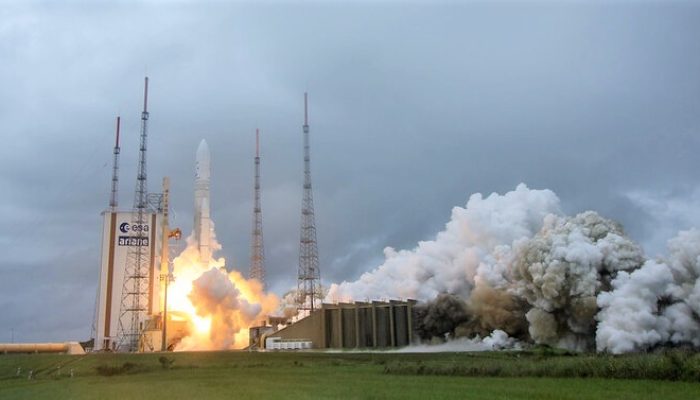
Where is Webb? This seemingly simple question is quickly making its way into everyday conversation, and not just in scientific and astronomy circles. After a long 32-year wait, NASA officially launched the James Webb Telescope a couple of weeks ago on 25 December 2021. More recently, the telescope deployed its final primary mirror segment on 8 January this year, a crucial milestone in its mission ...[Read More]

Imaggeo On Monday: After a long day in the field

Imaggeo On Monday: After a long day in the field

Working on the sea ice can be quite exhausting. Scientists face cold temperatures and wind, constantly scanning for polar bears, while trying to squeeze valuable data out of frozen instruments. At the end of the day you might have not found what you wanted, but every single bit of information brought back truly helps in understanding our complex World.   Over 12 months, 442 experts worked in ...[Read More]

GeoTalk: Meet Mengze Li, atmospheric chemist and the Atmospheric Sciences Division’s Early Career Scientist Representative

GeoTalk: Meet Mengze Li, atmospheric chemist and the Atmospheric Sciences Division’s Early Career Scientist Representative

Hi Mengze, thank you for spending your time with us today. Could you tell our readers a little about yourself? Hi Simon, thanks for the interview today. I’m happy to tell more about myself. I was born in China, lived and studied there until I finished my Bachelor’s study. After that I went to Germany for Master’s and doctoral degrees. Last year I have finished my PhD at Max Planck Institute for Ch ...[Read More]

Imaggeo On Monday: The evolution of a cloud during a day

Imaggeo On Monday: The evolution of a cloud during a day

A cloud in the lee of the Patagonian Andes observed during an entire day. The shape of the cloud changed from lenticular to whirl- and funnel-shaped. Description by Christoph Mayr, after the description on imaggeo.egu.eu.   Konstantinos Kourtidis also added a comment to the image, explaining more about how lenticular clouds like these can form: “That’s a great photo sequence. The ...[Read More]