

This week’s post is brought to you by Stefan Winkler, a Senior Lecturer in Quaternary Geology & Palaeoclimatology, who explains how the mountain tops of the Southern Alps become decorated by beautiful blanket-like cloud formations. The Sothern Alps of New Zealand are a geoscientifically dynamic environment in all aspects. They are arguably one of the youngest high mountain ranges in the ...[Read More]
Iceland’s Bárðarbunga-Holuhraun: a remarkable volcanic eruption
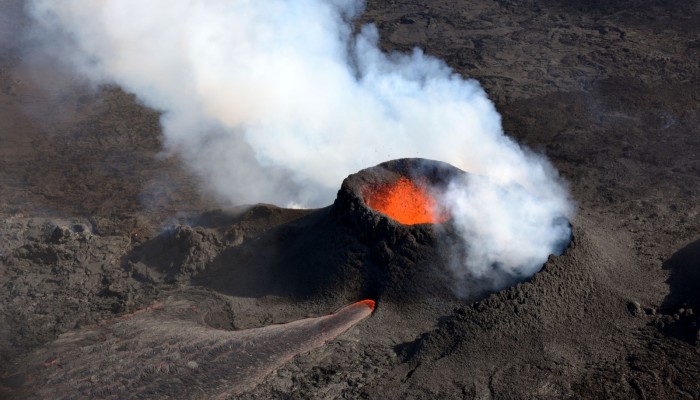
A six month long eruption accompanied by caldera subsidence and huge amounts of emitted gasses and extruded lavas; there is no doubt that the eruption of the Icelandic volcano in late 2014 and early 2015 was truly remarkable. In a press conference, (you can live stream it here), which took place during the recent EGU General Assembly, scientists reported on the latest from the volcano. Seismic act ...[Read More]
Upload your 2015 General Assembly presentation
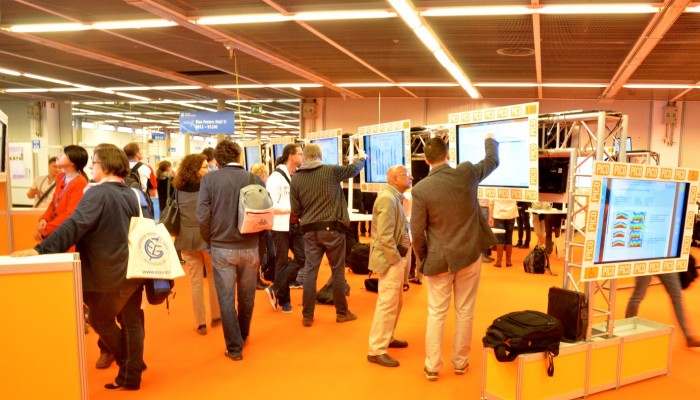
This year it is once again possible to upload your oral presentations, PICO presentations and posters from EGU 2015 for online publication alongside your abstract, giving all participants a chance to revisit your contribution – hurrah for open science! Files can be in either PowerPoint or PDF format. Note that presentations will be distributed under the Creative Commons Attribution 3.0 Licence. Up ...[Read More]
Imaggeo on Mondays: Colourful hydrovolcanism
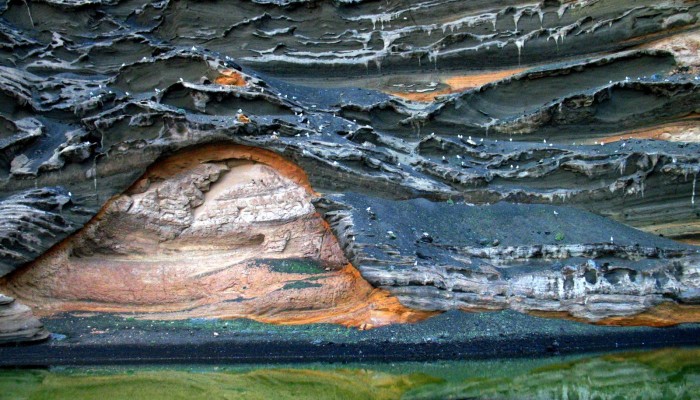
Like in a beautiful painting, layers of colour adorn the flanks of this volcano. In this week’s Imaggeo on Monday’s post, Stephanie Flude describes how these colourful layers came to be and gives an insight into why she became a geologist. What inspired you? Share your reasons for becoming a geoscientist with us in the comment section or via twitter using the hashtag #WhyGeo! “Why do you want to s ...[Read More]
Communication and Education in Geoscience: Practice, Research and Reflection
In this guest blog post, an international group of researchers discusses a recent communication and education session that they convened at EGU’s 2015 General Assembly. If you are involved in any of these disciplines, we’d love to hear your opinions on how you think their practitioners are currently viewed, both within the geosciences and by the general public. We look forward to your comments. Th ...[Read More]
Floods and droughts set to increase due to climate change
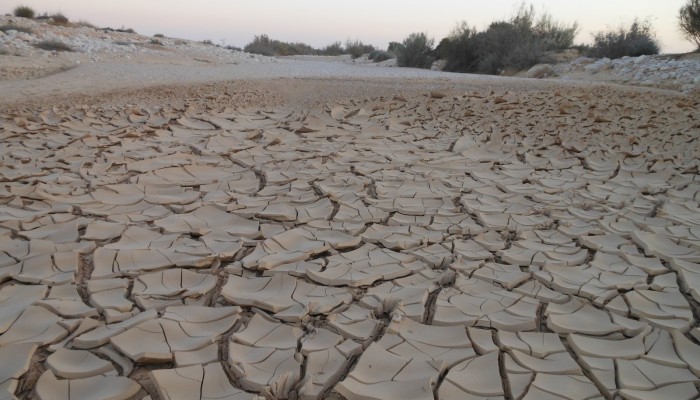
The planet is set to encounter a record-level amount of floods and droughts by 2050 – researchers recently announced at the European Geosciences Union’s General Assembly in Vienna. Nikita Marwaha shares their predictions on the impact that climate change will have on these extreme weather conditions. In a study by the Joint Research Centre (JRS) – the European Commission’s in-house science service ...[Read More]
Imaggeo on Mondays: Finger Rock
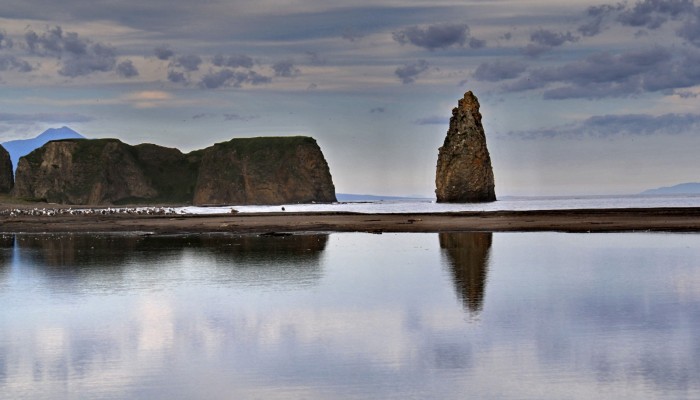
Standing proud amongst the calm waters of Golovnina Bay is ‘The Devil’s Finger’, a sea stack composed of volcanic sediments. Located on the Pacific coast of Kunashir Island -which is controlled by Russia but claimed by Japan – the stack is testament to the volcanic nature of the region. The island itself is formed of four active volcanoes which are joined together by low-lying geothermally active ...[Read More]
Drinkable rocks!
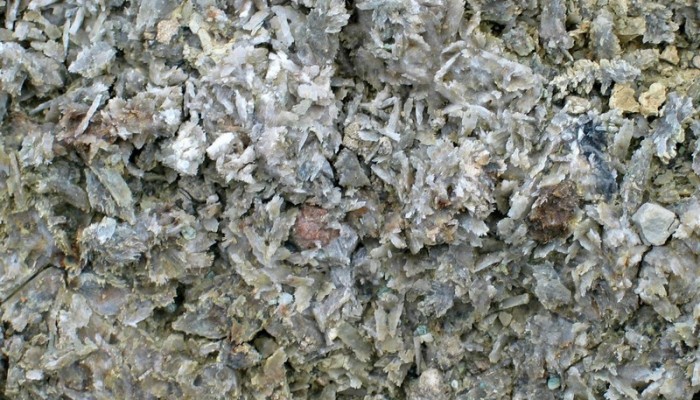
When water is scarce, you’ve gotta save it, or come up with an ingenious way to get more. Some Spanish shrubs do just that, quenching their thirst with water from rocks. Sara Mynott explains where they source it… Often, in areas where water is sparse, plants use a suite of techniques to harness what limited resources are available in their environment, from hairs that trap moisture in the air to d ...[Read More]
Imaggeo on Mondays: Earthquake Lake
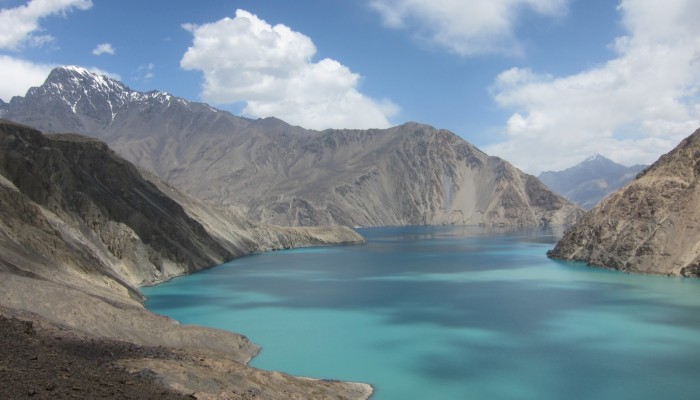
Despite its alluring turquoise waters and rugged mountain backdrop the story behind this beautiful lake is rather more troubling. In today’s Imaggeo on Mondays, the first post since our short break from the traditional format during the General Assembly, Alexander Osadchiev writes about the shaky origins of Sarez Lake. Lake Sarez is situated in Tajikistan, deep in the Pamir Mountains. In 1911 a lo ...[Read More]
Communicate Your Science Competition Winner Announced!
Congratulations to Zakaria Ghazoui, the winner of the first ever Communicate Your Science Video Competition 2015. Zakaria is a PhD student at the Institute des Sciences de le Terre (ISTerre) in France, and has been investigating Himalayan lakes using sediment cores. Here is his video, Inside Himalayan Lakes: Display "Inside Himalayan Lakes by Ghazoui Zakaria" from YouTube Click here to d ...[Read More]