I was 20 years old when I landed my first full-time job, at an institution dedicated to training technicians and engineers for renewable energies and energy efficiency; IFMEREE in Oujda, in the eastern region of Morocco, the first of its kind in the Middle East and North African region. It was there, being trained across the full technological spectrum of solar, wind, biomass, and energy efficiency in buildings, that a thought hit me with such clarity it bordered on comical:
The sun is massive. It is an unfathomably gigantic nuclear reactor sitting in the sky, dumping light and heat onto this planet every single day for free. Why should we ever have to pay much for electricity and hot water?
Today, in Munich, Germany, I look at my utility bills climbing into four digits (yup, in EUR), and the absurdity hasn’t worn off. If anything, my anger has sharpened.
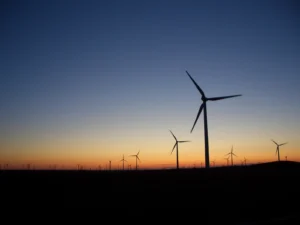
What working on the ground at age 20 teaches you very quickly, is that our energy crisis has never been a problem of physics or technology. It has never been a lack of human ingenuity, and it is certainly not a scarcity of planetary resources. The heat the sun generates is infinite. The ocean tides pulled by the gravitational dance of the moon are completely deterministic; we can calculate the megawatt yield of a marine turbine for a Tuesday afternoon fifty years from now with near certainty. The wind roaring over coastal waters and the agricultural manure capable of being fermented into bio-methane are right in front of us. The engineering works. The thermodynamics have been solved for decades.
So why are ordinary households still getting squeezed by outrageous energy bills? Why are people forced to choose between heating their homes in the winter and buying groceries, while energy companies announce record-shattering quarterly dividends? The answer isn’t technical. It’s ideological. It’s economic. It’s political. (Check out petro-masculinities!). The same barrier that stands between humanity’s equal access to solar and biomass is the exact barrier keeping tidal, offshore, and geothermal from being deployed at massive, publicly owned scales today: fossil fuel companies, lobbyists, and the governments that protect them, will not abandon their billions in business just so that you and I don’t have to pay outrageous bills or have access to clean energy.
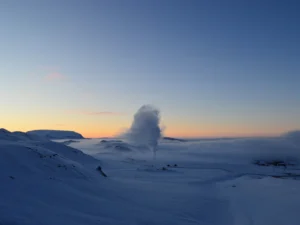
While solar and wind have finally broken into the mainstream because businesses realised the hardware could be mass-manufactured and privatised at an industrial scale, the lesser-known renewables are still deliberately framed as exotic, unready experiments. Yet the actual state of deployment tells another story. Next-generation geothermal has shattered its historical geographic limitations. For decades, tapped heat was restricted to volcanic anomalies like Iceland or the East African Rift.
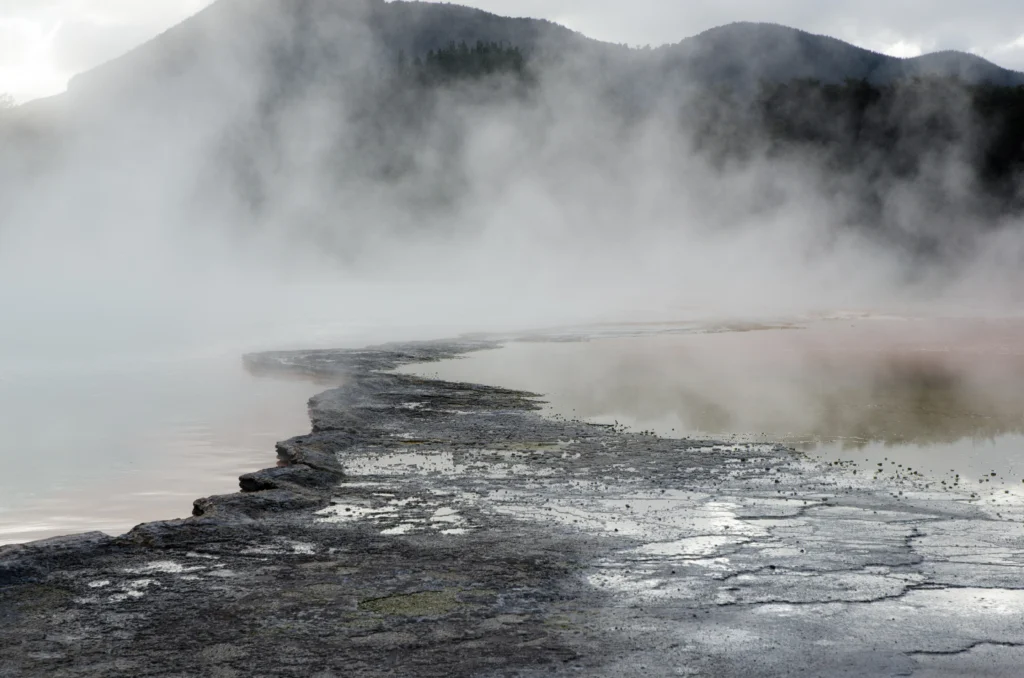
- Today, by repurposing horizontal drilling and hydraulic shearing techniques pioneered by the drilling industry, Enhanced Geothermal Systems and closed-loop Advanced Geothermal Systems are boring kilometers down into crystalline granite anywhere on Earth. Operating on far less land than conventional power plants, these systems pump fluids through subterranean rock to tap 200°C+ thermal energy, supplying constant, emissions-free baseload power day and night.
- And, where are my sea lovers at? Because out at sea, tidal stream generation has moved far beyond the environmentally destructive coastal barrages of the twentieth century. Because seawater is more than eight hundred times denser than air, an eight-knot marine current carries an immense kinetic punch compared to the strongest atmospheric gale. Today, arrays of seabed-anchored turbines spinning in Scotland’s Pentland Firth and utility-scale floating platforms are delivering predictable power directly into national grids. We never have to guess when the tide will turn, because lunar gravity operates completely indifferent to whether the sky is overcast or the wind has died down.
- Wave power is navigating its own decisive engineering breakthroughs:
The technology works, and is ready to scale. However, it is stuck because of who holds the purse strings.
The exact same barrier that stands between humanity’s equal access to solar and biomass is the exact barrier keeping tidal, offshore marine power, and geothermal from being deployed at massive, publicly owned scales today. The near chokehold that fossil fuels have on our businesses and governments and the leverage they can apply with the billions they earn in profits each year, keeps new energy ideas from growing and gaining the support they deserve – and we need. To the oil and gas giants and the politicians whose budgets rely on their royalties, free, or even low-cost and abundant energy is an existential commercial threat. They need energy to remain centralized, commodified, and scarce enough to justify extortionate retail tariffs. They will happily let us foot the bill for pipelines, drill sites, and climate disasters, as long as it ensures we remain paying customers with life-long contracts.
Living on a planet where energy is everywhere, only to be charged thousands simply to keep our lights on and our homes warm, is an example of structural and systemic violence (pdf). Decarbonizing our world cannot simply mean swapping oil companies for private green-tech monopolies that replicate the same extractive models. Energy sovereignty means reclaiming the sun, Earth’s heat, and the ocean’s pull as a collective, democratic commons, so that no one ever has to go broke just to survive the winter.