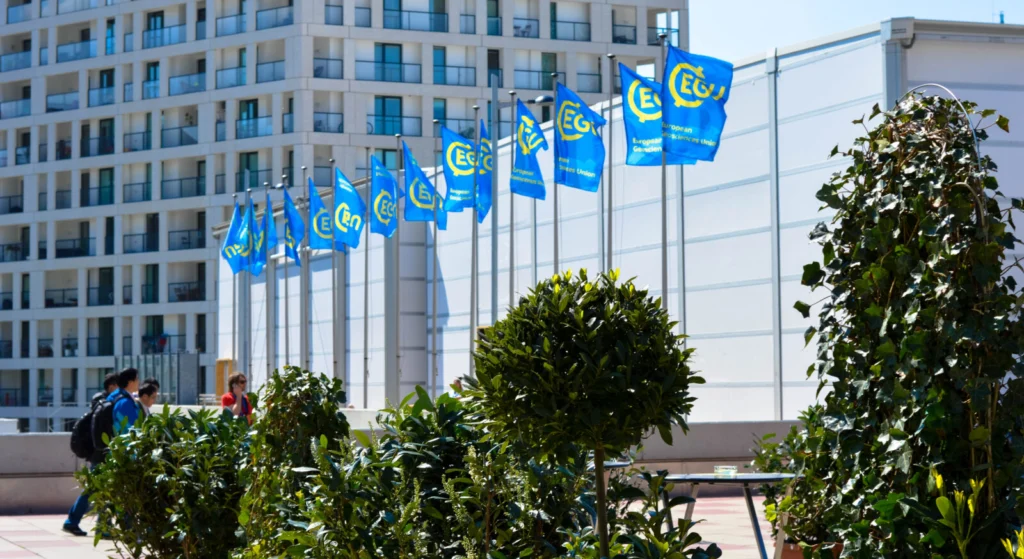
Photo by Kai Boggild. Source: Imaggeo
The first time I came to EGU was in 2007. I was two months away from graduation, a week away from my wedding, and it was my first major international conference. I had no idea what I was doing. It was just a day trip, a red-eye train in the morning, and a train home in the evening. I turned up in a suit and tie and probably stood by my poster like a deer in the headlights. On my way home, I browsed the printed abstract book (remember those?) and wished I had attended more talks. The General Assembly is big, diverse, and not easy to navigate, especially if you are not much of a people person. This is why I want to share this guide with you to help you not get overwhelmed during the largest geoscience assembly in Europe, enjoy it, and make the most out of it!
Focusing on your health matters
First things first: keep your body going. For many of you, this will sound trivial, but your body is your spaceship, keeping your mind safe and healthy on this trip. Give it what it needs; it is working hard during these long, crowded days. You might not give it all it needs, as you will probably have your sleep schedule disrupted, as well as your eating and workout routines, but you can always show it some care. Stay hydrated: this is easy at EGU, you just need a water bottle that you can refill throughout the venue, so don’t forget to keep drinking and refilling regularly. If you don’t, you risk having a headache. Also, trivial again, but eat good stuff regularly. Don’t try to get through the day on a hotel breakfast, free snacks, and a fast-food dinner. Schedule time for lunch, keep healthy snacks in your bag, and share these with people: it’s the best way to connect. If you are short on money, use a food-saving app such as
Too Good to Go; these will allow you to have a cheap but good dinner at the end of the day. If you are short on time, eat at the conference center, or if you don’t like the options (or the queue), order food to be delivered to the conference center gate.
Be mindful of your sleep. This can be difficult if you are jet-lagged or if you meet old friends you haven’t seen in a while, but it is worth the effort. Nobody wants to get ill, fall asleep in the middle of the most important session of the week, or wander around during the post-lunch food coma trying to find a couch to crash on. Keep your body moving! There are so many ways in Vienna to be active. There is a huge park right outside the conference center,
Donaupark, a public beach,
CopaBeach, and a
public exercise park less than 30 minutes walk from the venue. Vienna has some nice hiking destinations too, such as the
Wienerwald hills or the
Lobau floodplain forest, accessible by public transport. Going for a morning run with newly-found conference friends is an excellent way to build connections: just ask the people you see wearing EGU badges at the hotel breakfast. The secret tip is to travel by bike in town. You can bring your own bike if you come by train, or you can rent a public bike. Either way, your trip to and from the hotel will be a much-needed breath of fresh air instead of a crowded wait for the underground.
Now let’s talk logistics
The Vienna bike lane system is excellent, and most mapping apps offer cycling directions in Austria, so you can find your way. You will also need peace and quiet from time to time. You can again go to the park, but also don’t hesitate to use the quiet room or the prayer/meditation rooms in the conference center. There is also a small church right near the metro station. Regardless of your belief system, it’s important to give yourself moments of peace and reflection. Speaking of peace and quiet, some people need these for their toilet breaks. The pro tip here is to go for the gender-neutral toilets in the back corridors. These tend to be less crowded.
You will probably not be able to be mindful of all this during a busy conference week, but you can listen to your body and give it something when you tap into its reserves. Have you had a long night preparing for your presentation? Grab an extra healthy breakfast. Did you spend two days already without a break, going from one session to the next? Take a morning or afternoon out and go for a walk. Are you balancing your day-to-day work with being there at the conference? Get a big smoothie; you deserve it.
The same goes for the dress code: at the General Assembly, the only rule is that there is no rule; be yourself. You want to wear what makes you the most confident and comfortable, and everyone else is going to be OK with that. Beyond comfort, you want to make it easy for people to recognize you and start a conversation, so if you wear your department T-shirt or hoodie, or funny science-themed apparel related to your field, or something related to your hobbies or interests, such as merch from your favorite music group, you are good. Take care of your shoes, though: you will probably be standing and walking a lot. But nevertheless, if you want to wear a suit, or heels, or a dress, go for it! Again, when you pack your bag, bring leisure/workout clothes, including something you can swim in. If you have no space, stuff it down your poster tube.
Engaging in sessions and presentations
Why are you actually going to EGU? What do you want to achieve? What event, session, or meeting is your actual purpose? These are important grounding questions to help you gain clarity. For most of us, it will probably be the session where we are presenting our talk or our poster. For some, it will be finding a new job or starting a new project. It could also be a short course or a splinter meeting. Definitely take some time to think this over, or even talk through this with your colleagues, especially whoever is funding your trip. You want to have this as clear as possible. I suggest that it is always good to think about EGU in terms of sessions, not individual talks: you will rarely want to listen to only a single contribution in a session, because the context is also important. I think it is a basic rule of courtesy to sit through the whole session where you are presenting a talk and to walk through the whole poster session where you are showing your poster. If you are not presenting, you can probably still identify the one most important session that is the most closely related to your interests. Put that in your personal programme first, highlight it, and if someone wants you to be somewhere else at that time, politely say no. If you are interested in one of the more popular fields, you have a good chance that this session will last all day. Be there for the whole time if you can: you are making it easier for people to connect to you.
Make sure you are there for the start of the session well-rested, well-fed, and on time. Sit in the front to keep the back seats empty for late-comers. If you arrive late and every seat is taken, sit on the floor, and even bring outdoor seat mats with you or use a laptop sleeve to sit on. If the room is too crowded and you don’t get in, but the session is important for you, find a place outside and stream the presentation online on your laptop or even your phone.