1. Congratulations on your OSPP Award 2024! What was your initial reaction to winning, and how has it helped your career as an early-career scientist?
I was very delighted and also proud that my work is recognized in this way. I also understood in hindsight why I had little time to breathe during my poster presentation slot; some of the people asking a lot of the questions will have been the judges. I have not seen any impact on my career yet, but it is definitely nice to have on the CV for future applications and proposals.
2. Can you walk us through your EGU presentation – what was the core research topic, and why did you choose it?
I presented a technique to detect waves in multi-spacecraft plasma data – the wave telescope. This technique was developed decades ago, but with upcoming spacecraft constellations composed of more than 4 spacecraft, there is a need to extend the wave telescope method. Unfortunately, no data is yet available on such large constellations, and thus, I turned to a global simulation of Earth’s space plasma environment called Vlasiator to analyze simulated data. This allowed me to better understand the complications arising from more than 4 spacecraft and to accordingly extend the wave telescope technique.
The wave telescope technique can be mathematically challenging; this was one of the reasons why I find this topic exciting. It is also timely with the hopefully upcoming HelioSwarm and Plasma Observatory missions. In combination with the Vlasiator simulations, it also fosters a lot of collaborations and broadens my scientific knowledge; I like such overarching scientific topics.
… but with upcoming spacecraft constellations composed of more than four spacecraft, there is a need to extend the wave telescope method.
3. What key findings from your work stood out to the judges, and how do they contribute to solar-terrestrial sciences?
The judges liked the comprehensive nature of the study, for example, the combination of a data-based approach with state-of the-art simulation results. Also, they were positive about the good agreement of the wave telescope-based dispersion analysis of the simulation data with real-world results. This agreement shows that the presented approach is well suitable to be applied to future multi-spacecraft missions with a large number of spacecraft in Earth’s space plasma environment.
4. Share a memorable moment from preparing or delivering your talk – any challenges or tips for future OSPP hopefuls?
I do not have any specific moment, but as a general remark, I would advise presenters to be honest about their work. Sometimes, things don’t work out the way they were planned; models do not agree perfectly with the data. It is important not to try to hide this, but to honestly state what works well and what does not. After all, that is what research is about.
… but to honestly state what works well and what does not – After all, that is what research is about.
5. Did presenting at EGU offer opportunities for new collaborations, feedback, or insights that influenced your research?
For me, EGU is always a place where I can meet a lot of the people from my network/collaborators. Speaking to them in person, rather than online or via e-mail, is much better for getting arguments across and having a deeper dive into the topic. Although I was in contact with the relevant people before, discussing at the poster session at EGU24 helped to intensify collaboration for two papers that are now published and submitted, respectively. Additionally, the direct and honest feedback from yet unknown researchers really helps in finding weak points in one’s own line of argumentation, which is very valuable.
6. Can you share how your PhD experiences so far have guided your research, and who or what has motivated you during this process?
I have the luxury of being relatively free in choosing the direction of my research, mainly because of the trust my supervisors place in me. This, combined with good pay, has enabled me to dig deeper into problems. While this approach takes more time than going after the “low hanging fruit”, the tendency in current research to publish fast, I think it yields far more high-quality results, which, in the long-term, stand out and prevail. I see my position as privileged compared to other PhDs and would wish for more such possibilities for fellow PhD students, as their own learning experience is also much deeper.
While this approach takes more time than going after the “low-hanging fruit”, […] it yields far more high-quality results, which, in the long term, stand out and prevail.
7. How do you see your findings influencing future research or applications in your field?
The poster presentation and, in general, the research associated with it have culminated in the development of the “Extended wave telescope”, which enables analysis of multi-spacecraft data with large numbers of spacecraft. The associated publication is being reviewed at the moment. I hope that this extended technique can help in analyzing the data from future scientific large satellite constellations and thus help to understand the remaining gaps in solar wind and magnetospheric research better. In other publications with colleagues, we have shown the possibility of multi-spacecraft space plasma missions at other planets, which I would like to see in the future; the wave telescope would also be helpful there.
8. For other students and PhD candidates eyeing the OSPP award, what’s one piece of advice on crafting a standout presentation?
Use figures and sketches to explain your work rather than just plain text, and most importantly, start simple! One cannot expect that every viewer knows one’s topic, especially at EGU, where there are so many different disciplines present.
Use figures and sketches to explain your work rather than just plain text, […] start simple!
9. Was there anything unexpected, fun, or particularly rewarding about your EGU experience that you’d like to share?
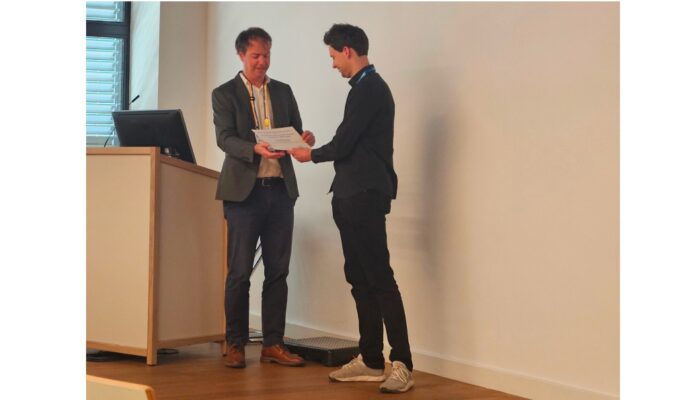
It was very nice to get a neat certificate for the award and to be honored during the division meeting. If I may mention one critique: rather than only waiving the EGU registration fee for awardees, which is usually covered by their institution, it might feel more meaningful and directly rewarding to receive an actual monetary prize.
A link to the poster is available on the OSPP award page: https://www.egu.eu/media/
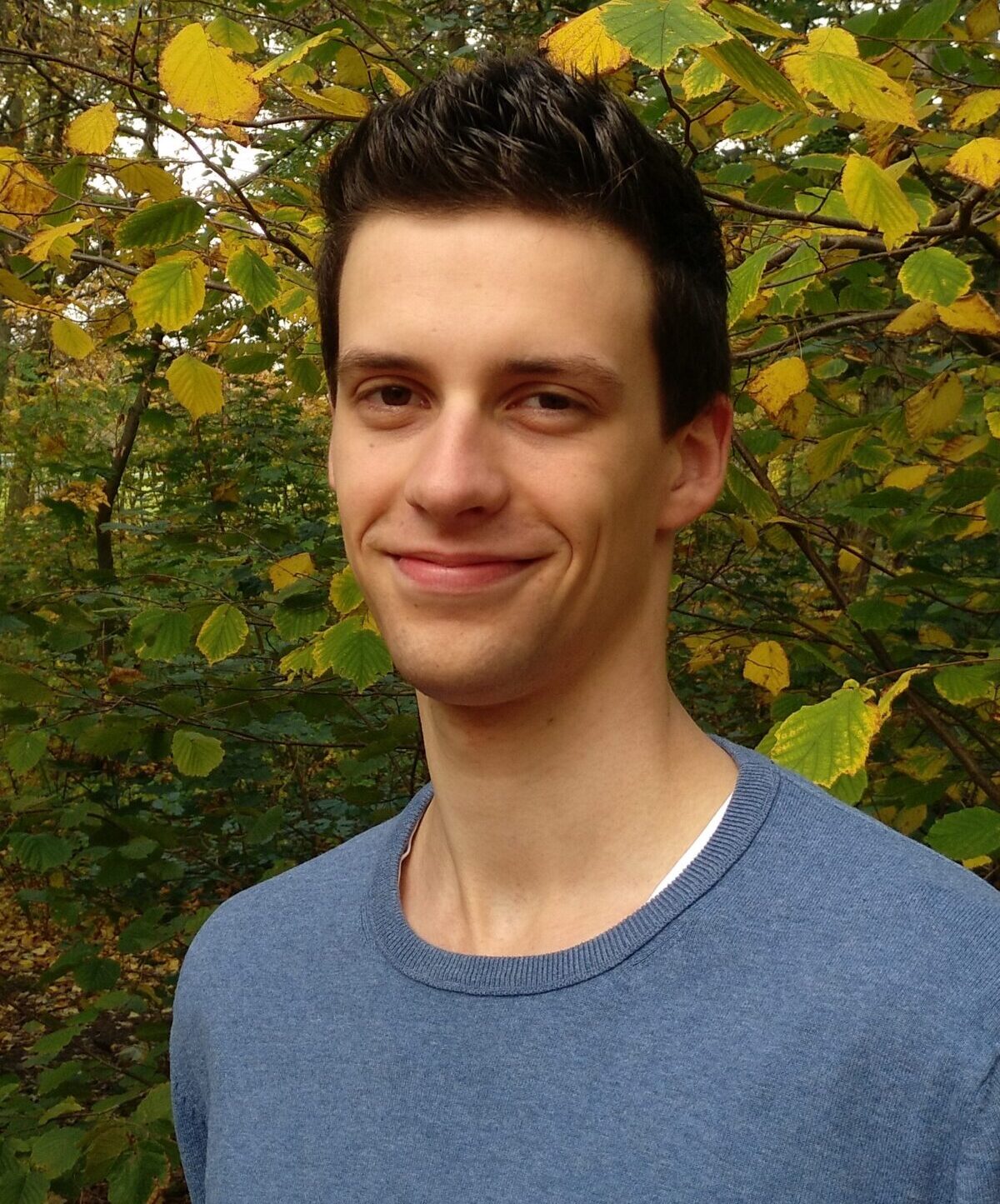
Leonard Schulz is a research associate and doctoral candidate at the Institute of Geophysics and Extraterrestrial Physics (IGEP) at Technische Universität Braunschweig, Germany. His work focuses on multi-point methods for space plasma physics, such as current density estimation and the wave telescope technique. He is also researching the effects of re-entering spacecraft and their material release on Earth’s atmosphere and maintains part of the magnetometer experiment (J-MAG) aboard ESA’s JUICE mission. He has been involved in other ESA missions such as Cluster and Comet Interceptor, and numerous mission proposals as well.