Deglaciation and formation of an ice rise with the ice-sheet model BISICLES. The simulation starts with an ice sheet in steady state that overrides a topographic high in the bed, close to the calving front. The sea level is then forced to rise steadily with 1 cm per year during 15 thousand years, and the …[Read More]
Division blogs
Soil facts
As part of the activities of the International Year of Soils, FAO has published the following Soil Facts. Contribute with your comments!
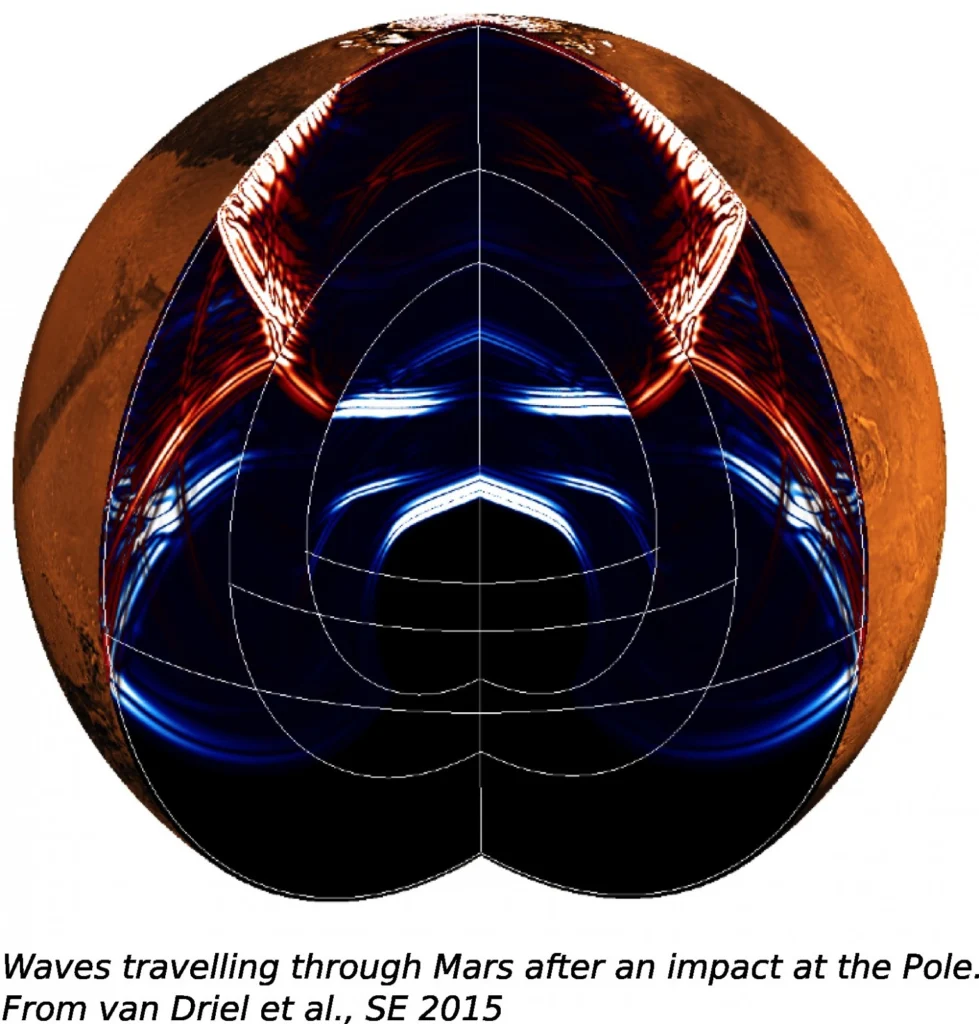
Brewing wiggles on Mars
Creating 1 Hz-seismograms in a 3-D Earth model, and comparing them to observed body waves, is a dream that’s today still too expensive for routine use. But even tackling the problem for a spherically symmetric Earth poses certain challenges. Recently, a new tool entered the stage (you might have followed the Solid Earth discussion): Instaseis …[Read More]
Global Soil and Sediment Transfers in the Anthropocene (GloSS) – Report from the kickoff meeting in Bonn
Open kickoff meeting of the PAGES working group held in Bonn, Germany, 19th – 21st Aug. 2015 The open kickoff meeting of the PAGES working group GloSS aimed to set the boundary conditions that will enable the GloSS-WG to meet its scientific goals within the next three years. Therefore, this workshop focused on the development of …[Read More]
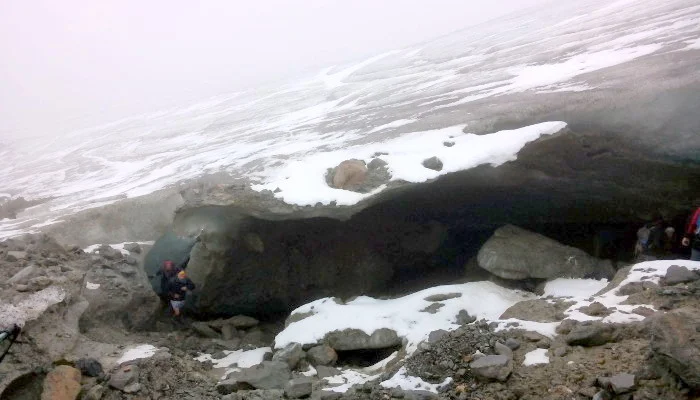
Image of the Week: Hochjochferner
The margin of the glacier “Hochjochferner” on the border between Austria and Italy. This glacier has been monitored with an Automatic Weather Station for several years by the Institute for Marine and Atmospheric research in Utrecth, NL.It is also the destination of the field trip that takes place during the annual Karthaus summer school in …[Read More]
Irish Geomorphology Scientific Workshop & Irish Quaternary Association meeting: Extreme Events 25th-27th November
Dear Colleagues, The annual Irish Geomorphology Group (IGGy) Workshop will be hosted at the Geological Survey of Ireland (GSI) in Dublin on the 25th and 26th November 2015 under the theme of ‘Extreme Events’ (a geomorphological perspective). The IGGy workshop will be followed by a themed IQUA (Irish Quaternary Association) meeting on November 27th, also …[Read More]
Eric Brevik’s work awarded by Geoderma
The review paper The use of electromagnetic induction techniques in soils studies, by James A. Doolittle and Eric Brevik, has been awarded as the Geoderma’s Best Review of 2014. The Geoderma Best Paper Awards are chosen every year since 2013. Candidates are nominated by the Geoderma Editorial Board and a short-list is then created for voting by …[Read More]
Sustainability of water uses in managed hydrosystems: human- and climate-induced changes for the mid-21st century
Words on Wednesday aims at promoting interesting/fun/exciting publications on topics related to Energy, Resources and the Environment. If you would like to be featured on WoW, please send us a link of the paper, or your own post, ERE.Matters@gmail.com **** Citation: Fabre, J., Ruelland, D., Dezetter, A., and Grouillet, B.: Sustainability of water uses in managed hydrosystems: human- and climate-induced changes for the …[Read More]
Postdoctoral Research Assistant in Planetary Seismology
Applications are invited for a two-year Post-doctoral Research Assistant in Planetary Seismology, within Bristol University’s School of Earth Sciences. The post will focus on NASA’s InSight geophysics mission, which lands on Mars in late 2016. NASA InSight aims to probe the detailed internal structure of Mars for the first time by deploying two tripod-mounted seismometers …[Read More]
What if everyone jumped at once?
One person’s jump is practically negligible when compared to Earth’s internal forces. But, what if everyone jumped together at the same time? There are roughly 7 billion people on Earth, with a total weight of approximately 350 billion kilogram. What if we all jumped together at once? Are we able to shake the planet? Are we …[Read More]