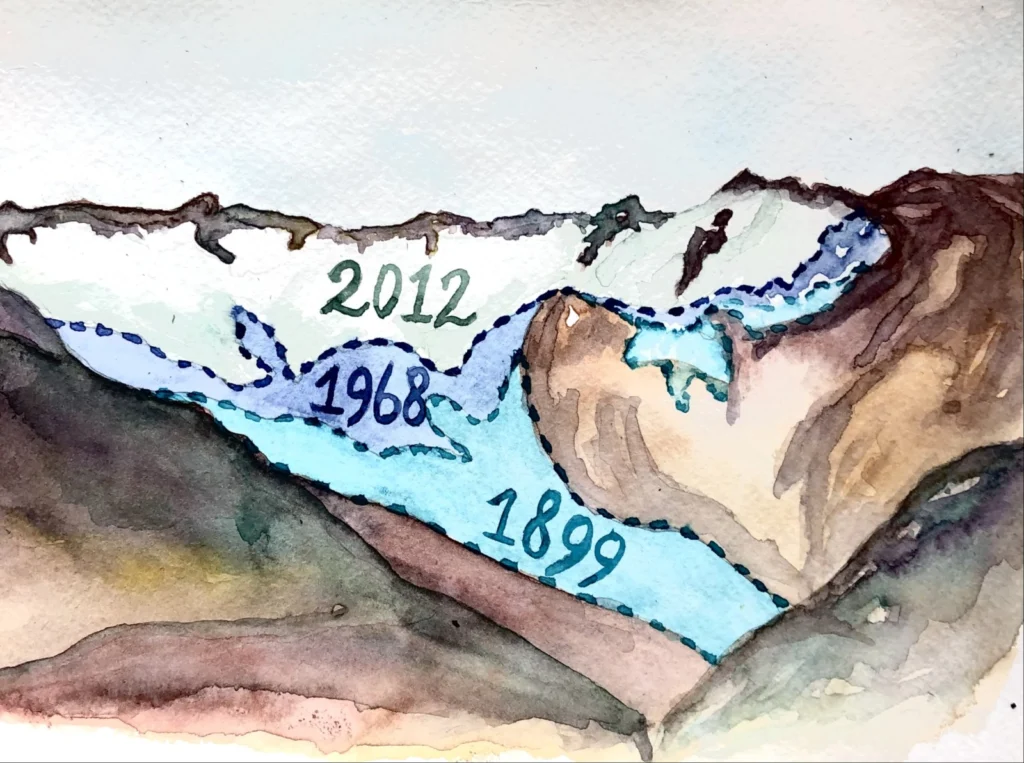
The beautiful island of Taiwan (as given by its colonial name, Ilha Formosa) is primarily known for its lush tropical forests, delicious culinary cuisine, bubbling hot springs, and a bustling cityscape. But, what does Taiwan have to do with the cryosphere? Before you resist the urge to leave and get a bubble tea, read on …[Read More]
Division blogs
Tectonics and Structural Geology
TS Must-Read – Brun (1999): Narrow rifts versus wide rifts: inferences for the mechanics of rifting from laboratory experiments
In 1999 Jean-Pierre Brun published his Must-Read paper about rifting, in which he reviews fifteen years of laboratory experiments at Geosciences Rennes. In a brief introduction the paper reminds the reader of the two main rift types: narrow rifting as the preceding stage for continental break-up, and wide rifting that occurs after cessation of convergence. …[Read More]
Geodynamics
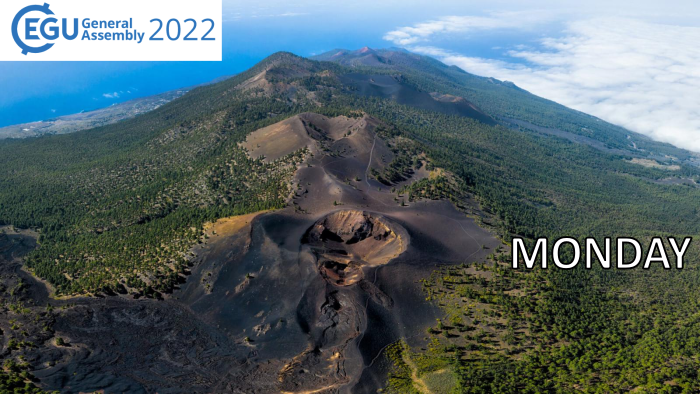
What to expect from EGU22: hybrid General Assembly
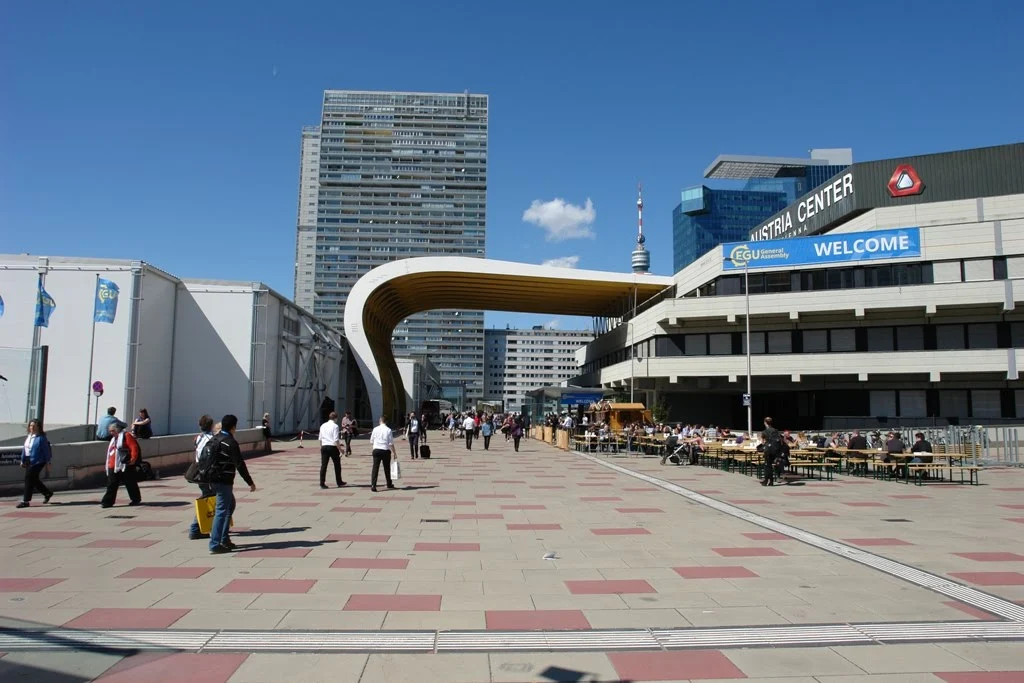
This year, the EGU General Assembly 2022 (EGU22) will be in hybrid form, with on-site events in Vienna (returning after three years of absence), while at the same time introducing new concepts to include virtual attendees as much as possible. With the hybrid conference looming in just a few weeks, it’s time for all attendees to …[Read More]
Stratigraphy, Sedimentology and Palaeontology
Does half-precession influence European climate?
What is half-precession? In the first half of the 20th century, the Serbian researcher Milutin Milanković described the periodic changes of the Earth’s orbit around the Sun. In recent decades, changes in these Milanković cycles have been shown to have an impact on global climate, and information about this is preserved in geologic records through …[Read More]
Geodynamics
The Sassy Scientist – Take Some Time Off!
Yo Han feels the need to please everyone. His collaborators, supervisor, office mates, faculty staff and his family (they’re low on the list though). Overly ambitious yet with the weight of the world on his shoulders, he sighs: How can I feel less pressure in my work? Dear Yo Han, Don’t worry so much. I …[Read More]
Natural Hazards
“This is a man’s world” – Challenges in being women in science
Gender equality is a fundamental human right and a basis for building a peaceful and sustainable future for our society. It has been identified by the United Nations as one of the seventeen urgent goals – the so-called Sustainable Development Goals – to be achieved by all countries to ensure sustainability on a global scale …[Read More]
Geodynamics
Join the EGU GD Blog Team!
We are looking for new blog team members for the new ‘EGU year’ (June 2022 – June 2023)! By being part of the blog team, you will have the opportunity to meet lots of people from the geodynamics community and beyond and boost your own profile. This year, we are looking for many different kinds …[Read More]
Seismology
“State of the ECS”: It’s that time of year again – EGU 22!
Hello everyone! Matthew here, writing this as I’m on my way to my first in-person conference in over two years. Speaking of first in-person conferences in over two years… EGU 22 is fast approaching, and the excitement is palpable! Your friendly, multi-neighbourhood EGU Seismology Division ECS Reps (bit of a mouthful) have pulled together a …[Read More]
Cryospheric Sciences
Current challenges: high-altitude Chilean glacier monitoring in an extended drought
Central Chile has been facing a long dry period since 2010, marked by a high mean precipitation deficit, a so-called Mega Drought (MD) (Garreaud et al., 2019). This, besides long-term temperature increase (Burger et al., 2018; Falvey & Garreaud, 2009), has affected negatively the glaciers’ mass balance in the region mainly due to low snow …[Read More]
Climate: Past, Present & Future
How glaciers record the winds of change
After decades of observation, one of the profound consequences of anthropogenic global warming is the rapid rise in temperature in the Arctic, refered to as Arctic Amplification. Compared to the mid-latitudes, warming in the Arctic is twice as fast. The reason is mainly due to the positive feedback of a melting cryosphere: Darker surfaces are …[Read More]