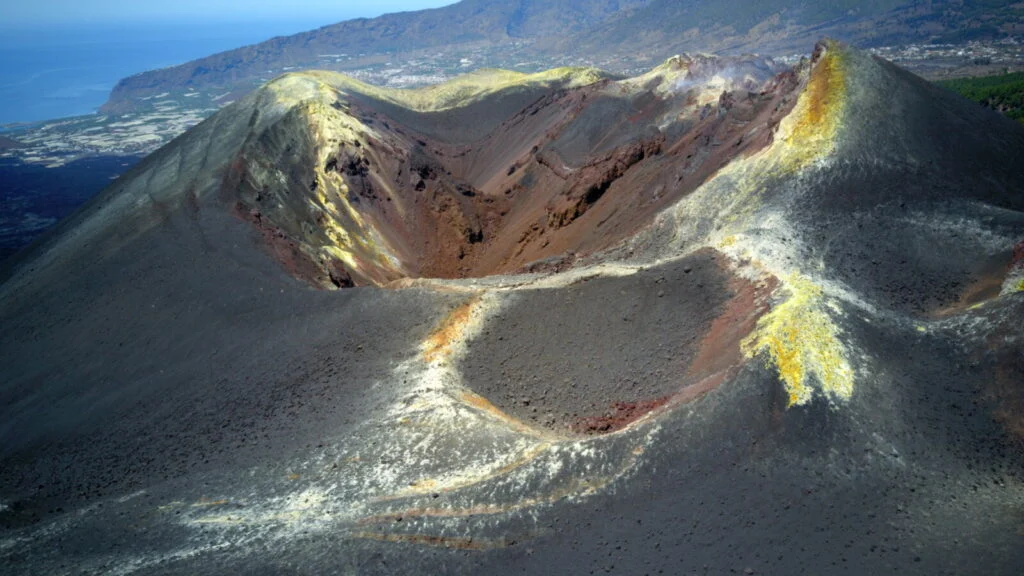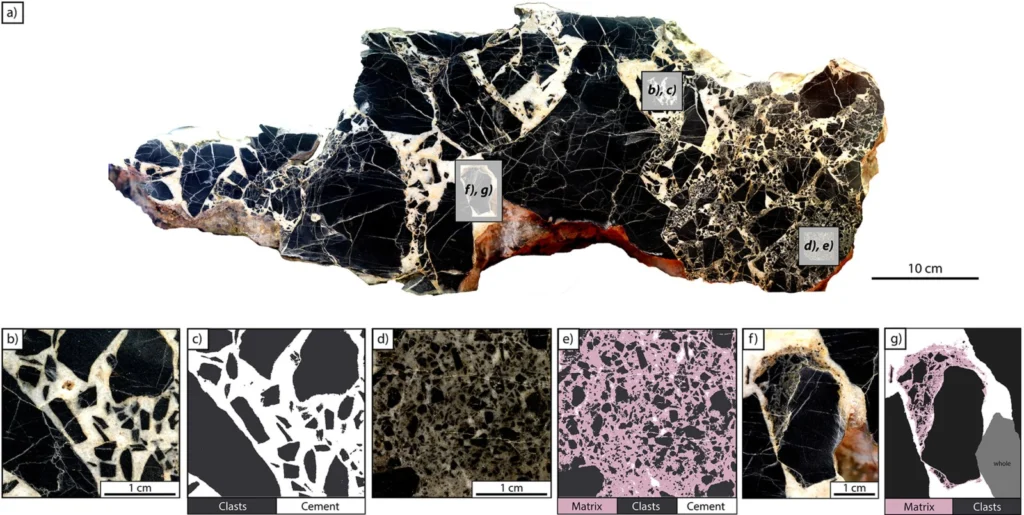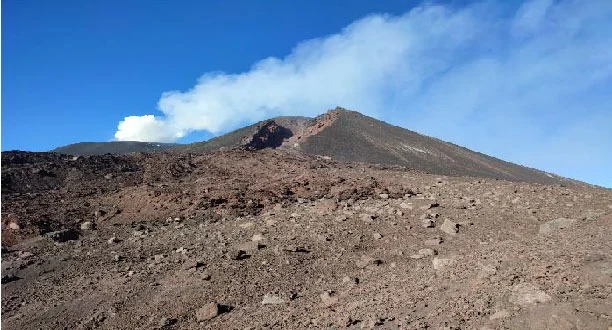
Why should you care about hydrothermal alteration in volcanic systems? When people think of volcanoes, they imagine large, devastating eruptions and lava streams gushing from the summit of an edifice. However, even when volcanoes are not visibly ‘active’, there can be more lurking below the surface. Hydrothermal alteration is one of the important and often …[Read More]
Volcanic hazards
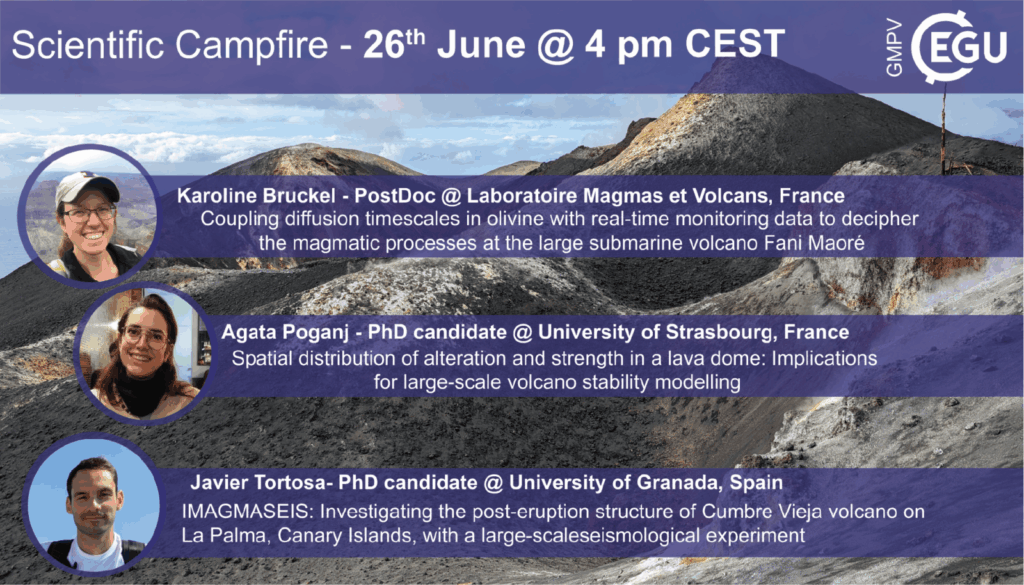
EGU GMPV ECS Campfires – Thursday 26th June @ 4 pm CEST
We’re excited to invite you to the fifth edition of the Geochemistry, Mineralogy, Petrology and Volcanology Campfires of the 2024/2025 season! Join us on Thursday, June 26th at 4 pm CEST on Zoom for a Scientific Campfire, during which three Early Career Scientists will present their research to the community. Our speakers for this edition …[Read More]
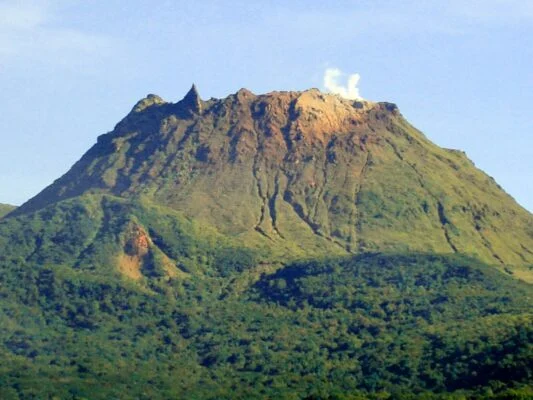
La Soufrière de Guadeloupe: Past Eruptions and Ongoing Activity
La Soufrière de Guadeloupe is an andesitic stratovolcano located in the southern part of Basse-Terre, within the Guadeloupe archipelago (Eastern Caribbean). It towers over the towns of Sainte-Claude and Basse-Terre. Nearly 50 years ago, this region faced severe consequences from a phreatomagmatic eruption, forcing the evacuation of 80,000 people. Since then, the volcano has been …[Read More]
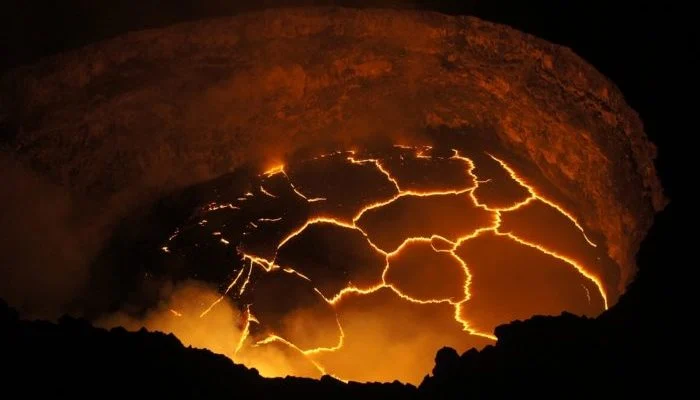
I asked ChatGPT to write a blog about lava lakes: here’s what happened
If you’ve not been living under a rock you’ve probably heard of ChatGPT, the AI text generator wowing the internet and striking fear into the heart of exam co-ordinators worldwide. I’ve been meaning to write a blog about lava lakes for a while now, ever since rewatching Werner Herzog and Clive Oppenheimer’s excellent documentary Into …[Read More]
Tambora 1815: From eruptive dynamics to the global impact of the eruption – with Jessica Kandlbauer
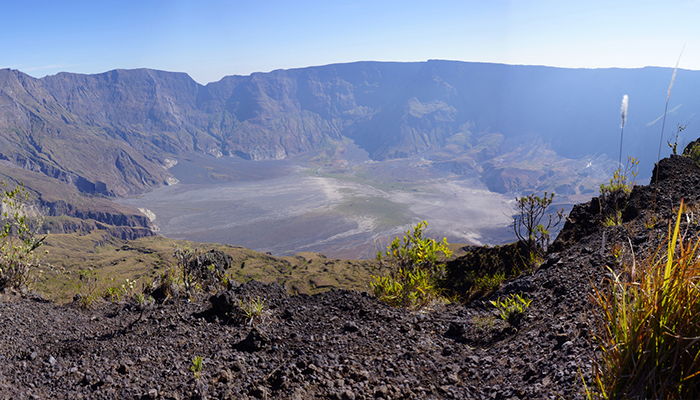
reading time: 10 minutes The Tambora 1815 eruption: a brief introduction On April 10th, 1815, the Tambora volcano, located on the island of Sumbawa in Indonesia, was responsible for one of the largest eruptions in the last millennium (Stothers, 1984; Sigurdsson and Carey, 1989; Oppenheimer, 2003; Self et al., 2004; Kandlbauer et al., 2013a; Kandlbauer …[Read More]
Fagradalsfjall 2021 versus 2022: similarity and differences
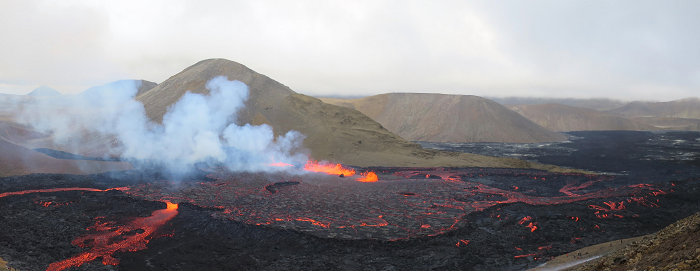
The Icelandic eruptions of 2021 and 2022 originated in the Reykjanes peninsula, characterized by the Krýsuvík-Trölladyngja system, one of the five volcanic systems present along the peninsula. This peninsula is a leaky transform fault, characterized by episodic rifts and associated volcanism. The last two years have brought about some of the most momentous volcanic eruptions …[Read More]
Can human curiosity affect dynamic risk?
In simple words, the volcanic risk (R) can be defined as R = Value × Vulnerability × Hazard. The value is a figure that varies according to the total number of population and / or infrastructures at risk during a volcanic eruption, vulnerability is the percentage of value at risk for a given volcanic event …[Read More]
EGU22: Wednesday highlights
This Wednesday we are at exactly half time through the congress! Here are some tips for today as one looks forward to a wonderful day of learning and sharing. We start between 8.30 and 11.45 CEST immersing ourselves in the world of metamorphic minerals (session GMPV 7.2– Room D2 https://meetingorganizer.copernicus.org/EGU22/session/41922#Presentations) and geodynamic processes (session GD …[Read More]
Volcanoes and social media make us (more?) crazy
Many people are drawn to danger and behaviors that can harm their health or finances. Dangerous activities include the attraction that humans have always had towards natural events, such as volcanic eruptions, or towards gambling, adventure, challenging travels or physical activities without the ability or the necessary preparation. In today’s life many people face risks, …[Read More]
An Overview on the 15 Jan 2022 Hunga Tonga-Huna Ha’apai Eruption
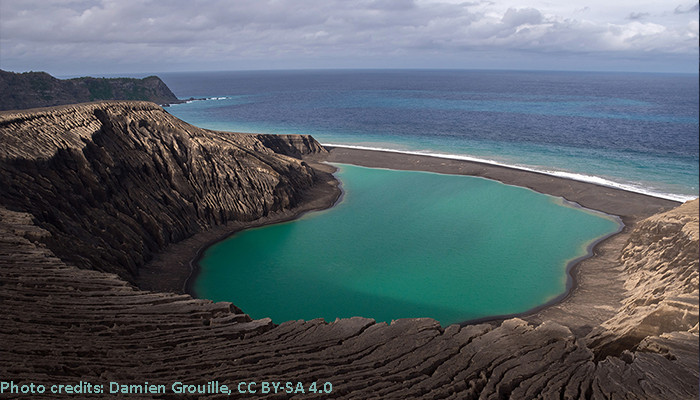
Since 15 January 2022, the islands of the Tonga archipelago and surrounding territories have been suffering the effects of what has turned out to be one of the biggest eruptions of this century. The eruption occurred on Hunga Tonga-Hunga Ha’apai, an island created by the emergence of a large submarine volcano. HTHH is located among …[Read More]