GMPV
Geochemistry, Mineralogy, Petrology & Volcanology

Societal impacts

GMPV ECS Campfires – Mineralogy Meets Soil Science: Remediation, Weathering Processes and Interactions
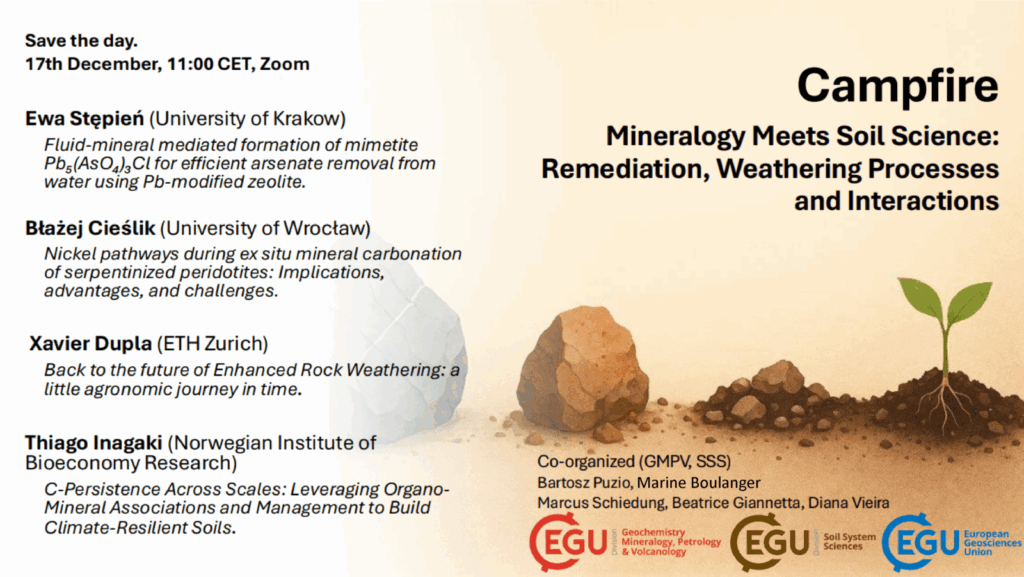

Joint Campfire - GMPV - SSS

How do minerals shape the future of soils, and how do soils drive mineral transformations? This campfire highlights remediation strategies, contamination hazards, and mineral–soil interactions that control water quality, carbon storage, and ecosystem health. Join us on Wednesday, December 17th @ 11 am CET to explore how weathering, organo-mineral processes, and innovative approaches help tackle po ...[Read More]

EGU GMPV ECS Campfires – Tuesday 27th February 11am CET

EGU GMPV ECS Campfires – Tuesday 27th February 11am CET

Mark your calendar! We have prepared the first edition of the ECS Tips Campfire of the Geochemistry, Mineralogy, Petrology and Volcanology division, which will take place on Tuesday 27th February at 11am CET on Zoom. This special edition will be dedicated to Outreach & science communication, during which three scientists will present their outreach activities and have a panel discussion with t ...[Read More]

Tambora 1815: From eruptive dynamics to the global impact of the eruption – with Jessica Kandlbauer

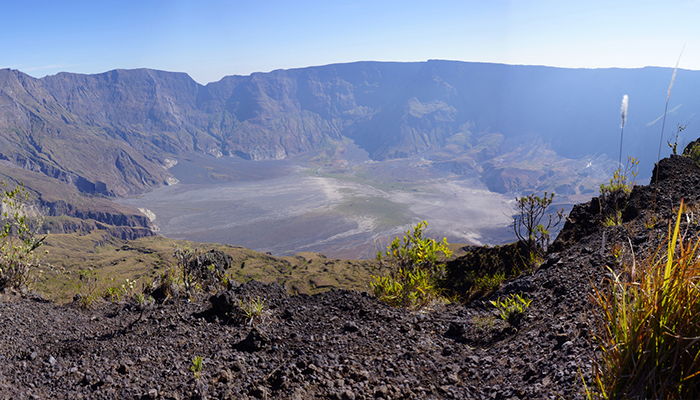
Panorama Mount Tambora caldera

reading time: 10 minutes The Tambora 1815 eruption: a brief introduction On April 10th, 1815, the Tambora volcano, located on the island of Sumbawa in Indonesia, was responsible for one of the largest eruptions in the last millennium (Stothers, 1984; Sigurdsson and Carey, 1989; Oppenheimer, 2003; Self et al., 2004; Kandlbauer et al., 2013a; Kandlbauer and Sparks, 2014). The eruption had a devastat ...[Read More]

Can human curiosity affect dynamic risk?

Can human curiosity affect dynamic risk?

In simple words, the volcanic risk (R) can be defined as R = Value × Vulnerability × Hazard. The value is a figure that varies according to the total number of population and / or infrastructures at risk during a volcanic eruption, vulnerability is the percentage of value at risk for a given volcanic event and the hazard is the probability that a certain place may be affected by a determined hazar ...[Read More]

Volcanoes and social media make us (more?) crazy

Volcanoes and social media make us (more?) crazy

Many people are drawn to danger and behaviors that can harm their health or finances. Dangerous activities include the attraction that humans have always had towards natural events, such as volcanic eruptions, or towards gambling, adventure, challenging travels or physical activities without the ability or the necessary preparation. In today’s life many people face risks, however these risks ...[Read More]

Exploring parachute science in analytical geoscience

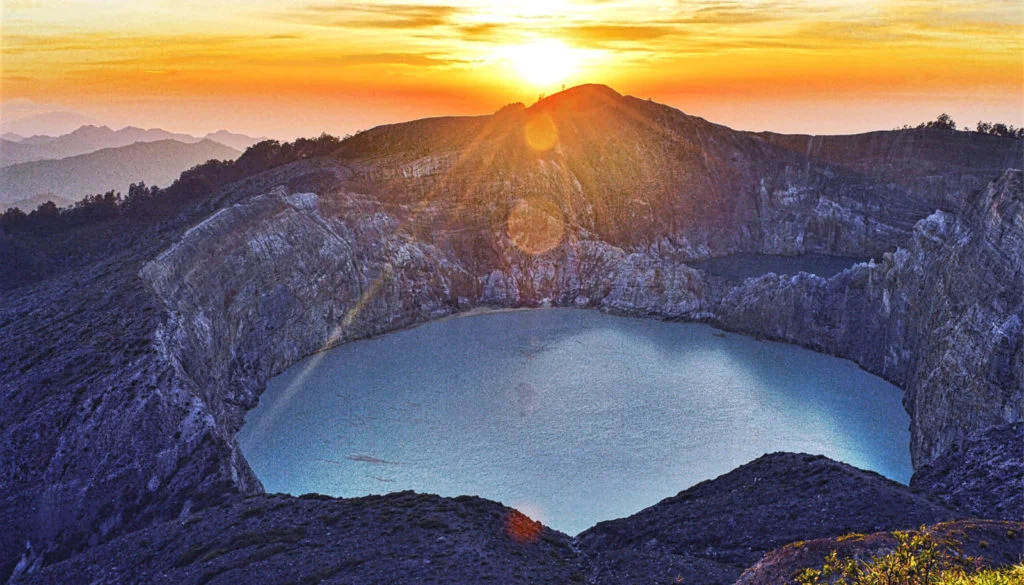
Crater lakes, Kelimutu Volcano, Indonesia.

During this past October, a team of researchers took part in a “hackathon” organised by the UK Natural Environment Research Council (NERC) to generate data and new ideas to increase diversity in geoscience. This was an extremely hectic, sometimes stressful but fun and illuminating experience which ultimately culminated in a pilot funding bid (which we learned this week has been successful!). Our i ...[Read More]

Volcanoes and Wines, Part 1

Volcano and Wine pt1 frontpage

Why talk about wine on the GMPV blog? Well, this geologist-favourite drink is not only good memories of the EGU General Assembly but also a topic that spans among all the GMPV categories. Indeed, wine composition, flavour, structure and quality are inevitably bound to the mineralogy and geochemistry of the soil, making it so common and appreciated since ancient times. And what gives us a nice comp ...[Read More]

Fire, Fog, Frost, Famine – French Revolution? The Lakagígar eruption in Iceland, 1783-1784 [Part 2]

Fire, Fog, Frost, Famine – French Revolution? The Lakagígar eruption in Iceland, 1783-1784 [Part 2]

PART II: Were the Haze Hardships caused by Men? Famine Before the Lakagígar eruption, the population of Iceland was 48810 people; four years later, it was down to 38518. Disregarding about 1500 deaths which were caused by a smallpox epidemic, the eruption may still have killed about 1/6 of the population [5]. These deaths were not directly caused by the lava or by toxic gases. The main cause was h ...[Read More]

Fire, Fog, Frost, Famine – French Revolution? The Lakagígar eruption in Iceland, 1783-1784 [Part 1]

Fire, Fog, Frost, Famine – French Revolution? The Lakagígar eruption in Iceland, 1783-1784 [Part 1]

“On the 8th of June 1783, at Whitsun, there gushed forth from the mountains behind the summer pastures a fire which devastated land, cattle and humans with its effects, both nearby and far away”, wrote Reverend Jón Steingrímsson of Kirkjubæjarklaustur in his autobiography [2]. The “fire” which welled up from a volcanic fissure now known as Lakagígar (the craters of Mount Laki) was the biggest floo ...[Read More]