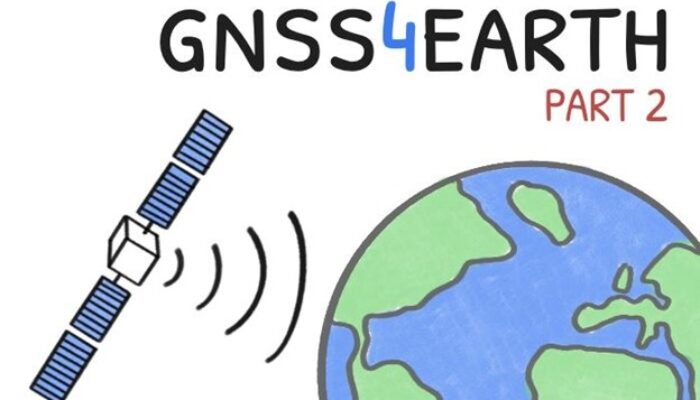
Global Navigation Satellite Systems (GNSS) are best known for positioning, navigation, and monitoring Earth surface motions with high precision (see two of our previous posts on GNSS here and here). But did you know that the same satellite signals can also provide information about snow, soil moisture, or sea level, without installing any additional instruments? This idea lies at the heart of GNSS ...[Read More]
EGU Campfire Geodesy – Share Your Research – 19th Edition
We are excited to announce the 19th edition of Geodesy Campfire – Share Your Research in April. The Geodesy EGU Campfire Events “Share Your Research” give (early career) researchers the chance to talk about their work. We have two exciting talks by our guest speakers, Yuting Cheng and Hamed Izadgoshasb. Below, you can find the details of the topics awaiting us. We will have time to network after t ...[Read More]
A Brief Recap of EGU GA26
Thank you all for an amazing EGU General Assembly (GA) this year! If you missed EGU26 or some of the events we organised, here’s a recap so you can stop wondering how it went and get an idea of what to expect next year and connect with us through our channels to stay updated. As in the past years, we started our GA with the online division meeting before the general assembly to present the G-Divis ...[Read More]
Beyond Navigation: How GNSS Reveals Earth’s Hidden Secrets
Part 2 – the regional case In our previous post, we discussed global scale phenomena, showing how the Global Navigation Satellite Systems (GNSS) constellation is the ultimate instrument for monitoring the Earth as a whole: tracking plate tectonics, defining the planet’s absolute size, and measuring variations of its gravity field. Essentially, the big questions of our constantly changi ...[Read More]