
Due to the rapid rise in temperatures, it started raining on the snow and ice-covered roads, prompting the regional public transport operator to suspend all bus services. The rain also resulted in icing on the overhead lines of the main railway line coming into town. Rail traffic was also temporarily suspended. Before the adjacent highway could be salted, several tens of cars were involved in a chain-reaction crash. It took several hours before the highway could be reopened. With no road or rail services and a closed highway, it was in practice impossible to move using land transport.
This is not the incipit of my latest failed attempt at writing a novel. It is something that I have experienced in Sweden, where I live. Rain on snow or frozen rain are perhaps not the most obvious examples of a high-impact climate extreme, but they illustrate well the effects that climate extremes can have on our daily life. Other extreme events, such as hurricanes or pluvial floods, provide an even starker reminder when they lead to large death counts and widespread damage to infrastructure.
We have access to a large and rapidly increasing amount of data about temperatures, rainfall, and several other climate variables, and a good understanding of the physical drivers of many frequently occurring climate extremes. In stark contrast to this, when it comes to understanding the societal toll of an extreme climate event, both process understanding and data are much scarcer. In a recent perspective paper we identify three key challenges to understanding impacts of climate extremes, and argue that this gap matters profoundly for both scientific development in the field, and the practical usability of research findings to make society more resilient to climate impacts.
One of the most fundamental challenges lies in the data themselves. Climate data is comparatively abundant and precise, but data on impacts such as deaths, injuries, economic losses, displacement, or long-term health effects are often incomplete, inconsistent, or entirely missing. Even when such data exist, they are rarely collected in a standardised way. Heat-related mortality, for example, is notoriously underreported because heat often aggravates existing medical conditions rather than appearing as an explicit cause of death. Flood damages may be recorded differently across regions, reporting bodies, or time periods, making meaningful comparisons difficult. Many indirect consequences of extreme events, such as mental health impacts, educational disruption, or long-term economic hardship, are barely tracked at all. Without robust and harmonized impact data, it becomes difficult to study vulnerability, risk, or the effectiveness of adaptation measures.
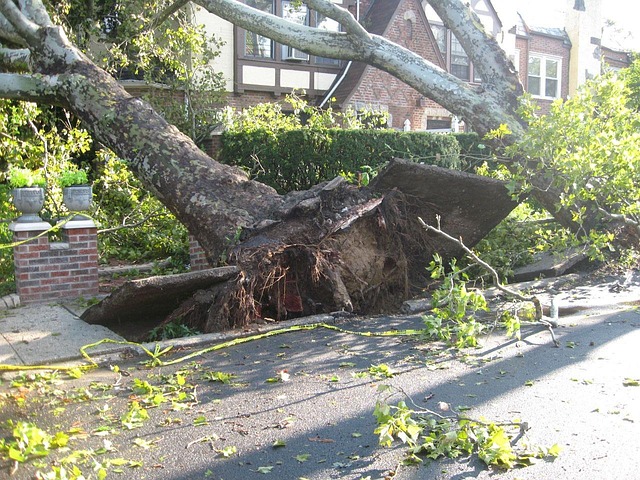
An uprooted tree, Source: Royalty free from pixabay
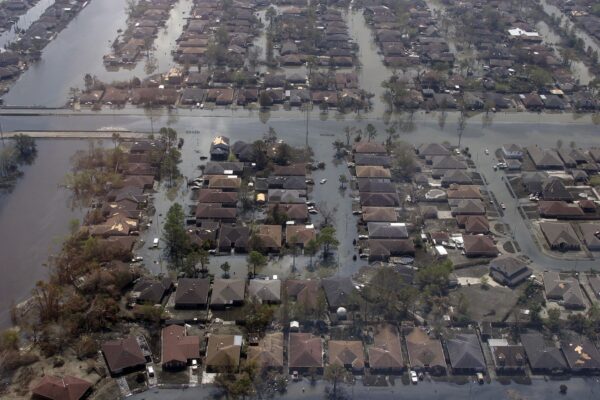
Next to data scarcity, there is a deeper conceptual issue: the impacts of climate extremes are heavily mediated by our society. The same event can produce radically different outcomes depending on social, economic, and institutional contexts. Housing quality, healthcare access, early-warning systems, and levels of inequality all shape how hazards translate into impacts, and how impacts are distributed across the population. The example of the heatwaves in France in 2003 and 2006 show the importance of early-warning systems and preparedness, while the flooding following Hurricane Katrina highlights how an event can lead to very unequal impacts in the same city. Moreover, societal climate impacts often emerge through cascading processes. Heavy rainfall may trigger landslides, disrupting transport networks. This may in turn limit access to medical care, with serious consequences unfolding well after the rainfall event itself. These interactions between physical and social systems are complex, context-dependent, and difficult to capture.
Projecting future impacts presents a further challenge. The steady development of climate models has enabled us to extensively simulate changes in physical hazards, such as the frequency and intensity of extreme heat, heavy precipitation or strong winds, under different future scenarios. Translating these projected hazards into meaningful estimates of future societal impacts, however, requires additional modelling steps, whose own assumptions and uncertainties compound those in the hazard projections. As a result, impact projections mostly remain limited to specific sectors – such as crop yield or temperature-related mortality – or regions, and struggle to provide integrated information comparable to the one on hazards that we obtain from climate models.
Despite these difficulties, we emphasize that new opportunities are emerging. Advances in machine learning and natural language processing offer ways to extract impact information from vast amounts of textual material – including news articles, reports, and government documents – that have previously been difficult to analyse systematically. There is also increasing work on deriving quantitative impact information from remotely sensed data, such as night lights, enabling to study regions with limited reporting and collection of impact data. In parallel with this, there is growing recognition that progress in understanding the genesis of climate impacts depends on genuine interdisciplinary collaboration between climate scientists, social scientists, experts in specific sectoral impacts and practitioners. This enables identifying common patterns and generalisable elements in the genesis of impacts, applicable across different contexts. Finally, we see a strong potential for innovation in projecting future impacts. Concrete examples include storylines of plausible future extremes and their impacts incorporating local knowledge and societal justice considerations, and the use of data-driven approaches for estimating future impacts of climate extremes. The latter have seen adoption in specific fields, such as for crop yield projections, but are yet to be widely implemented for climate-related societal impacts.
Without a clearer understanding of impacts of climate extremes, preparedness and adaptation efforts risk being poorly targeted or inequitable. Better impact science is essential not only for anticipating future risks, but also for evaluating whether current and planned adaptation measures are effective. Our central message is that we should seize the many methodological, technical and collaborative opportunities now emerging to achieve a breakthrough in the study of the societal impacts of climate extremes. As many climate extremes become more frequent or intense, we need to both project the climate hazards of the future and understand – and ultimately minimise – the detrimental impacts they will have on society.
The formulation of this text was refined using a large language model. The author remains the sole responsible for its content.
To dive deeper into the research, you can read the full open-access article here.
This post has been edited by the editorial board.
References

Messori, G., Boyd, E., Nivre, J., and Raffetti, E.: Challenges and Opportunities for Understanding Societal Impacts of Climate Extremes, EGUsphere [preprint], https://doi.org/10.5194/egusphere-2025-3451, 2025.

A Fouillet, G Rey, V Wagner, K Laaidi, P Empereur-Bissonnet, A Le Tertre, P Frayssinet, P Bessemoulin, F Laurent, P De Crouy-Chanel, E Jougla, D Hémon, Has the impact of heat waves on mortality changed in France since the European heat wave of summer 2003? A study of the 2006 heat wave, International Journal of Epidemiology, Volume 37, Issue 2, April 2008, Pages 309–317, https://doi.org/10.1093/ije/dym253

Augustine, L. A. (2025, September 3). Two decades later, the experience of Katrina continues to shape how the nation prepares for and responds to disasters. National Academies of Sciences, Engineering, and Medicine. Read the article