
Over on the Nature Methods blogs site, there are some interesting posts with advice for authors on how to prepare cover letters, rebuttal letters, appeal letters and the like. Here’s an example of ‘how NOT to write to an editor‘, based on a recent experience of mine. I shall let the author remain anonymous, but my hunch is that this is not an isolated example of this sort of beha ...[Read More]
GeoSphere
GeoPoll # 2 – What geologic attraction would you like to see most?
The first geopoll was a huge success!! I was completely floored by the overwhelming number of responses and the time and care people took to give their opinion. The results of the last poll showed, overwhelmingly, that field work is of paramount importance to a good geology education. In fact, the top two choices with 160 and 157 votes apiece both involved taking students to the field. The third p ...[Read More]
GeoLog
Imaggeo on Mondays: Quartz lawns and crystal flowers
Petrologists spend a large part of their time peering down microscopes at wafer thin slices of rock to work out what they’re made of and how they were formed. What lies on the other side of the lens can be an incredibly beautiful pattern, a kaleidoscope of colour, or stark bands of black and white, all of which provide clues to the rock’s history, and the history of the landscape it came from. Ber ...[Read More]
Seismology
Animation comparing earthquake magnitude and energy release
Seismologists sometimes find it hard to explain to the general public the significance of the earthquake magnitude scale with relation to the energy release. Here is a very nice animation comparing the relative energy release of some 20th and 21st century earthquakes by their moment magnitudes.
Geology Jenga
Rocks of the Earth – EGU 2014
For the first time in 2014 the EGU General Assembly had a theme: The Face of the Earth. A number of special displays and talks were arranged to celebrate the first themed meeting. Our very own Dan was heavily involved with one aspect of Face of the Earth; along with some colleagues, he manned the Rocks of the Earth stand at the conference center foyer. No doubt a number of you donated rocks to be ...[Read More]
GeoLog
How to share your science through film
This year was the first ever EGU Communicate Your Science Video Competition, an opportunity for young scientists to share their research with the wider public. It was also the first year to have a science film workshop at the Assembly – one to meet the needs of budding science communicators at the conference. Dan Brinkhuis from ScienceMedia.nl and Maarten Roos of Lightcurve Films set out to share ...[Read More]
WaterUnderground
Vote now for the coolest hydrogeology paper in 2013 contest!
Vote here before May 31st for the coolest 2013 paper in hydrogeology! Seven papers have been nominated – it will take almost no time! Here are links for more information about the contest or the Early Career Hydrogeologist Network.
GeoLog
GeoEd: We need to talk about evaluation
Say hello to Sam Illingworth, Young Scientist Representative, Science Communication Lecturer and education enthusiast! Sam will be making regular contributions to the GeoEd series, sharing his experience of science outreach with geoscientists, educators and the public at large. In his GeoEd debut Sam reports on the importance of evaluating outreach activities, one of the key areas covered in EGU 2 ...[Read More]
GeoLog
Imaggeo on Mondays: Light fantastic – flashing phenomena in Norway’s night sky
In this week’s Imaggeo on Mondays, Bjørn Gitle Hauge – from Østfold University College – opens our eyes to the astounding aurora borealis, and the unusual phenomena seen in Norway’s night sky… Hessdalen is a former mining district in the middle of Norway with huge ores of copper and mineshafts up to a kilometre deep. The climate here is sub-Arctic, with temperatures reaching as low as -50 de ...[Read More]
VolcanicDegassing
An 18th Century London Volcano
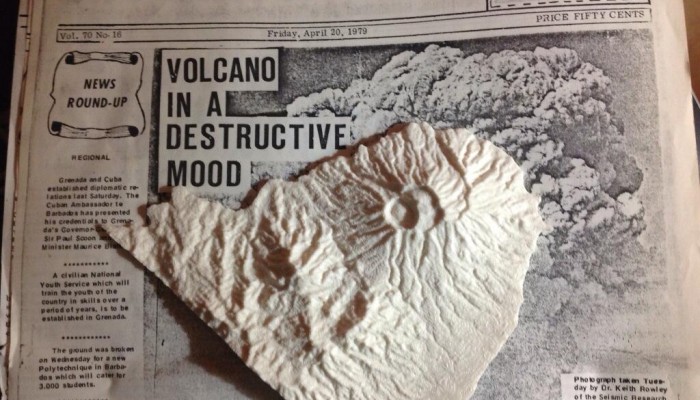
We are now just three weeks away from the launch of an ambitious public engagement project – ‘London Volcano‘. This will see us build a large scale-model of volcano on the front lawn of London’s Natural History Museum. This activity is all part of Universities UK Week 2014, and our aim is to highlight the work we are doing on ‘Strengthening Resilience in Volcanic Area ...[Read More]