
The Ten Minute Interview is a feature we will run regularly as part of our blog. Dan and I feel passionate about promoting the work of Early Career Researchers (ECRs) and also all the people behind the scenes who actually make research happen. The unsung heroes of our labs if you like; technicians and support …[Read More]
2110 search results for "researcher"
If you didn't find what you were looking for, try searching again.
Day 3 and 4 – Craters, Very Old Rocks, Fukushima and Extinctions
Here is my Goldschmidt summary part 3 comprising both day 3 and day 4. I had to prepare my own talk, that I gave on Thursday (day 4) so I had to put the blog on hold to practice. Here are a few of the most interesting talks that I went to: Fred Jourdan hailing …[Read More]
What’s Geology got to do with it? 1 – The Maya civilisation
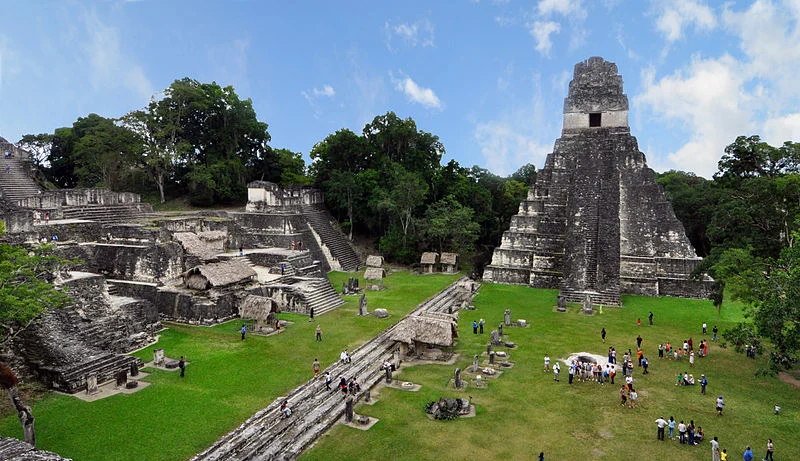
Geology is not just about looking at rocks. From finding oil and gas and tackling climate change to manufacturing, archaeology or geopolitics, geoscientists appear in most spheres of today’s world and economy, albeit often behind the scenes. In a new series of posts we will be looking at how geology relates to interdisciplinary or seemingly …[Read More]
Goldschmidt 2013 – Day 2 – Carbon, Uranium, Litigation and London
Day 2 of Goldschmidt 2013 is done and what a great day it was. Hectic, but conferences always are. There is just so much to see and do, so many people to talk to and so many people to meet for the first time that it can be a bit overwhelming. The best thing to …[Read More]
Ladies and gentlemen: the Rolling Stones
Racetrack Playa is a plain without vegetation of a dry located above the northwestern side of Death Valley, in Death Valley National Park, Inyo County, CA, USA (click here to see in Google Maps). Although “playa” is the Spanish word for beach, it is also used in English to refer to a dry lake. Racetrack …[Read More]
Vegetation research in Finnish Lapland: mountains, sunshine and reindeer
People started warning me about the mosquitoes back in April. It sounded grim. But when I arrived in Finnish Lapland in August, the mozzies had peaked earlier in the season when temperatures were unusually high, and were all dead. This was a fortunate escape: Miska Luoto of the University of Helsinki and his team of …[Read More]
Resource site for young scientists launched!
Early career researchers make up a large proportion of the EGU membership and students (both graduate and undergraduate) regularly make up about a third of General Assembly participants. With so many young scientists involved in the EGU, it’s time we had something that caters for them – the young scientists’ website! The new website is …[Read More]
Professionalism and Social Responsibility (5): Some thoughts on disseminating research
Over the past few weeks we’ve looked at a number of important factors concerned with being geologists that have a high degree of professionalism and social responsibility. These posts have included a number of practical tips on writing, preparing reports and undertaking fieldwork overseas and in different cultures. Today we explore the importance of disseminating …[Read More]
Supervisor profile – Professor Mike Kendall
Professor Mike Kendall Professor in Earth Sciences School of Earth Sciences, University of Bristol PhD (1992) “Contributions to the theory and modelling of seismic waves in anisotropic inhomogeneous media” Supervisor: Prof. C.J. Thomson 1) The Twitter challenge: Describe your PhD in 140 characters (if you can remember it) Developed theory and numerical methods to track seismic …[Read More]
Melting, microbes and methane: Are we about to face a carbon apocalypse?
Marion Ferrat takes a look under the frozen layers of Arctic permafrost and discusses how these soils may come back to haunt us. The vast plains of Siberian or Canadian permafrost are a sight to behold. Hundreds, sometimes thousands of miles of frozen soils cover these lands, a cold and barren environment. In places, however, …[Read More]