
Matt Herod has long been part of the EGU Blog Network, where he writes about all things geochemistry from his base in the University of Ottawa. In this week’s GeoTalk, we had the chance to talk to Matt about all the other science communication activities he’s been up to – from mentoring kids in Canada …[Read More]
2110 search results for "researcher"
If you didn't find what you were looking for, try searching again.
From synchrotron to super-volcano – buoyed up by magma
Devastating supervolcanoes can erupt simply due to changes that happen in their giant magma chambers as they slowly cool, according to a new study. This finding marks the first time researchers have been able to explain the mechanism behind the eruptions of the largest volcanoes on Earth. Geologists have identified the roots of a number …[Read More]
Guest Post: Hilary Dugan – Ice as a platform for understanding lake ecosystems
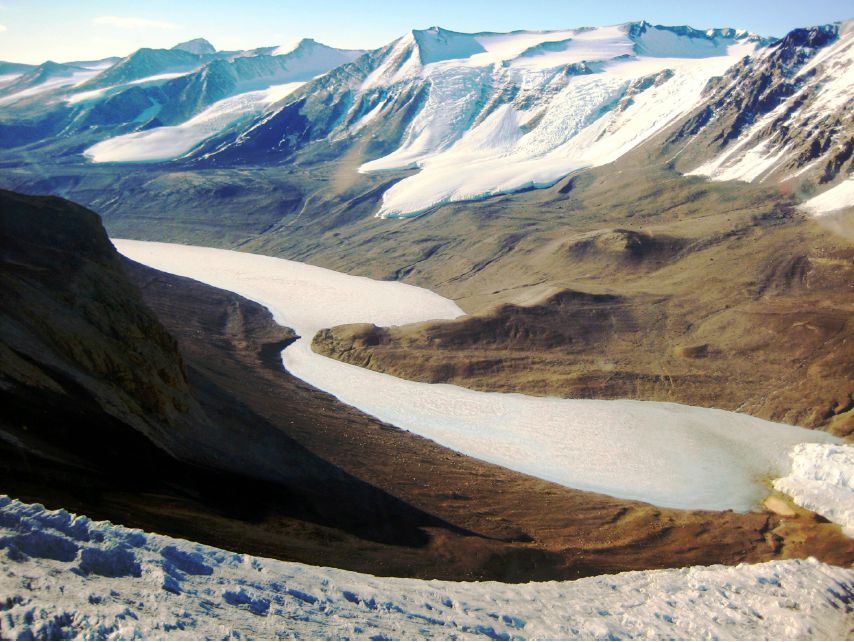
Today we have a new guest post written by current PhD candidate and Antarctic researcher on her very fascinating field work. Actually, she wrote this post while at McMurdo station. Hilary and I have known each other since our time at Queens University in Kingston, when she was one of my TA’s and was doing …[Read More]
My year in 2013
Inspired by Martin Eve (link), I decided to make a documentation of academic-related stuff I’ve achieved in 2013. The last year was mostly occupado by the first year of my PhD, but other academic-ish stuff too as complimentary activities to research. This is kinda like a personal diary of ‘achievements’, as well as a documentation …[Read More]
Geoscience under the tree
In a festive-themed post, EGU Media and Communications Manager Bárbara Ferreira selects a plethora of geoscience-inspired Christmas presents, which you could give to your favourite researcher. Please note that, with the exception of the last one, the items listed below are not necessarily recommended or endorsed by the EGU. For me Christmas is more about …[Read More]
From mud to moai statue: lake sediments reveal new insights into Easter Island colonization
The small landmass of Easter Island (164 km2), the southeasterly point of Polynesia in the Pacific Ocean, has achieved iconic status in the world today as people wonder how its colonisation was physically possible by settlers journeying through the vast ocean in tiny boats, how and why the enormous moai s were constructed and, most …[Read More]
Registration for the EGU 2014 General Assembly is open!
The EGU General Assembly brings together geoscientists from all over the world to one meeting that covers all disciplines of the Earth, planetary and space sciences. This year, the conference will have a theme: The Face of the Earth. Much like a human face, our planet exhibits a huge diversity of shapes and forms. This …[Read More]
Snacking on climate
ClimateSnack is a new initiative for early-career climate scientists around the world to improve their writing and communication skills. Snackers get to write tasty climate blogs and discuss them in a friendly and interactive environment. Marion talked to three members of the Imperial College London group for the latest issue of GeoQ! Good written and …[Read More]
Seeking young scientists! A great opportunity to get involved in the EGU
Young scientists make up a significant proportion of the EGU membership and it’s important to us that your voices get heard. One way to do this is by getting in touch with your division’s young scientist representative, or better yet, putting yourself forward as a young scientist representative for your division. Young scientist representatives are …[Read More]
I need your clothes, your boots, and your copyright.
James Lewis is a PhD student at Imperial College London in the field of Planetary Geochemistry. When not blowing up gas cylinders, or hunting for jarosite, he can be found wandering the streets of London as an amateur photographer. James also suffers from Thesisitis, a common condition among third-year PhD students. He can be found …[Read More]