
The call for sessions for the General Assembly 2016 are now open. We invite you, from now until 18 Sep 2015, to take an active part in organizing the scientific programme of the conference by suggesting new sessions or getting involved with those in the skeleton programme. In particular we would like to encourage Early …[Read More]
6000 search results for "6"
If you didn't find what you were looking for, try searching again.
Need support? Check EGU Meetings Support for 2016
Are you planning to host a meeting, workshop or training school, but need some support? Check out the EGU Meetings Support scheme for 2016. *** The EGU welcomes proposals for Topical Meetings, Training Schools and Workshops, as well as applications for EGU Sponsorship of External Meetings, for the year 2016.Successful proposals result in high profile …[Read More]
6th Young Geomorphologists’ Day in Cagliari/ Sardinia
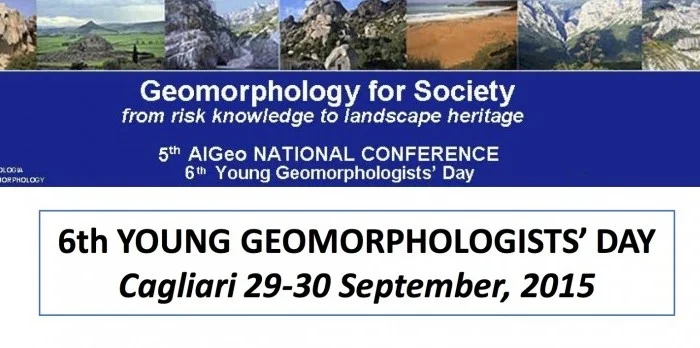
The Italian Young Geomorphologists represented by Irene Bollati and Francesca Vergari invite you to join their event in September 2015. We are happy to announce the 6th Young Geomorphologists’ Day that will be held in Cagliari (Sardinia, Italy) on 29th September 2015. The Event is specifically dedicated to young geomorphologists’, for sharing results of their scientific researches. Any contribution in …[Read More]
Images of Guatemala (6) – Some Impacts of Agriculture
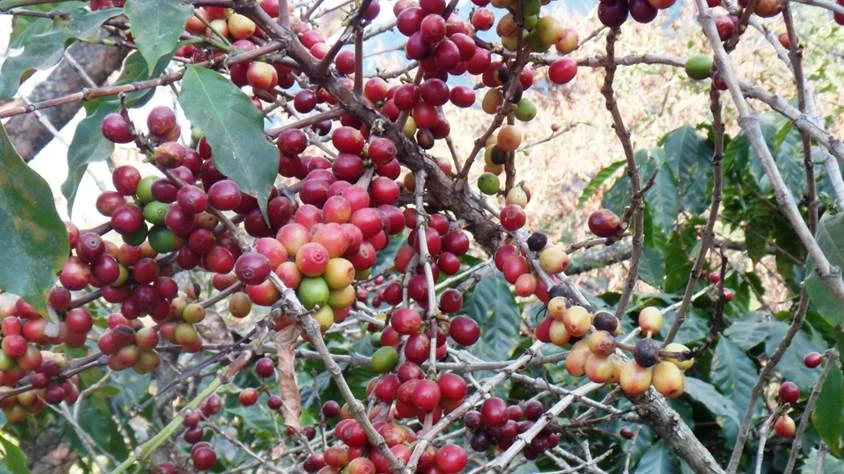
(Credit: Geology for Global Development, 2014) This truck load of sugar cane was one of many observed on this stretch of road from Antigua leading to a volcanic observatory around the volcano Fuego. Agriculture – notably sugar and coffee – in Guatemala is highly significant in many respects, bringing benefits such as exports and jobs. There …[Read More]
Alumnus profile #6 – Dr Sam Engwell
Dr Sam Engwell Marie Curie Early Stage Researcher, INGV PhD title “Dynamics and Deposits of Large Explosive Eruptions” 1) The Twitter Challenge: Describe your PhD in 140 characters Investigation of eruption processes during supereruptions by analysis of deposits in deep-sea sediments.
Connecting European connectivity research (COST Action ES1306)
Saskia Keesstra E-mail: saskia.keesstra@wur.nl Deputy President of the Soil System Sciences Division of the European Geosciences Union Why connecting connectivity research? Successful prediction of pathways of storm runoff generation and associated soil erosion is of considerable societal importance, including off-site impacts such as water quality and the provision of related ecosystem services. Recently, the role of connectivity …[Read More]
Friday Photo (126) – Nyoma Residential School (Ladakh)
GfGD, IERT (University of Jammu), and Teachers/Students from Nyoma Residential School A post-teaching photograph in the heart of the Indian Himalayas, with the Indus River in the background. Students had recently undertaken a one-day course on glaciers and climate change, landslides and earthquakes. Read more about the project in a collection of posts with this …[Read More]
The home of our hearts, Cape Breton – A transformative professional experience with the Canadian Water Network (Part 1 of 6: prologue)
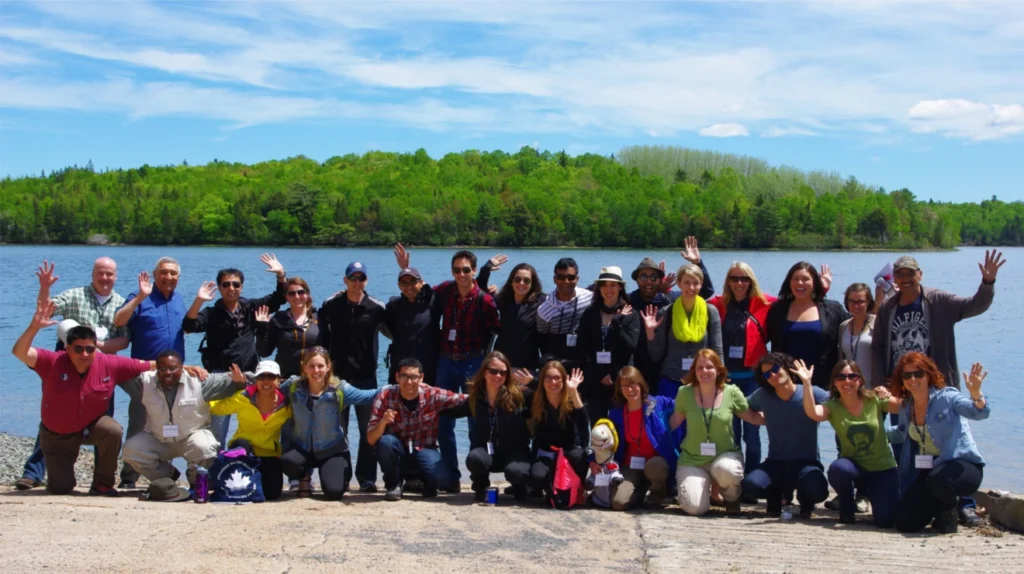
Prologue [part one of a special six-part blog series by Mark Ranjram, MEng student at McGill University. From June 8 to June 13 2014, Mark had the privilege of being a part of the Canadian Water Network’s (CWN) Student and Young Professionals (SYP) Workshop in Cape Breton Island, Nova Scotia] Let me start this series …[Read More]
GfGD in the Himalaya (6) – Student Posters
As part of the geology education programme, run in Leh on 20-21st June, students were invited to produce a poster reflecting one of the core themes of the event (energy, natural resources, climate change, geohazards and disasters). The topics of climate change global warming were the most popular selected by students. Here is a small …[Read More]
Science Snap (#26): Angel Falls, Venezuela
Sorcha McMahon is a third year PhD student in the School of Earth Sciences at the University of Bristol. Sorcha is investigating how strange igneous rocks called carbonatites may have formed, using both natural samples and high-pressure experiments. Angel Falls is the world’s highest uninterrupted waterfall in the Canaima National Park, a UNESCO World Heritage …[Read More]