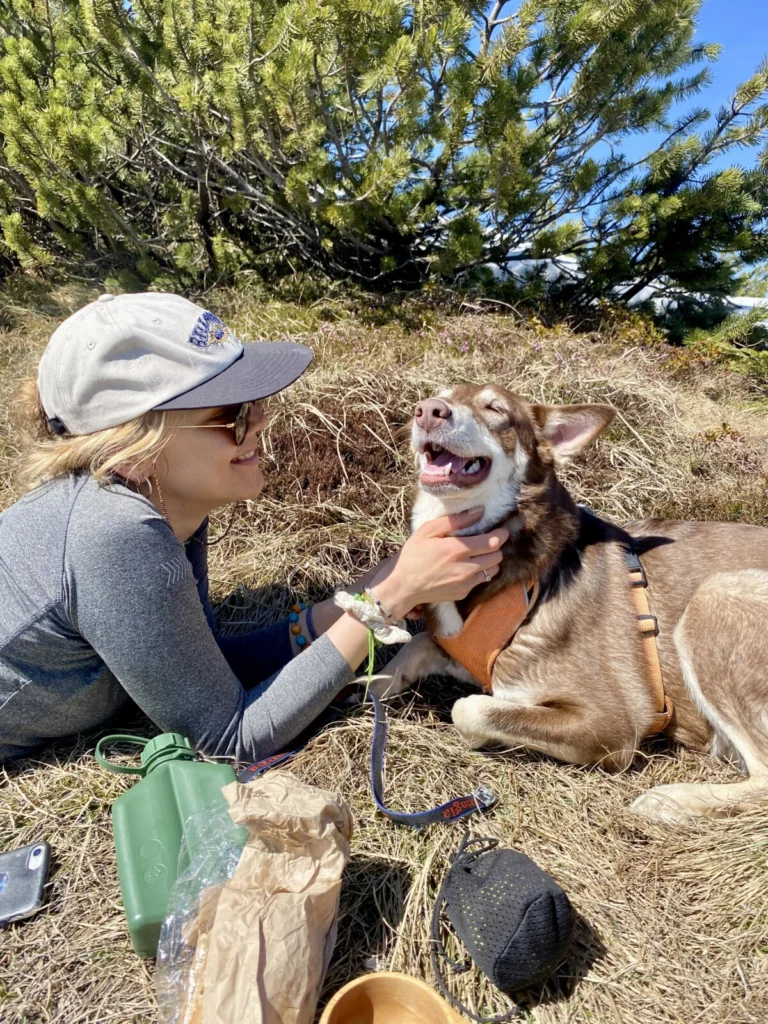
Next time you’re outdoors, in a park or anywhere where there is no pavement, look down at the patch of earth beneath your feet. To many people, it’s just mud, dirt, or maybe soil, something passive that things grow in. But to a soil scientist, that handful of soil represents a dynamic ecosystem that supports an incredible 95% of all the food we eat, filters every drop of our drinking water, ...[Read More]
If you didn't find what you was looking for try searching again.
Geodesy
Beyond navigation: How GNSS reveals Earth’s hidden secrets
Part 1 – the global case When you check directions on your smartphone or track your morning run, you’re tapping into a global infrastructure that has revolutionized not just navigation, but our understanding of Earth itself. What began as military technology has evolved into powerful scientific tools that confirm longstanding theories and reveal previously unobservable phenomena. In th ...[Read More]
Hydrological Sciences
ROBIN: Tracking Climate Change Through the World’s Most Natural Rivers
Hydrological change is one of the clearest signals of climate variability and human impact on the environment. Yet detecting these changes reliably requires robust, long-term data from river basins that are as close to “natural” as possible, with little influence from dams, abstractions, land use change or any other human influences. That’s where the ROBIN project comes in. ROBIN, or the Referenc ...[Read More]
Solar-Terrestrial Sciences
A talk with scientists across Europe: building the future of European heliophysics together
“Heliophysics studies the Sun, its sphere of influence, and how it affects the bodies in the solar system.” – this holistic approach to understanding our space environment is at the heart of the European Heliophysics Community (EHC), an open and inclusive network of researchers across Europe (https://www.heliophysics.eu/). The EHC promotes collaborative, curiosity-driven science that explore ...[Read More]
GeoLog
On LGBTQIA+ Challenges and Allyship in STEM
During November, several important dates are recognised, including the International LGBTQIA+ in STEM Day on November 18. This month is also designated as Transgender Awareness Month, culminating in the recognition of Transgender Day of Remembrance yesterday, November 20. In celebration of our LGBTQIA+ community, this blog highlights some of the activities we undertook throughout the last year. Be ...[Read More]
GeoLog
It’s more than just a date: Unpacking the importance of the International Day of LGBTQIA+ in STEM – Perspectives of a queer woman in science
We cannot solve the world’s most complex problems, from climate change to curing disease, if scientists must leave parts of themselves at the laboratory door. This is a reality that we must acknowledge in Science, Technology, Engineering, and Mathematics (STEM). The demand for conformity, the fear of judgment, and the reality of discrimination act as invisible barriers that can limit innovat ...[Read More]
GeoLog
Making earthquakes understandable: How “Near Me” search behavior can guide better risk communication
When a tremor shakes the ground, the first thing many people do isn’t check a scientific database: they reach for their phone. Within seconds, searches like “earthquake near me” surge across Google. This simple phrase captures something profound: a universal need not to understand seismic mechanics, but to know “Am I safe?” Over the past few years, this “near me” framing has quietly reshaped how t ...[Read More]
Cryospheric Sciences
Geysers, Geese, and Graph Neural Networks: Impressions from the Glaciology in Machine Learning Summer School (GlaMacLeS)
An isolated, idyllic, and inspiring setting in the gorgeous Centennial Valley of Montana, where nothing pulls your attention from the task ahead, a motivated group of PhD students and postdocs in glaciology, and five energetic lecturers: the perfect combination for tackling the ambitious challenge of exploring the interface between glaciology and machine learning. Who wouldn’t learn well here, esp ...[Read More]
Atmospheric Sciences
“You Can’t Get Around Clouds”: A Conversation with Climate Scientist Ulrike Lohmann
Prof. Dr. Ulrike Lohmann is a leading atmospheric physicist and climate scientist at ETH Zurich’s Institute for Atmospheric and Climate Science, renowned for her pioneering work on clouds, aerosols, and their interactions within the Earth’s climate system. Her research has significantly advanced our understanding of how microscopic particles influence cloud formation and, in turn, the global ...[Read More]
Climate: Past, Present & Future
20 years of Climate of the Past: A journey through two decades of paleoclimate research
Twenty years ago, a small group of scientists set out to create a journal dedicated entirely to understanding Earth’s climate history. That journal, Climate of the Past (CP), was launched in 2005 as an international open-access journal of the European Geosciences Union (EGU), and over the past two decades it has become a cornerstone for the paleoclimate community. From geological eras to the last ...[Read More]