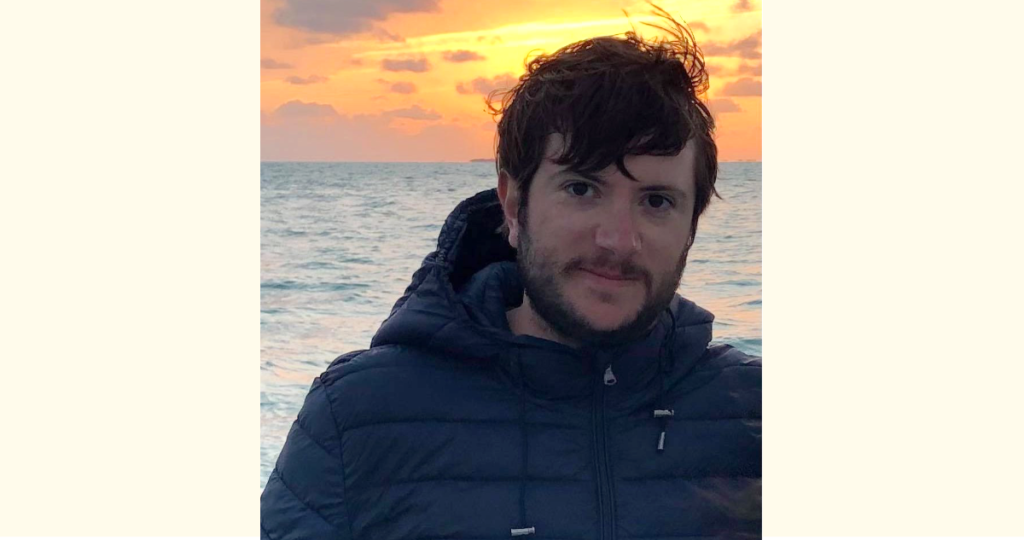
In this week’s blog, Garima Shukla, ECS representative of the Geodynamics Division and PhD student at the Indian Institute of Science Education and Research, Bhopal, India, working with Dr. Jyotirmoy Mallik, discusses her research involving fieldwork and statistical calculations. Her research also delves into rock magnetism and palaeomagnetism to unravel the longstanding enigmas surrounding ...[Read More]
GeoLog
Imaggeo On Monday: Connection to the deep crust
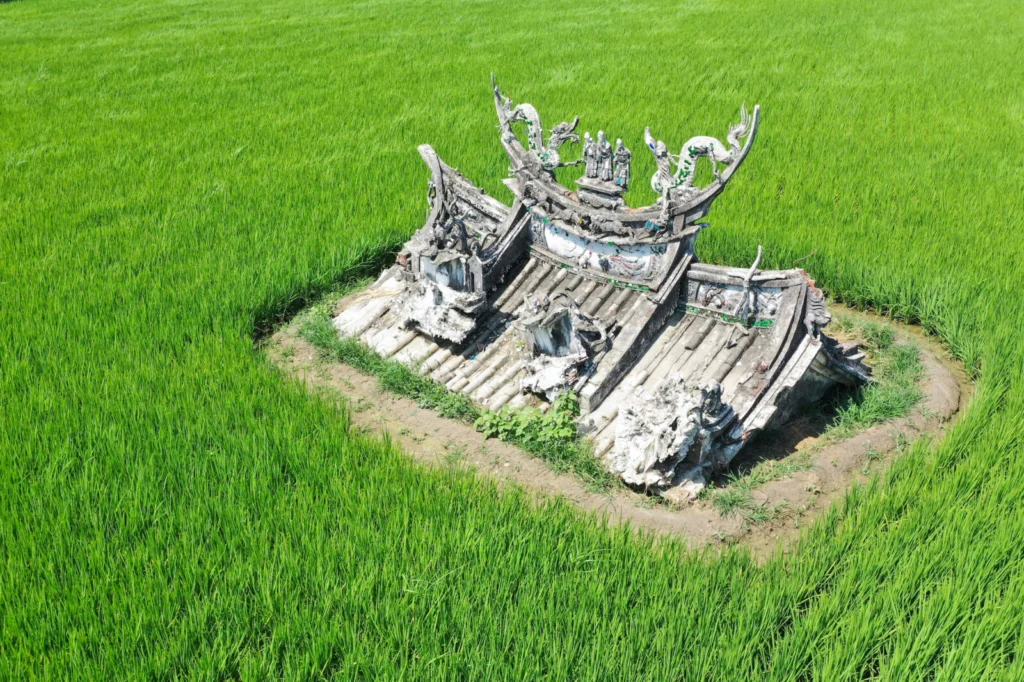
This year for the EGU24 Photo Competition we had some amazing photos submitted! In case you missed them before the meeting, for the next few weeks we will be featuring all 10 of the shortlisted photos, and our three winners! This week, Alberto Caracciolo’s image ‘Connection to the deep crust‘. The 2021 Fagradalsfjall volcanic eruption was the first one in the area after ap ...[Read More]
GeoLog
GeoTalk: Meet Dan Evans, the new Early Career Scientist Union Representative!
Hello Dan. Thank you for agreeing to this interview! Before we dig deeper, could you tell our readers about yourself and your career background in soil science? Absolutely, Simon, thank you so much for inviting me to this interview. Well, one of my earliest memories is being in the garden, ripping up the grass to poke my fingers into the soil beneath. That curiosity has fuelled a life-long passion ...[Read More]
Geodynamics
Two phase or not two phase
In this week’s blog Shi Joyce Sim from Georgia Institute of Technology shares the underlying science behind two-phase flow dynamics. A talk at the Lunar and Planetary Science Conference in March got me thinking. Basically, the presenter described how boundary layers grow over time, a phenomenon that cannot be captured using one dimensional models and necessitates modeling in higher dimensi ...[Read More]
GeoLog
Chasing solar storms and coffee breaks
Erika Palmerio, a leading early career scientist working on conditions in space driven by solar activity, shares her journey of networking and inspiration.
Natural Hazards
Evolving multi-hazard paradigms in a nutshell
Understanding multi-hazard approaches is crucial in an era of escalating natural hazards leading to disastrous impacts on Earth’s citizens. Triggered by the increasing frequency and severity of these events, this brief post provides a concise yet comprehensive overview of evolving paradigms in multi-hazard research and management. By exploring definitions, historical developments, and curren ...[Read More]
GeoLog
The EGU Science-Media Toolkit: your guide to overcoming science communication limbo!
Your research deserves recognition beyond your peer-reviewed paper. While academia is often considered the hallmark for knowledge generation, the dissemination of your work should take further steps so that your scientific research can reach the people it is meant to help. Because your audience may not always be experts in your field and may require simplified explanations of your science, EGU is ...[Read More]
Cryospheric Sciences
Cryo Comm – Explaining ice core science with “cool” educational videos
Mastering the art of science communication is becoming more and more important, especially in the realm of climate science! Training and practice can really help PhD students acquire this skill. With this in mind, the DEEPICE project, a training network of 15 PhD students, has developed a wide range of activities to train the DEEPICE students, including the creation of a series of educational vide ...[Read More]
Geochemistry, Mineralogy, Petrology & Volcanology
GMPV Campfires – Call for Speakers
GMPV Campfires – Call for Speakers The EGU Geochemistry, Mineralogy, Petrology and Volcanology ECS committee are currently looking for early career scientists to present at and attend our monthly online talk series (EGU Campfires). The EGU Campfires are a free one-hour online seminar consisting of three to four 10-12-minute talks. These quick-fire presentations give you an opportunit ...[Read More]
Geodynamics
Biogeodynamics – Let’s model the entire world!
All models are wrong, but some are useful – we all have heard this quote. But it raises several questions (including but not limited to) – What would a model of the entire world look like? Can you couple geodynamical models with climate and biological evolution models? Would these models be useful? In this week’s blog post, Timothy Gray, a PhD student from ETH Zürich is looking for ans ...[Read More]