EGU Blogs

Division blogs

BG
Biogeosciences

Why did the Amazon forest become a CO2 source in 2023?

Why did the Amazon forest become a CO2 source in 2023?
When simulations help highlight an anomaly, scientists who are curious commit to dig deeper, and of course when resources but most importantly data is available, you get good science. In the third episode of the EGU Biogeosciences Division podcast series Bikem Ekberzade talks with Santiago Botia to look at the story behind a recent study that was published in AGU Advances. You can listen to the po ...[Read More]

NH
Natural Hazards

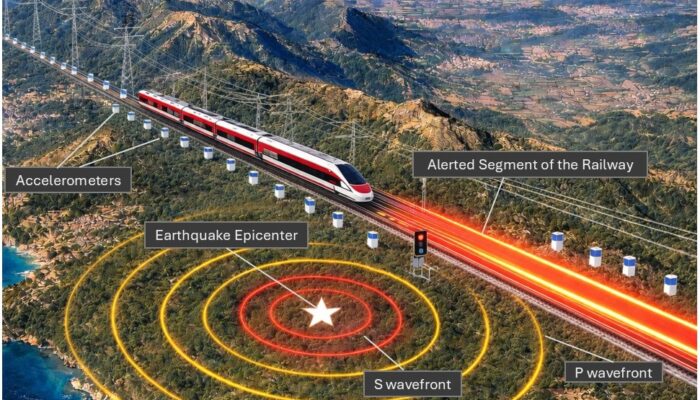
From Seismic Signals to Safer Trains: Italy’s First Earthquake Early Warning System for High-Speed Railways

From Seismic Signals to Safer Trains: Italy’s First Earthquake Early Warning System for High-Speed Railways

Earthquakes remain among the most disruptive natural hazards worldwide, capable of causing sudden loss of life, severe economic damage, and long-lasting societal impacts. One of the most effective tools developed in recent decades to mitigate these effects is Earthquake Early Warning (EEW), a real-time monitoring strategy that exploits a fundamental physical property of earthquakes: seismic waves ...[Read More]

CR
Cryospheric Sciences

Memories from the Field – The Vastness of the Greenland Ice Sheet

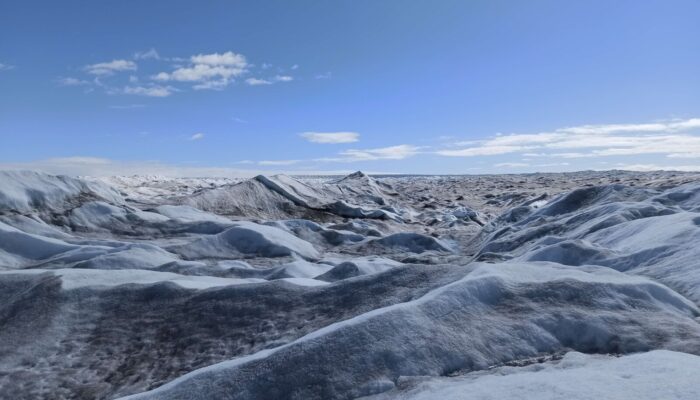
Below a clear blue sky, ridges of ice undulate towards the horizon in stripes of white, blue, and black.

I remember the day very well. It was the first time we drove up to the glacial ice from our base station in Kangerlussuaq (Western Greenland), where we had patiently been waiting for two days for the  weather to clear.  I took this photo during a three-week fieldwork campaign in July of 2025 as part of the Deep Purple project. As part of the project, we were in the field to collect glacial ice-alg ...[Read More]

GM
Geomorphology

Highlighting: Martian Geomorphology (Interview with Lauren Mc Keown)

Highlighting: Martian Geomorphology (Interview with  Lauren Mc Keown)

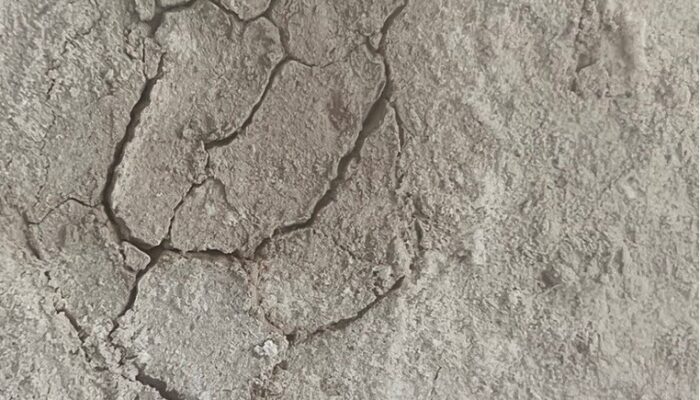
This blog post is part of our series: “Highlights” for which we’re accepting contributions! Please contact Emma Lodes and Anna van den Broek (GM blog editor, elodes@asu.edu, a.j.vandenbroek@uu.nl), if you’d like to contribute on this topic or others.  by Lauren Mc Keown, Assistant Professor – University of Central Florida. Email: Lauren.Mc.Keown@ucf.edu. Website: http://www.laurenemckeown.co ...[Read More]

HS
Hydrological Sciences

Hydrotalks: IAHS working group leaders and coordinators on HELPING scientific decade, working groups activities, and writing community papers

Hydrotalks: IAHS working group leaders and coordinators on HELPING scientific decade, working groups activities, and writing community papers

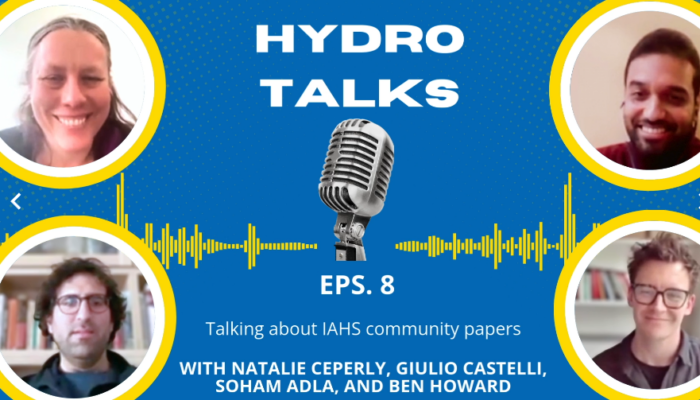
In episode 8 of the Hydrotalks podcast, we hosted four coordinators of  working groups of the HELPING hydrological decade. We warmly welcomed Dr. Giulio Castelli (University of Florence) and Dr. Natalie Ceperley (University of Bern), group co-leaders of Co-Creating Water Knowledge working group; Dr. Soham Adla (ING Bank, Netherlands), a coordinator of Science communication, outreach, and promoting ...[Read More]

TS
Tectonics and Structural Geology

Tuna and Tufo: The geology and history of the Aegadian Islands near Sicily

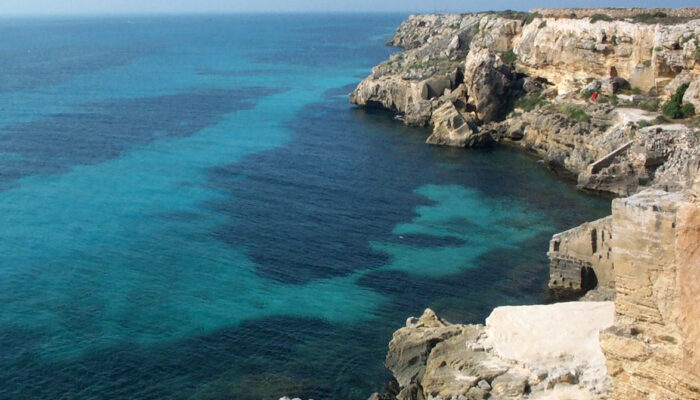
an image of a sea cove with rugged rocks to the right and bottom right of the image and clear blue sea water to the left and upper left of the image

The Aegadian or Egadi islands (not to be confused with the Aegean islands situated between present day Greece and Türkiye) is a small archipelago of islands around 20 km off the Western coast of Sicily. These islands are most known for their historic industries, namely for a type of rock quarried from the largest island (Favignana) and the large tuna fishery around the island. In recent times this ...[Read More]

GD
Geodynamics

Under pressure: measuring stress within the crust

Under pressure: measuring stress within the crust

At the geodynamic scale, tectonic forces guide the distribution of stress. Stress in the Earth is not constant, but varies through space. Variations in gravitational energy caused by changes in mass distribution within the Earth, forces acting at plate boundaries, and basal mantle drag all cause stress to vary and act in different directions. Overall, stress plays a key role in tectonics. It allow ...[Read More]

CL
Climate: Past, Present & Future

Inside the Baltic Sea N2O Hunt: Tracing Sources using Isotopic tools

Inside the Baltic Sea N2O Hunt: Tracing Sources using Isotopic tools

Nitrous oxide (N2O), commonly known as laughing gas, is one of the most important greenhouse gases, and its rise in the Anthropocene significantly contributes to global warming and depletion of stratospheric ozone. The marine environment, especially coastal and marginal seas, is an important (about 25%) contributor to the global atmospheric source of N2O. Nitrous oxide is primarily produced in mar ...[Read More]

AS
Atmospheric Sciences

Why “Perfect” Infrared Spectrometers Are a Myth – and Why That Matters for Atmospheric Measurements

Why “Perfect” Infrared Spectrometers Are a Myth – and Why That Matters for Atmospheric Measurements

Modern atmospheric science relies on precise and stable measurements to understand how the composition of the atmosphere evolves over time. From air quality to climate-relevant trace gases, long-term observations are essential for identifying trends and detecting subtle changes. One of the key tools enabling such measurements is infrared spectroscopy, which allows scientists to identify and quanti ...[Read More]

ST
Solar-Terrestrial Sciences

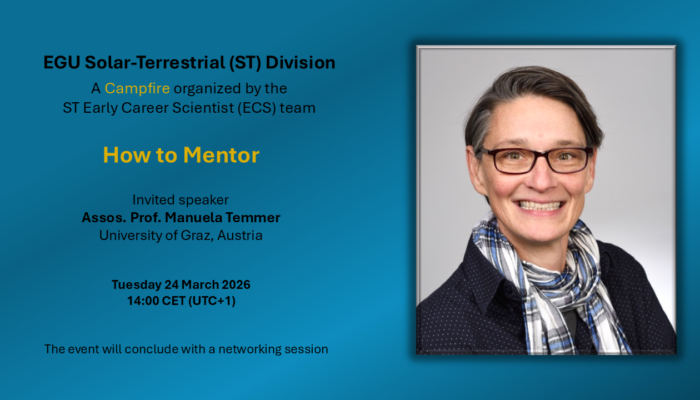
ST-ECS Networking Campfire: “How to Mentor”

ST-ECS Networking Campfire: “How to Mentor”

In academia, success is often measured with quantifiable outputs such as publications, grants, and awards. On the other hand, the challenging road leading to this success is not something discussed openly. The relationship we build with our colleagues, the support and guidance we receive from mentors and supervisors are important factors affecting our success as individuals and as a community.  Me ...[Read More]