
In a post two months ago, I promised that I’d keep you updated with how my research is progressing. Needless to say, I’ve done a pretty poor job of that, unless you follow me on Twitter! I must apologise – the workload while travelling was severely under-estimated, and I’ve barely had time to catch a nap. I’m writing to you now from Lyon, where I finally had a day off in about a month to explore the Basilica and Roman amphitheater ruins here, and am now nestled in a snug pub hammering away at a manuscript!
The underworld thief returns from the dead
So I don’t normally blog whenever a new dinosaur pops out the pages, but a new one, Acheroraptor temertyorum received quite a welcome back to the living world with this exquisite illustration by Danielle Dufault. I’ve asked for her permission to post on here, and it’ll appear on the front cover of Naturwissenschaften (December issue, probably), so defo worth checking out a hard copy!
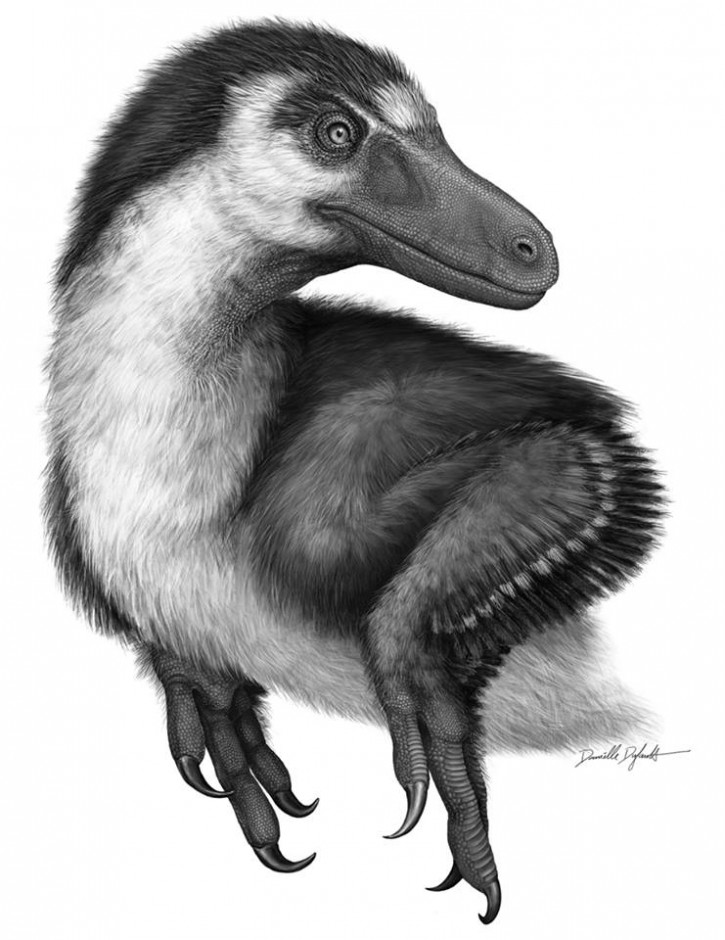
Acheroraptor, in all its glory (click for larger, or email Danielle!)
I need your clothes, your boots, and your copyright.
 James Lewis is a PhD student at Imperial College London in the field of Planetary Geochemistry. When not blowing up gas cylinders, or hunting for jarosite, he can be found wandering the streets of London as an amateur photographer. James also suffers from Thesisitis, a common condition among third-year PhD students. He can be found on Twitter as @jmtlewis.
When I was applying for PhD projects two and a half years ago I found it slightly frustrating that no one could give me a definitive description of what a PhD is like. There was no single answer as to what the challenges would be or the timescale at which practical work and writing up would play out or what was expected of me. Now that I’ve just become a third year student I’ve come to realise that there’s a reason for this. A PhD project has so many variables: the nature of your supervisor; the department; lab work; field work; modelling, and so on. New postgraduate research students can’t be given a rigid road map for their entire project because generally in the space of a few weeks or months things will change so much that the original plans will be almost meaningless. If you’re just starting out with your project don’t let this scare you but embrace the fluidity of academic research. While it’s important not to stray too far from your core project aims some of the most interesting and publishable work comes about when people explore why something didn’t work or following up an unanswered question identified through reviewing the literature.
Theropod skulls: a note of caution
Morphometrics is a horrible word, but refers to a technique that is gaining increased traction in palaeontology in recent years. It essentially is a way of measuring anatomy, or specific aspects of anatomy. An extension of it is called geometric morphometrics, and this relies on using co-ordinate points on fossils to analyse things like shape variation.
The newly minted Dr Christian Foth had a study out earlier this year that did a kind of meta-analysis of morphometrics, using theropod skulls (the group including dinosaurs like T. rex and Troodon, as well as modern birds) as an example. A lot of research has gone into using morphometrics to look at patterns in theropod skull variation through time, as looking at these evolutionary patterns is not only awesome, but can also tell us about their ascent to success through time.