
Ruzi Mohammed thinks that he is around 110 years old. He keeps track of the years using the changing seasons, and there is no missing them in Turtuk, where winters reach -20˚C, and summers are warm and pleasant. Too high for mosquitos, and low enough for a good harvest, Turtuk is a paradise in the summer. The winter is survived by shutting down, almost hibernating, and surviving on wheat mixed wit ...[Read More]
Green Tea and Velociraptors
Geology beyond science
This was originally posted at: http://www.nature.com/scitable/blog/earthbound/geology_beyond_science So people who read this blog (*one person cheers off in the distance*) may have noticed that my partner-in-crime, Jane Robb, recently abandoned me to the fusty claws of Nature. *sniff* Fear not though! Jane is pursuing awesome things now with the European Geosciences Union, the other organisation I ...[Read More]
GeoSphere
Back to Basics on Groundwater
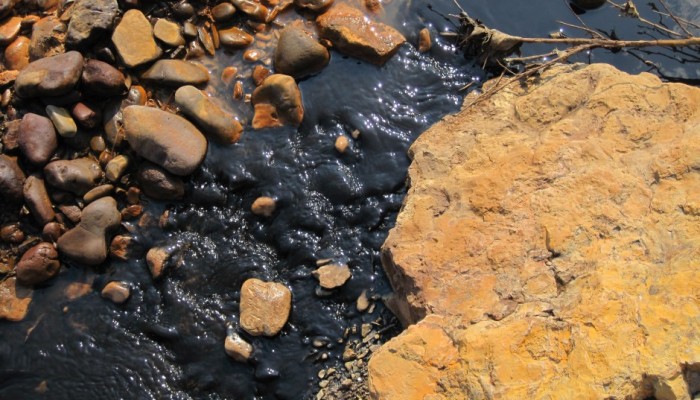
When many people hear the word groundwater they imagine a raging underground torrent of water flowing along a pathway called an aquifer. Well, sorry to disappoint you, but you could not be more wrong about how groundwater exists and flows. In this post we will discuss the very basics of groundwater science (hydrogeology) and flow. What is groundwater? As the name implies groundwater is simply wate ...[Read More]
Geology for Global Development
Blog Competition (1st Prize) – Robin Wylie: Hydro in India, a Dark Side to the Green Solution
For our Blog Competition 2013, we asked for people to submit articles addressing one of two topics. Robin’s article on the recent floods in Utttarakhand State, India, won first prize in its category. Robin Wylie studied geophysics at the University of Edinburgh, and then spent some time working at a volcanic observatory in Hawaii before starting his Master’s in Earth and Atmospheric Physics ...[Read More]
Between a Rock and a Hard Place
Abbreviated science
KFC, MTV, BP, BBC, NASA, NHS, UNICEF, FIFA…combinations of letters that are known the world over. These famous examples demonstrate the power of the acronym, a word formed from the initial components of a series of other words. You may have noticed that acronyms in science seem to be everywhere. No grant proposal, research group or society is complete without the obligatory ‘humorous&# ...[Read More]
Green Tea and Velociraptors
So you want to be a palaeontologist..?
Well, according to Sesame Street, all you need to do is sing the palaeontologist theme song! So forget studying, research, and years of training. Actually, it is pretty cool – it does show this; all you need to do to become a palaeontologist is have a fascination for the natural world, and get your hunting hat on! Found at: http://koprolitos.blogspot.it/2013/09/sesame-street-pa ...[Read More]
Geology for Global Development
Friday Photo (96): Landslides on the Jammu-Srinigar Highway
Professors from Jammu University assess a landslide on the edge of the Jammu-Srinigar Highway. This essential supply route links the mountainous Himalayan Region up with the rest of Jammu & Kashmir State. Landslides are a common problem along this busy road, used by lorries, business and the military, as well as forming part of an important pilgrimage route . (c) Geology for Global Development ...[Read More]
VolcanicDegassing
Friday Field Photos: Eruptions at Lokon-Empung volcano, Indonesia
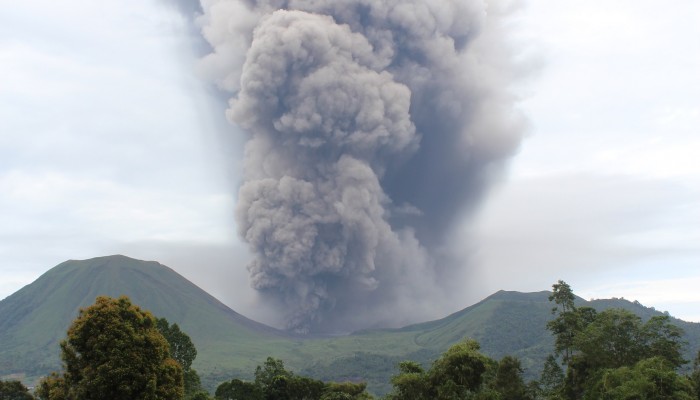
This week I am at a workshop near the twin-peaked volcano Lokon-Empung, in Sulawesi, Indonesia. True to form (it is the most active volcano in Sulawesi), Lokon has been rather active, with fairly frequent small explosions forming some small but dramatic ash plumes. The active vent is not at the summits of either Lokon, or Empung, but instead at the crater called Tompualan, which lies in the saddle ...[Read More]
Four Degrees
What’s all the Phos about?
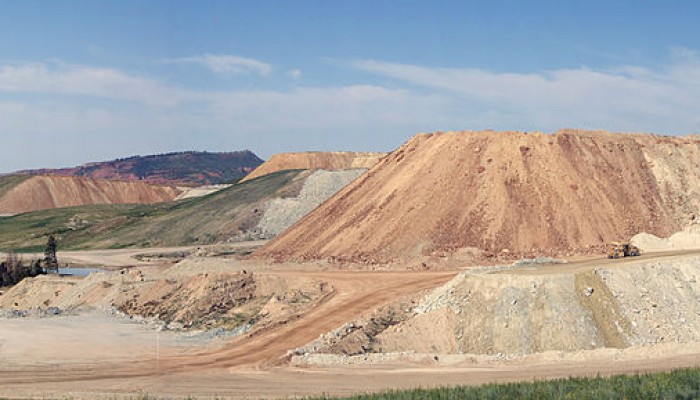
Phosphate use for fertilisers, essential in modern agriculture, is hitting an all time high while resources are being heavily depleted. Flo discusses the background, numbers, geopolitics and potential solutions behind the issue of ‘the end of phosphorus’. The Issue The dilemma over diminishing natural resources is a topic of our times with the daily bulletins filled with reports relate ...[Read More]
Between a Rock and a Hard Place
Science Snap (3): Earth’s biggest volcano?
James Hickey is a PhD student in the School of Earth Sciences at the University of Bristol. A geophysicist and volcanologist by trade, his PhD project is focussed on attempting to place constraints on volcanic unrest using integrated geodetic modelling. The newly discovered submarine Tamu Massif (pictured below), approximately 1500 km east of Japan, has been proposed as the wo ...[Read More]