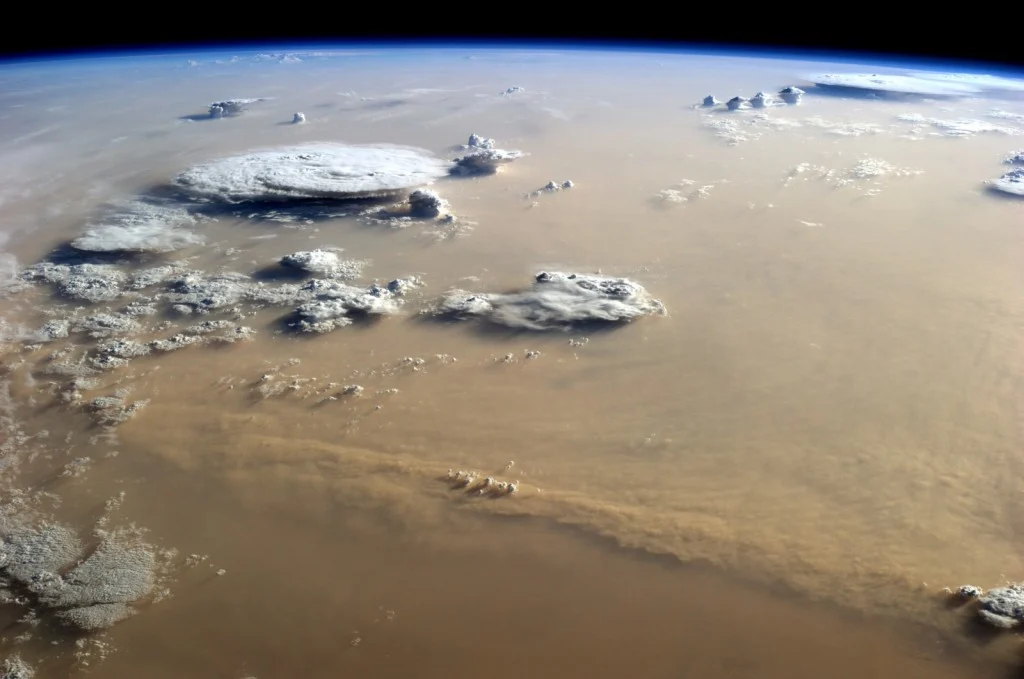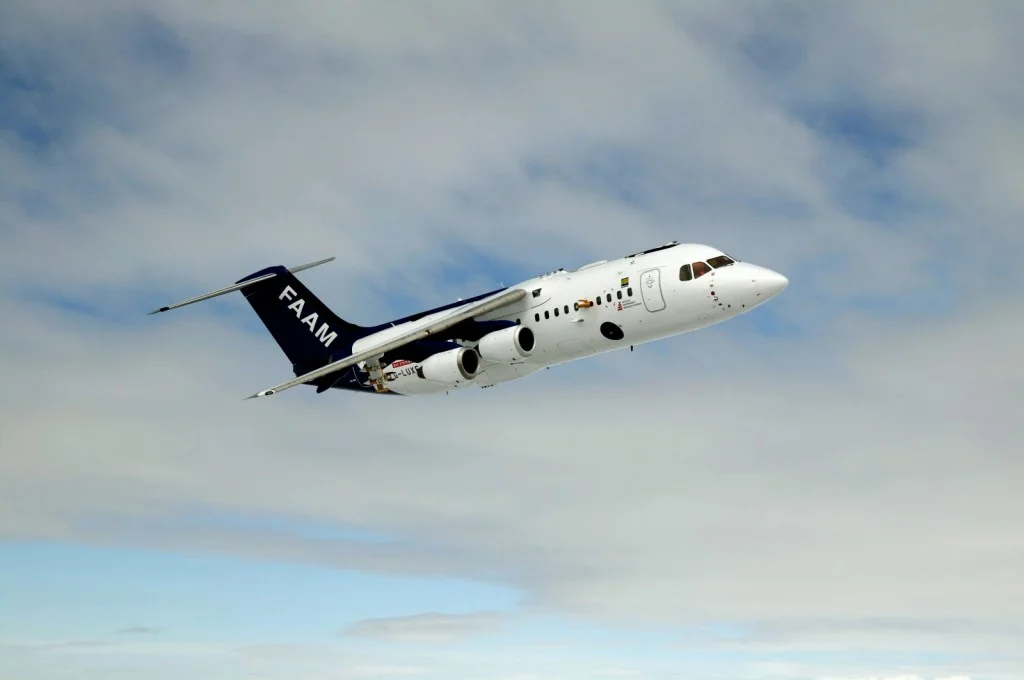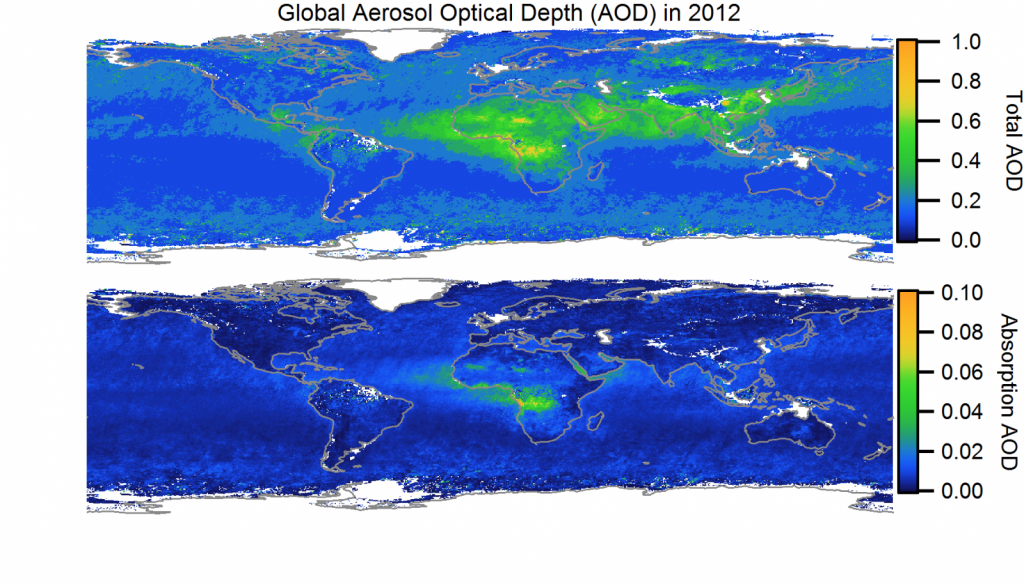
The short lifetime of aerosol particles in the atmosphere means that they tend to be found concentrated in regions close to where they were formed. As they only last for days to weeks in the atmosphere, they don’t travel too far as the Earth’s winds aren’t able to fully mix the air over such a short period. This short lifetime should also mean that any changes in the emissions of ...[Read More]
Biomass burning
Wuthering heights
Aerosol particles typically have short life spans in the atmosphere (days to weeks) but they can travel far and wide in that time. They can be lifted up to new horizons, higher and higher in the atmosphere. This is important for their impact on our climate, for example, at least 20% of the uncertainty in the climate impact of black carbon aerosol is due to differences in its vertical distribution. ...[Read More]
The dark side of the atmosphere: the blog awakens
Aerosol particles come in lots of different flavours and one of their most important properties is how they deal with incoming sunlight. Some are rather unwelcoming and send sunlight back to whence it came (space), which leads to a cooling of the atmosphere as the sunlight doesn’t reach the surface of the Earth. Others offer sunlight a warm(ing) embrace and absorb it, which heats up the atmo ...[Read More]
Fire in Salford
My commute to work yesterday morning took an unexpected turn as my train pulled into my usual stop in Salford, Greater Manchester. To my right was a huge plume of smoke, which I would usually associate more with deforestation fires in Brazil! A plume of black smoke was rising up against the backdrop of beautifully clear skies, with the smoke gradually changing to a lighter shade of grey higher up. ...[Read More]
Aerosols and the pause
There is a new commentary piece in Nature Geoscience by Gavin Schmidt and colleagues on ‘Reconciling warming trends’. The paper investigates several potential causes for the discrepancy between climate model projections and the recent ‘slowdown’ in global surface temperatures, which is nicely illustrated on Ed Hawkins’ Climate Lab Book blog. One of the aspects the pap ...[Read More]
Fires in South East Asia
Smoke from a number of agricultural fires is currently blanketing Thailand and Cambodia. This is shown below in the satellite image from the MODIS instrument on the TERRA satellite. The red dots are classed as ‘thermal anomalies’ by the satellite instrument and are usually indicative of fires burning in these locations. The majority of the fires are occurring in grass and cropland area ...[Read More]
AGU 2013 roundup
Now that the 2013 AGU Fall Meeting has ended, I thought I would roundup what I’ve been involved with over the week for both this blog and the Barometer Podcast, which I was recording each day with Sam Illingworth. Links to each piece are available below. Many thanks to all who have read and shared these over the past week. Recording the podcast at conferences is becoming a trend as we’ ...[Read More]
AGU 2013 day 1: Short-lived climate forcers
My first day at AGU 2013 revolved around sessions on short-live climate forcers, which are components in the atmosphere that have short lifetimes (compared to carbon dioxide for example) and generally warm the atmosphere. Reduction of these compounds, such as methane and black carbon, has been mooted as a way to reduce global mean temperatures in coming decades. This is summarised in the figure be ...[Read More]
A continent on fire
While preparing my poster for the upcoming AGU Fall Meeting, I downloaded some data on fire activity in South America for background on why we are interested in biomass burning in the region. I wanted to quickly check I had the data in the correct format, so I just plotted the coordinates of the fire counts without an outline of South America. I was surprised to see that the fire locations for Aug ...[Read More]
Spoiling the view
Probably the most obvious manifestation of air pollution comes when looking out of the window and scanning the horizon – does the landscape go on for miles or is the view reduced? The build-up of air pollution can often dramatically reduce visibility via a shroud of haze. On a recent trip to the Turkish Mediterranean coast near Antalya, the impact of air pollution on visibility was abundantl ...[Read More]