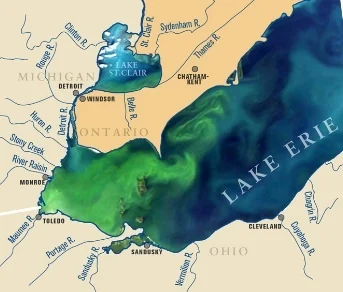
So it has been a while since I last blogged, attributed to various excuses – fieldwork, moving job, moving house – but moving forwards I intend to spend more time discussing the myriad aspects of geoscience I find fascinating. One good example is a recent paper from Janice Brahney (University of British Columbia) and colleagues in Global Biogeochemical Cycles entitled ‘Is atmospheric p ...[Read More]
Uncategorized
A new tool for the interpretation of palaeomagnetic data
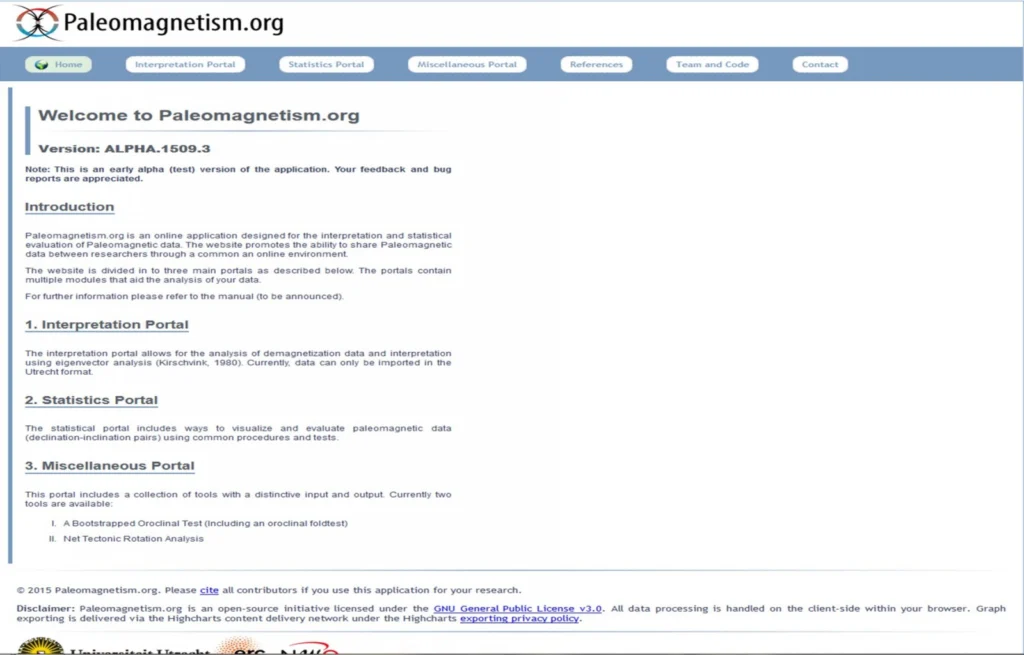
As part of my PhD research, I spent quite a lot of time at the Fort Hoofddijk (informally known as The Fort) – the palaeomagnetic laboratory of the University of Utrecht (in the Netherlands). For a little insight into what carrying research out in a 19th Century bunker, housed within the grounds of the botanical gardens of the University of Utrecht is like, take a look at this blog post that ...[Read More]
Rocks of the Earth – EGU 2014
For the first time in 2014 the EGU General Assembly had a theme: The Face of the Earth. A number of special displays and talks were arranged to celebrate the first themed meeting. Our very own Dan was heavily involved with one aspect of Face of the Earth; along with some colleagues, he manned the Rocks of the Earth stand at the conference center foyer. No doubt a number of you donated rocks to be ...[Read More]
EGU DIARIES: Days 4 & 5 (1st & 2nd April).
The last two days of the conference were packed with geomagnetism related sessions. I had to leave my blogging and Earth Scientist self behind and fully embrace the wide range of talks and posters directly relevant and important to my own research. I’ve decided to merge my last two diary entries; whilst a lot of the science was very interesting to myself, I appreciate that reading about the mathem ...[Read More]
10 Minute Interview – Live from EGU 2014, Sam Illingworth
Today I had the great pleasure of chatting with Sam Illingworth, the representative of Young Scientists at EGU. I mostly wanted to learn more about his role as EGU young scientist representative, so the format of the interview has changed a little,we also touch on his research interests and our shared passion for science communication. Vital Statistics You are: Sam Illingworth You work at: Manches ...[Read More]
Anthropocene featuring heavily at the EGU
Among other sessions on Tuesday (Day 2 at EGU2014), I (Daniel) ventured to the EGU Press Conference featuring four experts from different scientific disciplines debating the Anthropocene concept. This term is fast becoming well-known in the popular media, politics and a vast spectrum of scientific disciplines and refers to the possibility that we, humanity, are living in a new geological time peri ...[Read More]
Some personal perspectives from a PhD student on the peer-review system
This is a follow-up to a previous post from September 2013 entitled ‘Soliciting peer reviews from PhD students’. In that piece, I summarised the responses I’d received from a number of editors of peer-reviewed journals in the field of Quaternary Science having asked them their feelings on soliciting peer reviews from PhD students. Some recent events, most significant being the acceptance of my fir ...[Read More]
Towards better quantifying human impacts: Looking back on the PAGES Workshop in Leuven
Firstly, I’d like to express my sincere thanks to Dr Jennifer Clear (Czech University of Life Sciences, Prague) for her input to this blog article. The first week of February saw dozens of scientists arrive at the Katholieke Universiteit Leuven for the PAGES Focus 4 Workshop. This event brought together geomorphologists, soil scientists, palaeoecologists, archaeologists and palaeolimnologist ...[Read More]
A DYNAMITE journey around western Ireland
The four-year DYNAMITE project (DYNAmic Models in Terrestrial Ecosystems and Landscapes), a teaching and research cooperation programme between the School of Environmental Sciences, University of Liverpool, UK and the Departments of Geology and Physical Geography and Ecosystem Science at Lund University, Sweden, recently ended with an excursion for PhD students, postdocs and academic staff from bo ...[Read More]
Becoming a Ghost Buster: What triggers sapropel formation?
As I touched upon in our first post, we can use the magnetic properties of minerals in sediments (and other environmental materials) to understand changes in environmental and climatic conditions. This is known as environmental magnetism. The basic idea is to identify links between the magnetic properties of a material and environmental conditions and depositional processes. This approach is not a ...[Read More]