
Geology Jenga

Geophysics

The coolest way to visualise how planets work
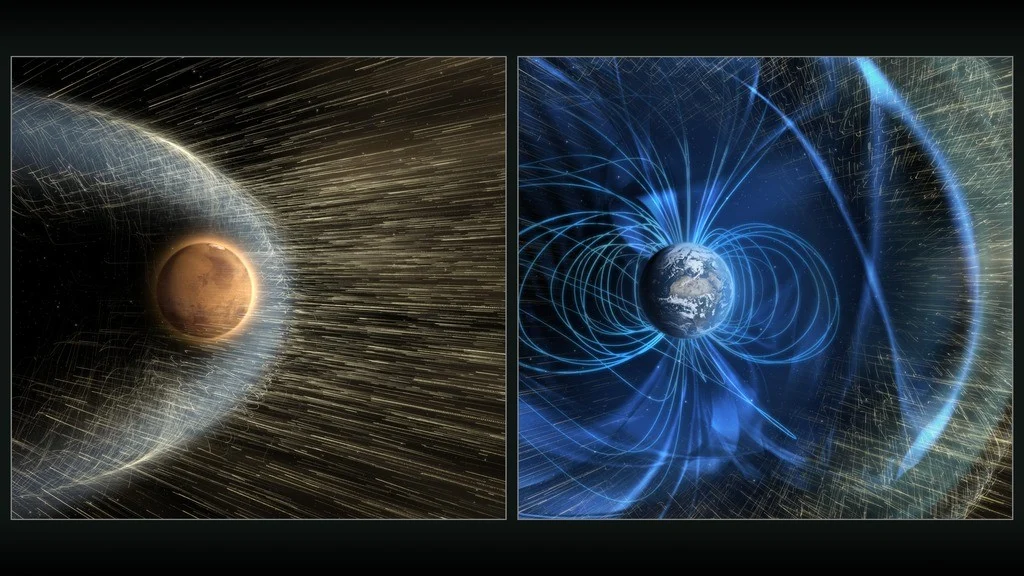
The coolest way to visualise how planets work
It’s not always easy visualising the complex processes which operate on planet Earth. Even more difficult, at least for me, is explaining them to others. That’s why I’m always on the look out for tools that might just help me with that and which I can share with others too. Enter the NASA Visualisation Explorer, and the Scientific Visualization Studio (SVS), which I came across r ...[Read More]

An Andy Warhol Moment for Liverpool’s Geomagnetism Group – dating the formation of the Earth’s Inner core

An Andy Warhol Moment for Liverpool’s Geomagnetism Group – dating the formation of the Earth’s Inner core

This week, my PhD supervisor, Andy Biggin, had a paper out in Nature. The findings of this new research point towards the Earth’s inner core being older than we’d previously thought. Recent estimates, suggest that the Earth’s solid inner core started forming between half a billion and one billion years ago. However, Andy’s (and co-workers) new measurements of ancient rocks as the ...[Read More]

10 Minute Interview – Live from EGU 2014

Today I had the great pleasure of interviewing Cindy Mora-Stock. It was a great success as I was finally able to put a face to the twitter handle that I’ve been following almost from my first days on Twitter.  What’s even better is that I can safely say I’ve come away from the interview having made a new friend, as Cindy and I hit it off straight away. The final bonus of choosing ...[Read More]

A foreseeable, yet surprising earthquake?

On Wednesday morning I woke up to a flurry of activity on my twitter feed: there had been a large earthquake in northern Chile. I followed up some of the tweets and realised that there had also been some tsunami warnings as a result of the earthquake. After ascertaining that the scale of the disaster wasn’t as large as I’d anticipated, given the size of the quake (I don’t want you to think for one ...[Read More]

Seismologists must leave their comfort zone: A Guest post by Steve Hicks

Scientists studying earthquakes should be prepared to put themselves forward to reduce the risk of earthquake damage. This was one conclusion from a meeting of scientists and engineers in London last week. Picture yourself here. You are an earthquake scientist. Years of research conclude that a capital city lies close to active fault that has the potential to generate a large earthquake. The local ...[Read More]

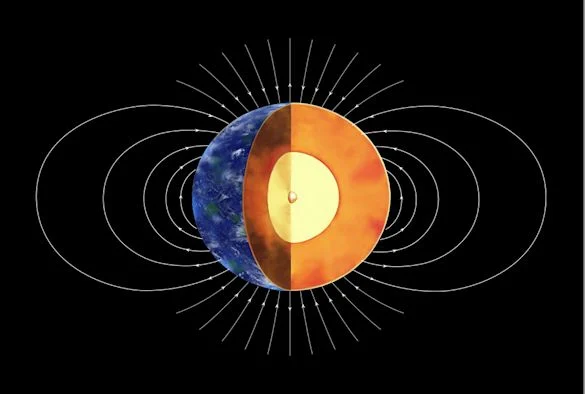
The Earth’s protective shield

I came across this video, which very clearly explains how the Earth’s magnetic field protects us from Solar Storms. It then goes on to explain the link of these phenomena to our planet’s climate. The added bonus is that the images are  very cool and I think the voice over is done by  Liam Neeson…. Does anyone else think so? Anyway, I digress… For a written account of what i ...[Read More]

Geology makes a difference to Society

The Geological Society of London have just today released a great report highlighting how geology contributes to our society. All too often the impression is that all geologists do is study rocks. Whilst in essence, this is what we do, the implications of geological research are far reaching and not always understood by the wider public. I think this report is a fantastic piece of science communic ...[Read More]

A round-up of some newsworthy geomagnetism stories

Happy New Year to you all! We’ve had a long Christmas break at Geology Jenga, but we are back! For 2014 we’ve got some really interesting 10 minute interviews lined up, as well as the continuation of the ‘Making the most of your PhD’ series and musings on all the things that interest Dan & I. So without further ado, let’s get started! The past few weeks and months have seen some exciting newsw ...[Read More]

10 Minute Interview – Promoting Earthquake Education amongst Persian Communities

During the summer I took part in a fantastic public engagement activity, I’m a Scientist, Get me Out of Here! It’s an X-factor style competition where school students get to meet and interact with scientists.  The students are the judges and vote for their favourite scientist to win a cash prize  to communicate their work with the public. Sadly, I didn’t win the cash prize, but d ...[Read More]