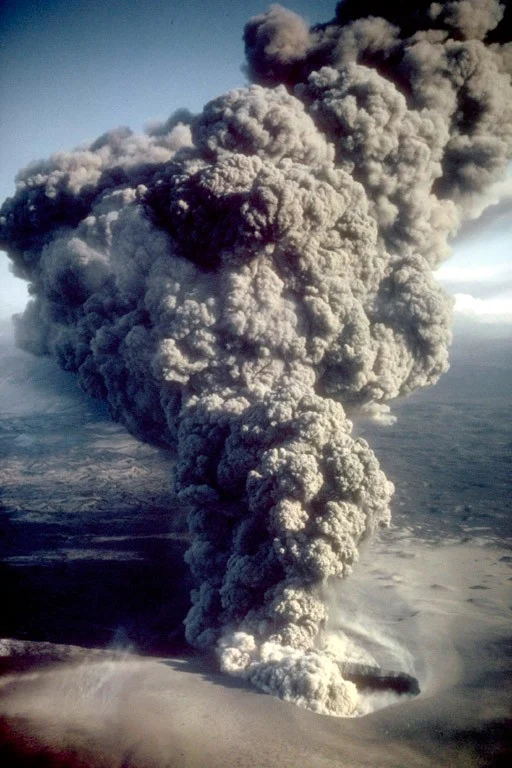
Following his session at the EGU General Assembly, Greg Valentine (Buffalo University) spoke to Sara Mynott about how he creates model volcanoes, specifically maar-diatremes, and blows them up to better understand what goes on in an eruption… So what is a maar-diatreme? A diatreme is a vent-like structure, mostly made up of broken up bedrock …[Read More]
volcanoes
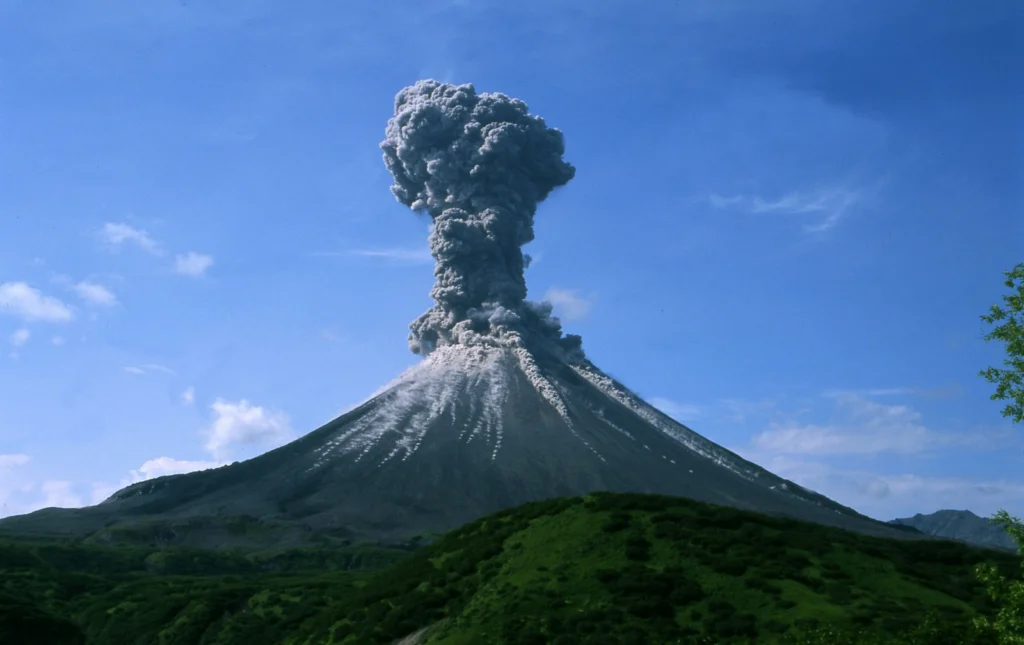
Imaggeo on Mondays: An explosive cloud
One of the world’s most volcanically active regions is the Kamchatka Peninsula in eastern Russia. It is the subduction of the Pacific Plate under the Okhotsk microplate (belonging to the large North America Plate) which drives the volcanic and seismic hazard in this remote area. The surface expression of the subduction zone is the 2100 …[Read More]
Imaggeo on Mondays: Hot and cold – how ash influences glacial landscapes
This week’s Imaggeo on Mondays is brought to you by Joanna Nield, a lecturer in physical geography at the University of Southampton. Nield explains how volcanic eruptions can impact glaciers and how ash fall can both accelerate and slow down glacial melt… This photo was taken at Fjallsjökull, Iceland in July 2011, shortly after the …[Read More]
Natural hazards workshop videos are online!
Every year, the EGU host a two day workshop for primary and secondary school teachers during the General Assembly. Geosciences Information For Teachers (GIFT) workshops aim to shorten the time between discovery and textbook, while providing teachers with material that can be used in the classroom. This year, the workshop was on natural hazards, with …[Read More]
Geosciences Column: Tracing Toba
Large volcanic eruptions have a significant impact on the Earth’s climate as aerosols (including sulphur dioxide and water vapour), together with ash are released into the atmosphere and increase the amount of sunlight reflected back into space (the albedo). This increase in reflectance (or decrease in energy absorption) can cause widespread climatic cooling, known as …[Read More]