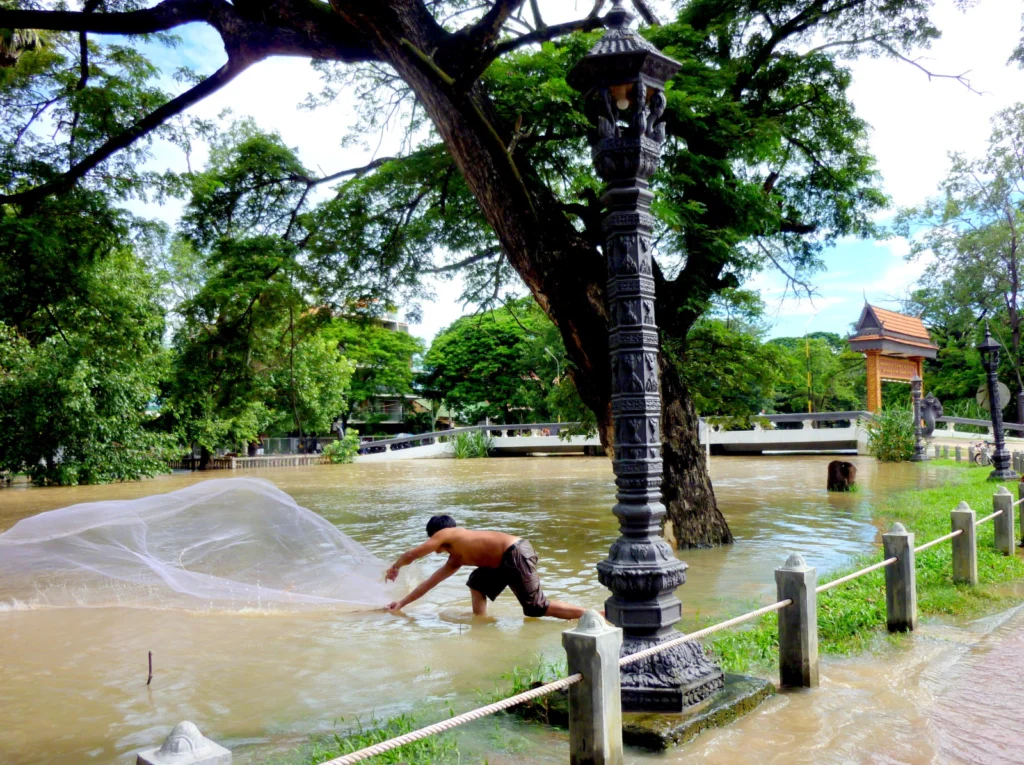
Hello Elisa! Thank you for agreeing to this GeoTalk interview. Could you briefly introduce yourself and your background to our readers? Hello, and thank you for having me. My name is Elisa Nobile and I recently completed my PhD at IUSS Pavia, in Italy. My background is in engineering for the mitigation of risk from natural hazards, and during my studies I quickly became interested in the impacts o ...[Read More]
GeoTalk: meet Robert Piotrowski, geomythologist and folklorist
Hello Robert! Thank you for joining GeoTalk. Before we turn the page, could you introduce yourself to our readers? I am an ethnologist and cultural anthropologist. I have the privilege of working in ‘Laboratory for Interdisciplinary Research into the Anthropocene’, led by Prof. Dariusz Brykała, which is part of the Institute of Geography and Spatial Organisation of the Polish Academy of Sciences. ...[Read More]
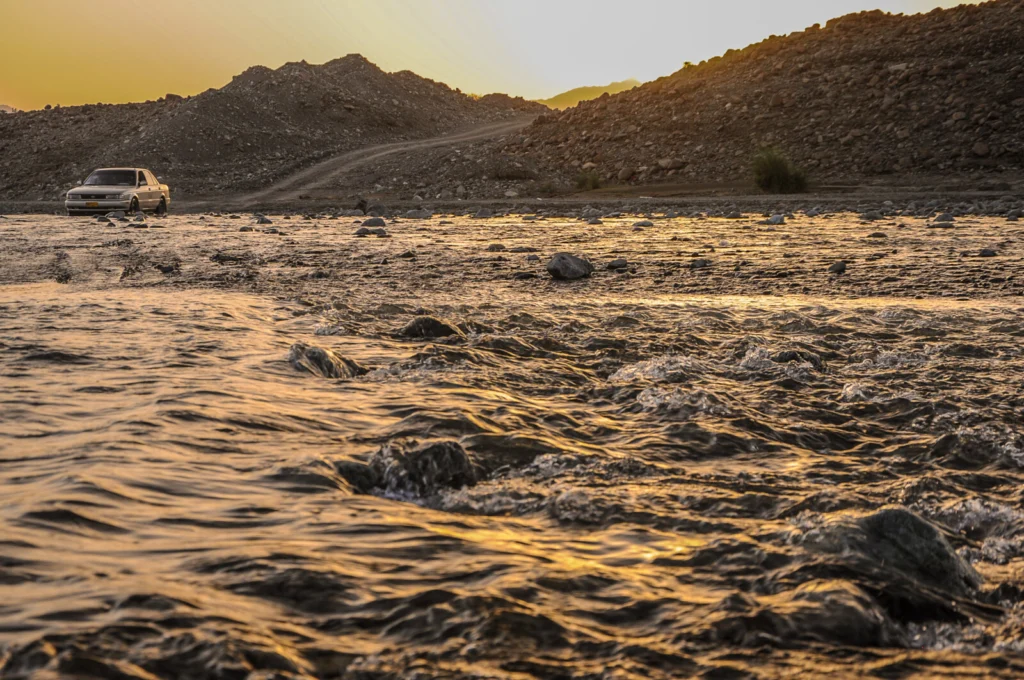
Open flood modelling: Real time inundation and human displacement forecasting is now possible!
Floods are powerful natural events that can wreak havoc on communities and ecosystems. Every year, millions of people are affected by floods, leading to loss of life, damage to homes, and disruption of daily life. This blog post explores a new method for quickly mapping flood zones and predicting their impacts. To help communities and decision-makers better prepare, the authors of a recent publica ...[Read More]
GeoTalk: meet Maria Vittoria, risk communicator & Early Career Scientist Representative for Natural Hazards
Hello Mavi! Welcome to GeoTalk. Before we start, could tell our readers a little about yourself and your background? Hey Simon! Thanks for the warm welcome. I’m Maria Vittoria, but you can call me Mavi. I’m a curious soul from southern Italy, a physicist by passion, and a dreamer at heart. My journey has taken me from Italy to the UK and back, studying the tiniest particles to the vast ...[Read More]
Turning adversity into opportunity: mapping plastic pollution in rivers
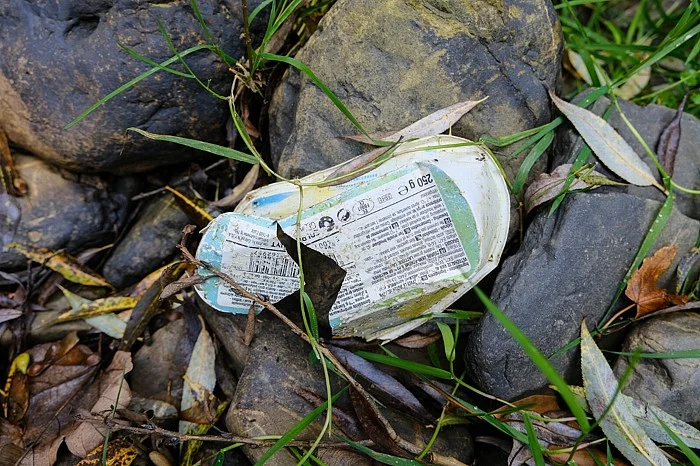
In July 2021, the Benelux area, Germany, and France experienced heavy rainfall followed by mass flooding, causing widespread damage. Along the vast quantities of plastic swept along the riverbanks, Rahel Hauk, a researcher from Wageningen University, conducted fieldwork to assess the impact of the flood event on plastic deposition. Amidst the debris, Hauk and her colleagues noticed a large volume ...[Read More]
GeoTalk: meet Nazimul Islam, Dendrochonrologist and Climate ECS Representative!
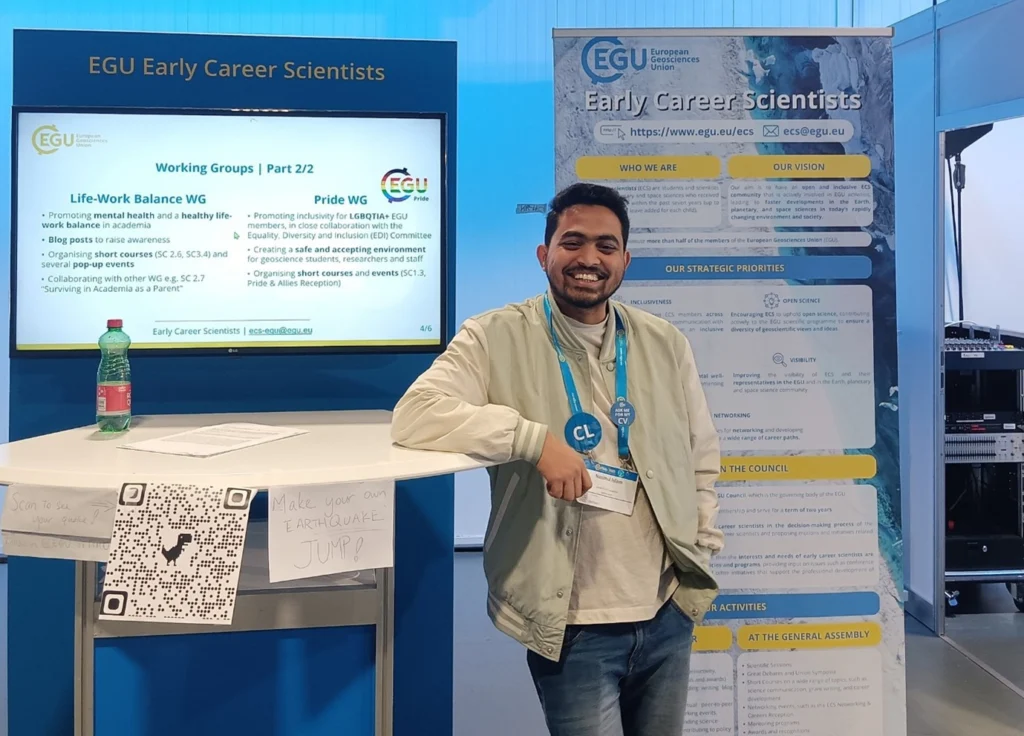
Hi Naz. Thanks for joining us for this edition of GeoTalk! How did you get into studying tree rings? Hello, thank you for inviting me! Well there is an interesting story behind this so let me share it with you. I was always fascinated by our natural environment, particularly mountains, glaciers, and rivers. That motivated me to study Geography for my Bachelor and Master Degrees. For my MSc dissert ...[Read More]
GeoTalk: meet Dinko Sindija, researcher of seismic signals and Seismology ECS Representative!
Hello Dinko. Thank you for agreeing to this interview! Before we dig deeper, could you tell our readers a little bit about yourself and your background? Well thanks for having me. My name is Dinko and I’m a seismologist, doing a PostDoc at the Department of Geophysics at the University of Zagreb. Currently, I work on a Croatian-Norwegian collaboration project in which we densified seismic network ...[Read More]
Why do we keep dismissing drought?
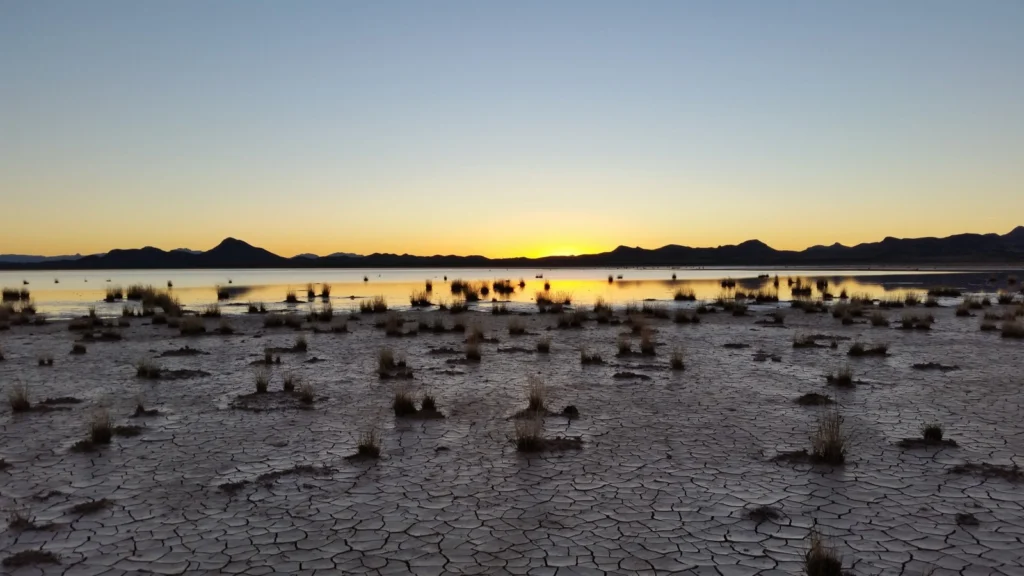
“If you see me, then weep” Like the foreboding inscription witnessed by Dante as he passed through the gates of Hell, the inscription chiselled into the so-called “hunger stone” marks the passing of a threshold into suffering. As the hunger stone emerges from the dwindling waters of the Elbe River, Czechia, it reveals a history of desiccation. Where spiritual torment is pro ...[Read More]
When race and natural hazards intersect: three geoscientists share their experiences
Around the world, the month of October is observed as Black History Month and includes the International Day for Disaster Reduction. While both these observances are significant in their own right, it gave EGU the opportunity to hear from geoscientists of Black, Indigenous, and People of Colour (BIPOC) communities about the many ways that race and natural hazards are linked: does one affect the ot ...[Read More]
GeoTalk: meet Blaise Nyandwi, researcher in public perceptions of volcanic hazards!
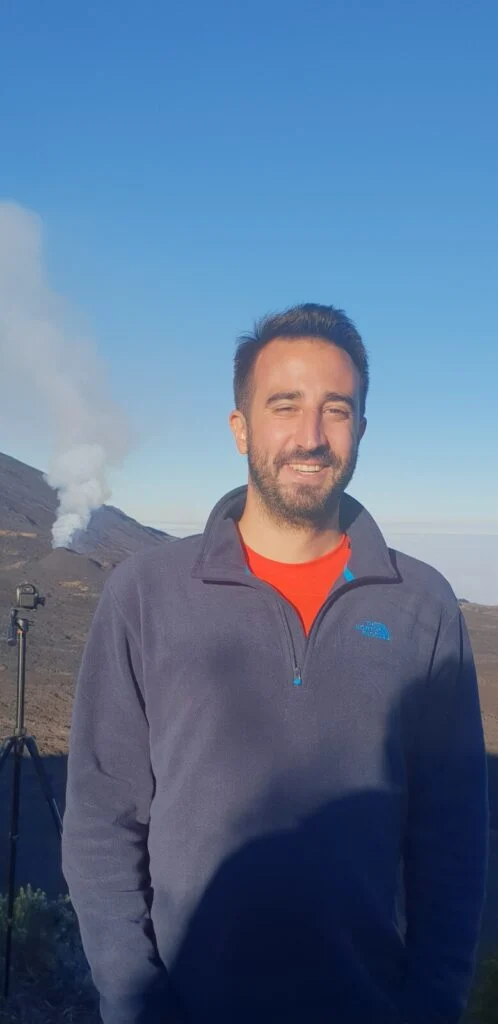
Thanks for joining us today Blaise! To begin, could you talk about your background and why you pursued research on people’s perceptions of natural hazards? I have a background in geology and environmental sciences. Goma is my hometown and I work as a lecturer at the University of Goma. Living and working in a city built on lava flows and permanently threatened by several hazards from Nyiragongo vo ...[Read More]