Welcome to GeoTalk, Elizabeth! Could you introduce yourself and your background? I’m a genderfluid glaciologist living between previously glaciated, currently glaciated, and flood-prone landscapes. I am a postdoctoral researcher at Utrecht University in the Netherlands. I did my bachelor’s in physics at the University of California, Los Angeles, and my Ph.D. in glacial geophysics at Co ...[Read More]
glaciers
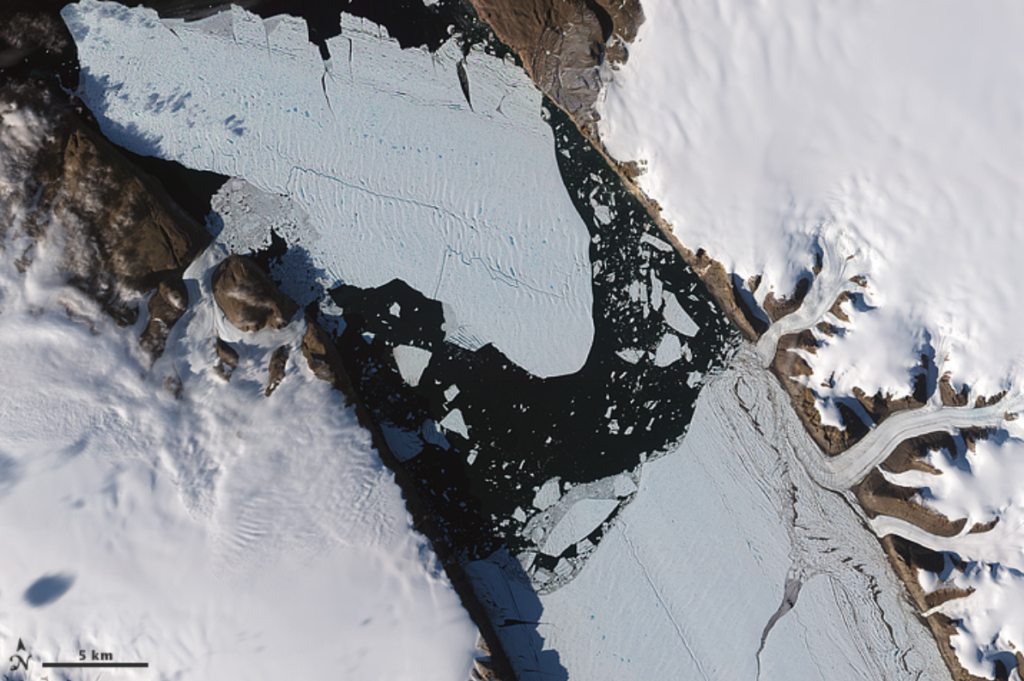
A chunk of ice the size of Amsterdam: how the calving of Greenland’s glaciers has changed since the 2010 Petermann Glacier event
Thirteen years ago, a roughly 251 km2 chunk of ice (or 97 miles2) broke off Greenland’s Petermann Glacier. This Amsterdam-sized piece of ice was the largest to calve in the Arctic since 1962. The massive iceberg traversed the Nares Strait, which lies between Canada’s Ellesmere Island and Greenland, and into the northern part of Baffin Bay—the northwestern-most arm of the Atlantic Ocean, before eve ...[Read More]
GeoTalk: meet Francesco Avanzi, researcher in meltwater security!
Hi Francesco. Thanks for agreeing to this interview! To break the ice, could you tell our readers a bit about yourself and your research? Hey Simon! I’m an Italian hydrologist and earned a PhD at Politecnico di Milano with a dissertation on how snowmelt contributes to seasonal runoff. I then did a postdoc at UC Berkeley, California, where I collaborated with a major US hydropower company to improv ...[Read More]
GeoTalk: Meet Larissa van der Laan, glaciologist and science-artist!
Hi Larissa, thankyou for spending time with us today! To break the ice, could you tell us a little about yourself and your research? Ha, I see what you did there. I’m Larissa, she/her, 29, and a PhD candidate at the Institute of Hydrology and Water Resources Management in Hannover, Germany. I’ve been fascinated by snow and ice since I was little, writing my first ever school report and ...[Read More]
GeoTalk: Meet Rebekka Steffen, the Geodesy Division’s Early Career Scientist Representative
Hello Rebekka, thank you for taking the time to talk with us today! Could you introduce yourself to our readers? Hi. Thanks for giving me the chance to talk about my research and plans as ECS Rep for the Geodesy Division. I’m a researcher in Geodesy at Lantmäteriet, which is the Swedish mapping, cadastral, and land registration authority (I prefer the much shorter Swedish version 😉). I’m working i ...[Read More]
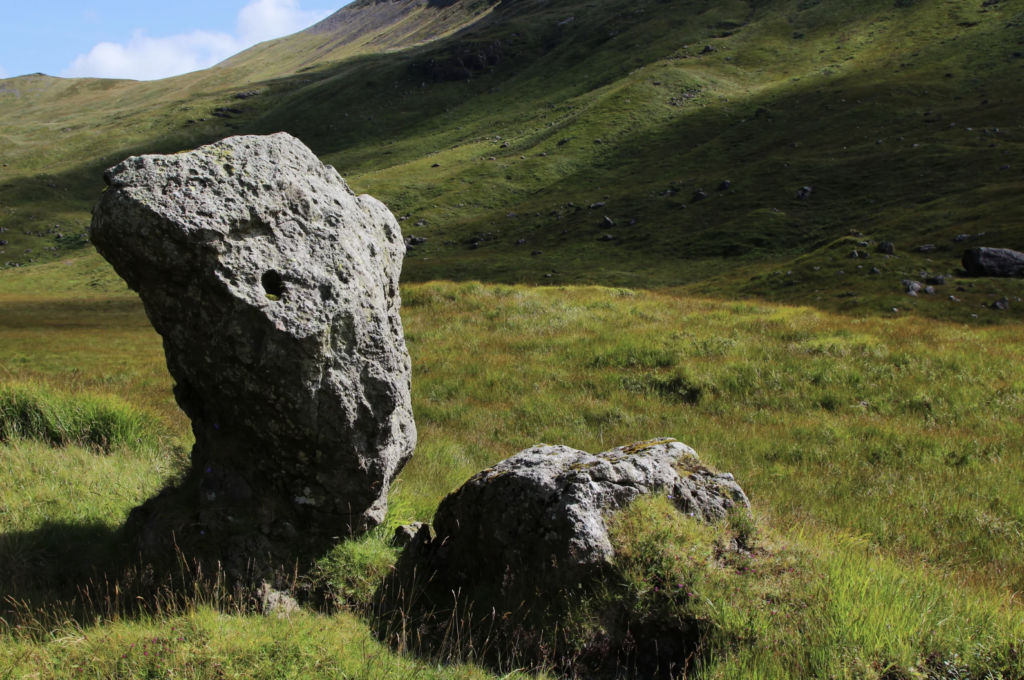
Imaggeo on Mondays: When boulders hitch a ride from glaciers
Glen More, on the Isle of Mull, Scotland, is a classic locality for studying glacial landforms and sediments. Here, two prominent ice-transported boulders stand guard at the head of the valley, left behind after the Loch Lomond Readvance (Younger Dryas stade), the final pulse of Quaternary glaciation in Scotland. Behind them in the characteristic U-shaped valley, hummocky morraines are littered wi ...[Read More]
Geosciences Column: How fast are Greenland’s glaciers melting into the sea?
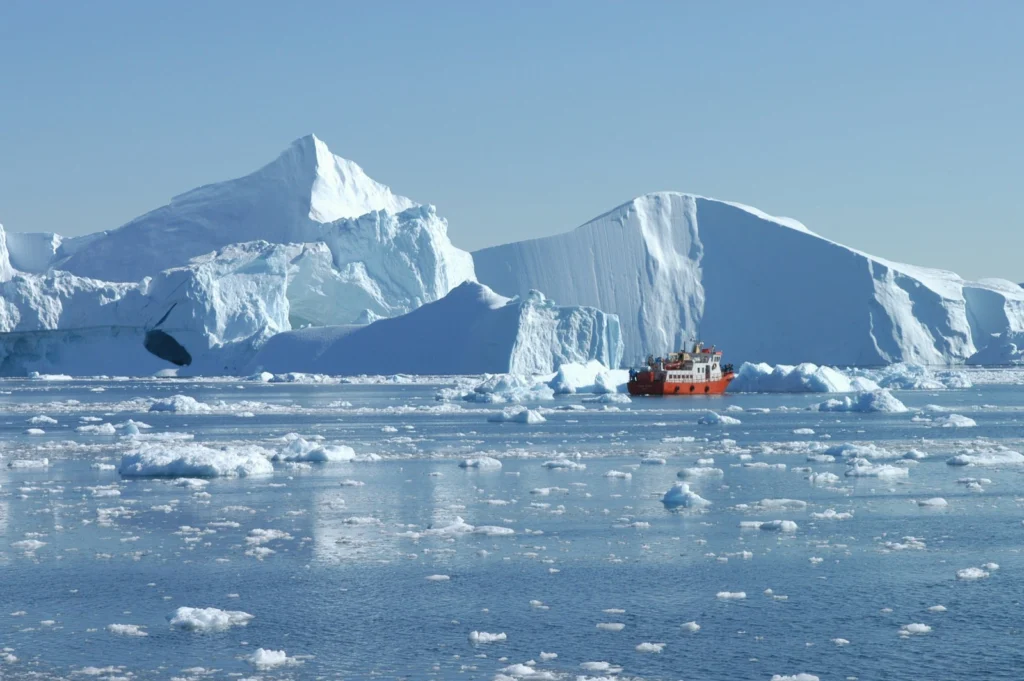
The Greenland ice sheet is undergoing rapid change, and nowhere more so than at its margins, where large outlet glaciers reach sea level. Because these glaciers are fed by very large reservoirs of ice, they don’t just flow to the coast, but can extend many kilometres out into the ocean. Here, the ice – being lighter than water – will float, but remain connected to the ice on the mainland. This phe ...[Read More]
Imaggeo on Mondays: A dramatic avalanche from Annapurna South
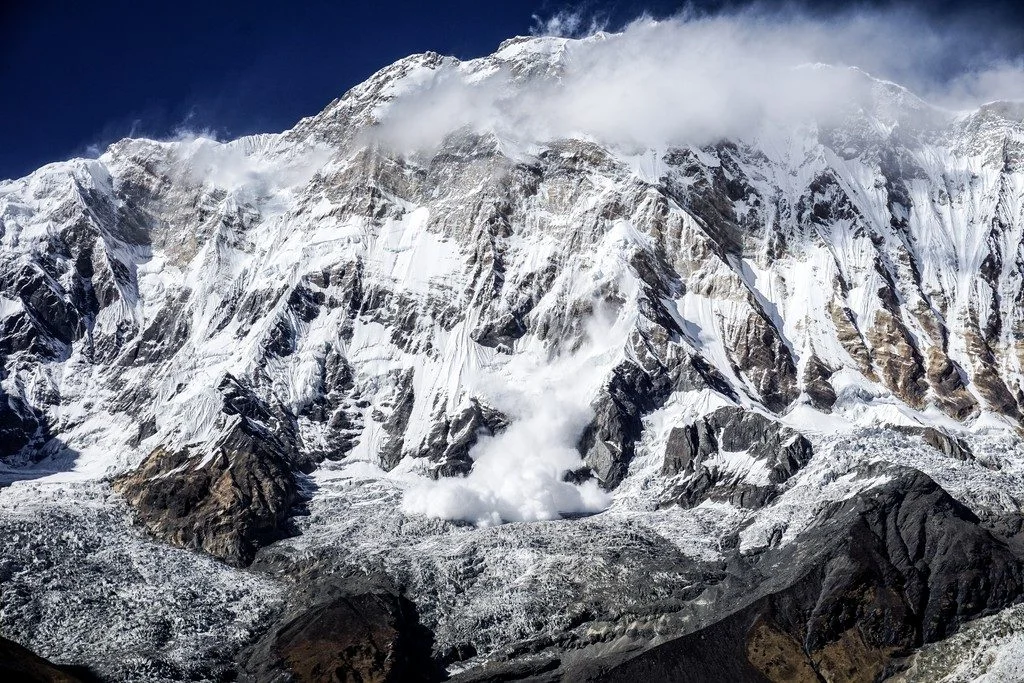
The Annapurna massif is located in an imposing 55 km long collection of peaks in the Himalayas, which behave as a single structural block. Composed of one peak (Annapurna I Main) in excess of 8000 m, a further thirteen peaks over 7000 m and sixteen more of over 6000 m, the massif forms a striking structure within the Himalayas. Annapurna South (pictured in today’s featured image), the 101st talles ...[Read More]
Imaggeo on Mondays: Tongue of a small giant
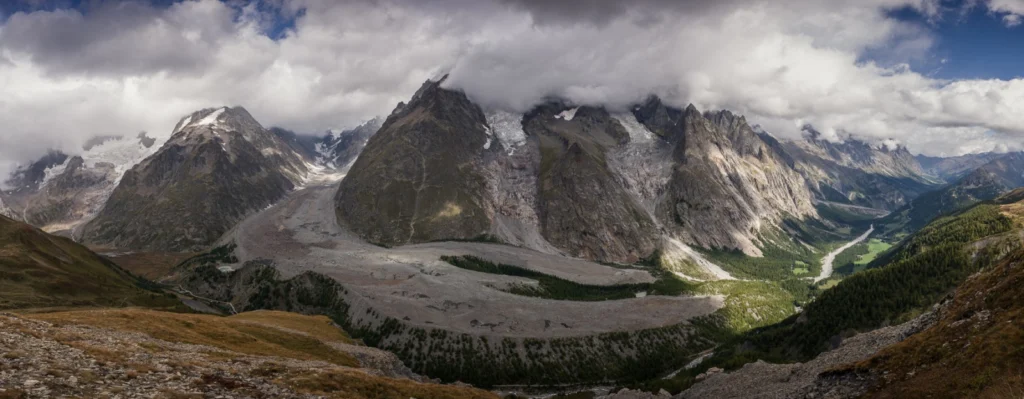
In a world where climate change causes many mountain glaciers to shrink away, bucking the ‘melting’ trend is not easy. In today’s post, Antonello Provenzale, a researcher in Italy, tells us of one glacier in the Alps which is doing just that. Mountain glaciers are retreating worldwide, with the possible exception of the Karakoram area. For most glaciers, ablation (ice melt) durin ...[Read More]
Imaggeo on Mondays: Why does a Norwegian glacier look blue?
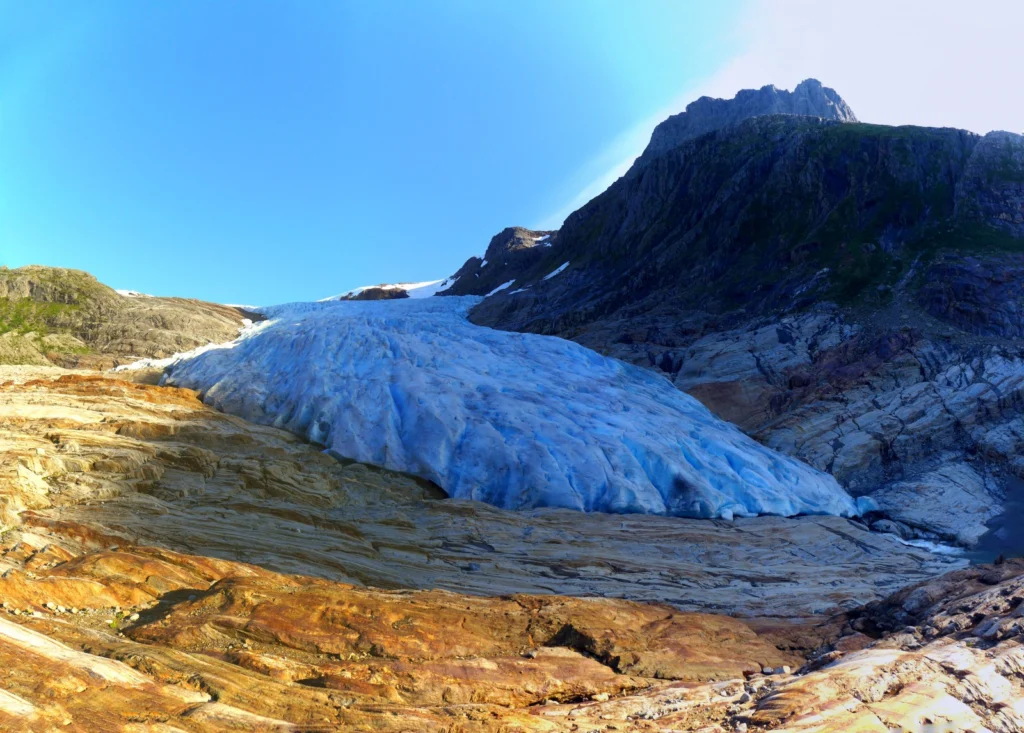
This picture shows the outlet glacier Engabreen running down from the plateau of Svartisen in Norway. Svartisen ice cap comprises two glacier systems of which the Vestre (western) Svartisen is Norway’s second largest glacier. Located right at the polar circle, Svartisen covers a total of 369 km² of the Nordland region. These coastal mountains accumulate a snowpack of 5-7 m depth through the winter ...[Read More]