GeoLog

early career researchers

How to vEGU – Networking (part 3): Early Career Scientist networking events!
How to vEGU – Networking (part 3): Early Career Scientist networking events!
From Monday to Friday over the two weeks of #vEGU21 the Early Career Scientists will be hosting networking events specific to each of the EGU’s Divisions. Keep up-to-date and discover when each ECS Division networking event is, alongside other details, in the EGU Programme by selecting “Please Select” and then “Networking” in the session programme page. Keep an eye out for other ECS events too, li ...[Read More]

Why is research in Antarctica so important?

Why is research in Antarctica so important?

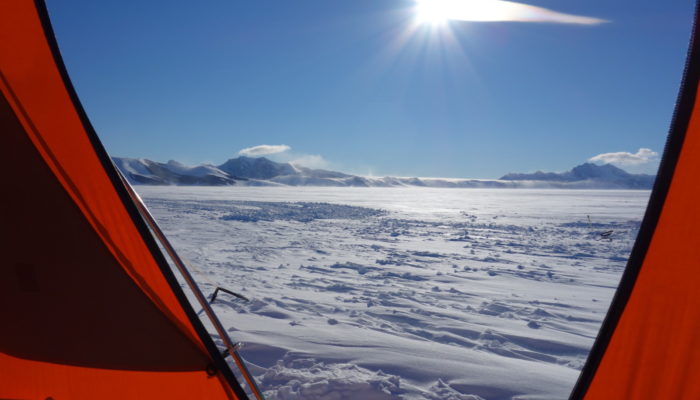
On the 1st December 1959 the Antarctic Treaty was signed by 12 nations, setting aside nearly 10% of the Earth “forever to be used exclusively for peaceful purposes… in the interests of all mankind.” In the years that followed more and more countries signed the agreement, until today when the agreement has been signed by 54 countries around the globe.  In 2010, the Foundation for ...[Read More]

How many transdisciplinary researchers does it take to find out how an ocean sinks?

How many transdisciplinary researchers does it take to find out how an ocean sinks?

There is no shortage of increasingly uphill challenges in the current research landscape, especially for Early Career researchers: discouragingly long-standing science questions; minimal freedom for developing methodologies; invariably ambivalent proposal reviews; an academic grading scheme based mainly on publication productivity and impact; and enforced competition for few permanent research pos ...[Read More]

GeoPolicy: A window into a career in Science Policy, as EGU’s first Policy Intern.

GeoPolicy: A window into a career in Science Policy, as EGU’s first Policy Intern.

My name is Ned Staniland and I am a third year PhD student in space physics at Imperial College London. I study the magnetic field of Saturn using data from the Cassini-Huygens mission that was launched in 1997. In July 2020, I was lucky enough to be EGU’s first intern where I worked in their policy and communications team.   Finding an Internship Since the beginning of my PhD, I have kept an eye ...[Read More]

Geotalk: Olga Vindušková, the Soil System Sciences Division’s co-blog and social media co-ordinator!

Geotalk: Olga Vindušková, the Soil System Sciences Division’s co-blog and social media co-ordinator!

Hello Olga, thanks for speaking with us today, can you tell us a little about your background and how you got to where you are now? Thank you for inviting me for what might be my first interview! My background is in environmental science and I chose to study soils because of how useful they are (in supporting ecosystems and our well-being) and how interdisciplinary their study is, spanning biology ...[Read More]

Imaggeo On Monday: Sunset in the Arabian basin

Imaggeo On Monday: Sunset in the Arabian basin

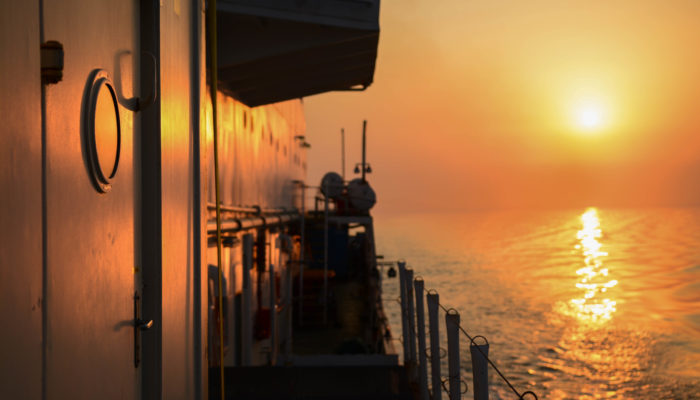
We know the topography of the moon better than the Earth’s seafloor, so we need to keep studying the ocean, and, for me, going to sea is the best way.   Only twenty percent of the seafloor is already mapped (see the Seabed 2030 Project), leaving eighty percent of our ocean unmapped, unobserved, and unexplored. This is why ocean going research is fundamental, not only for seabed mapping, ...[Read More]

The benefits of online writing retreats in these weird times

The benefits of online writing retreats in these weird times

The world shut down due to COVID-19, but PhDs did not. During these unfamiliar times, most PhD students have found themselves working from home trying more than ever to write as much as possible.  Over the past few of months, I have led several online writing retreats in collaboration with doctoral research schools and universities in Norway. They seem to have been very successful to help PhD’s wi ...[Read More]

New EGU webinar: Careers outside Academia

New EGU webinar: Careers outside Academia

Last week EGU hosted the second of our official quarterly webinar series, on Careers outside Academia. Up to 70% of scientists will transition to careers outside of academia after their PhD. Transferable scientific skills and knowledge are becoming progressively valued in non-academic job sectors. However, navigating job opportunities and transitioning to different career paths can be difficult. T ...[Read More]

#shareEGU20: meet the EGU Early Career Scientist Representatives (pt2)!

#shareEGU20: meet the EGU Early Career Scientist Representatives (pt2)!

Now that you have met the current and incoming Early Career Scientist Union representatives Raffaele Albano and Anouk Beniest, it’s now time to meet the rest of the current EGU Division representatives!   Atmospheric Sciences (AS): Fernando Iglesias-Suarez Contact: ecs-as@egu.eu Postdoctoral scientist at CSIC (Department of Atmospheric Chemistry and Climate, Institute of Physical Chemis ...[Read More]