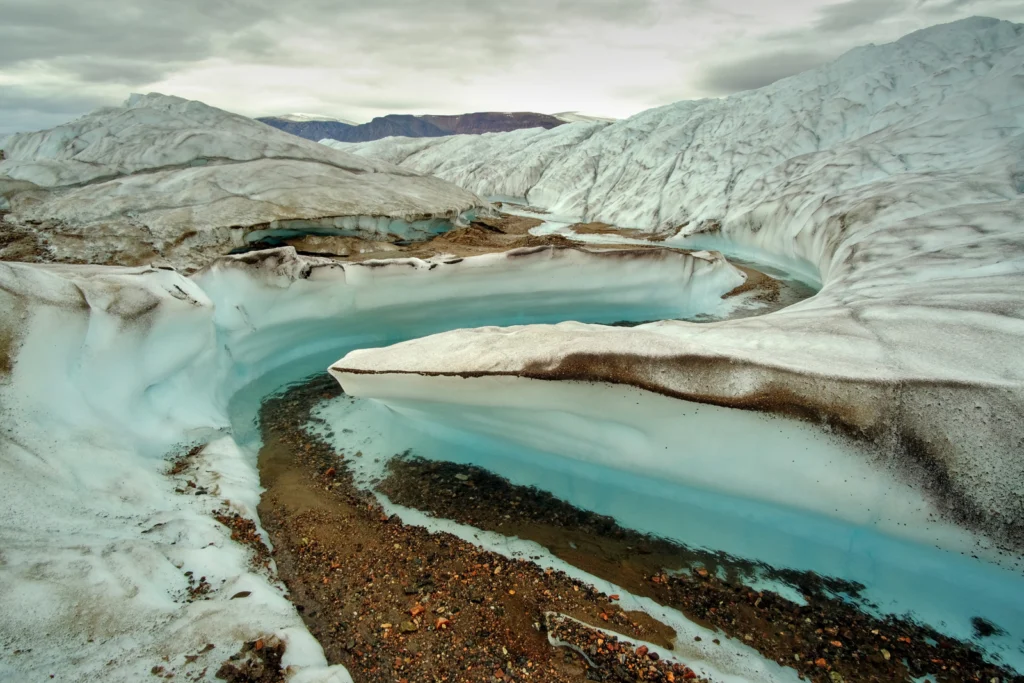
Hi Larissa, thankyou for spending time with us today! To break the ice, could you tell us a little about yourself and your research? Ha, I see what you did there. I’m Larissa, she/her, 29, and a PhD candidate at the Institute of Hydrology and Water Resources Management in Hannover, Germany. I’ve been fascinated by snow and ice since I was little, writing my first ever school report and ...[Read More]
Imaggeo On Monday: Ice caves in high altitude karstic areas
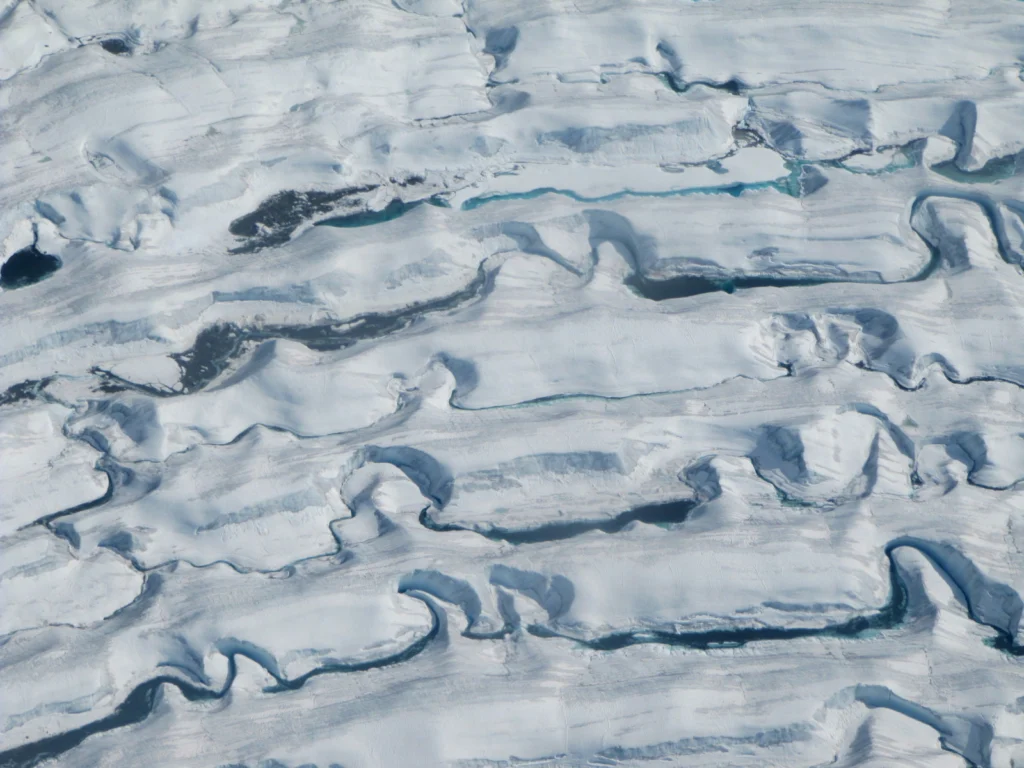
High altitude karstic environments often preserve permanent ice deposits within caves, representing a lesser-known portion of the cryosphere. Despite being not so widespread and easily reachable as mountain glaciers and ice caps, ice-caves preserve a great deal of information about past environmental changes and paleoclimatic evolution. Since one of their main characteristics is to have ground-ice ...[Read More]
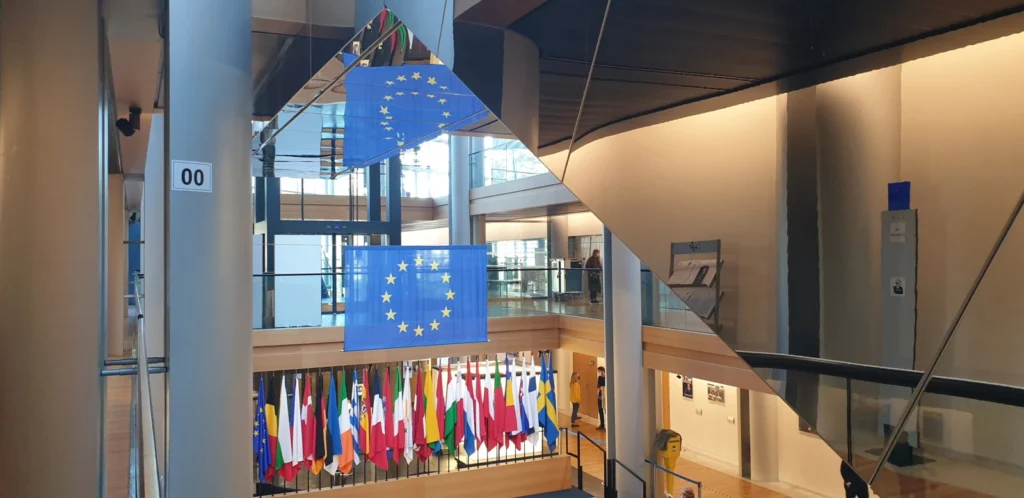
The European Science-Media Hub: Bringing scientists, journalists and policymakers together
This month’s GeoPolicy blog post introduces the European Science-Media Hub (ESMH) along with its key initiatives. It also takes a deeper dive into the organisation through a Q&A that we were thrilled to have with the Head of the European Parliament’s Scientific Foresight Unit Theo Karapiperis and the coordinator of the ESMH Svetla Tanova-Encke. In 2017, the European Parliament’s Panel f ...[Read More]
Using comics to talk about sexism in science: how ‘Did this really happen?!’ is trying to change the conversation
1953: Marie Tharp created a map that showed the seafloor was spreading via the Mid-Atlantic Ridge and therefore proved the theory of plate tectonics, only for it to be dismissed as “”girl talk” by her (male) supervisors. 1968: A few years after winning the Nobel Prize (without crediting her work), James Watson wrote about Rosalind Franklin saying “By choice she did not emphasize her feminine quali ...[Read More]
EGU’s Blog of the Year competition is back! Vote now for your favourite Division blog post of 2021
In yet another year that saw uncertainty and change, one thing has remained a positive constant: the impressive and insightful blog posts published regularly across the EGU’s official blog, GeoLog, and division blogs. The EGU Division bloggers in particular have been hard at work producing new informative, fun and interesting blog posts for our members both inside their Division, and across ...[Read More]
Top 5 Gifts for Geoscientists (2021 edition!)
Well it’s that time of year again when many people start looking for seasonal gifts for their loved ones, colleagues and others, but although you may have already sorted your gift for a geoscientist, we are here to help you if you are still looking for inspiration. If you want more ideas check back on our previous gifts for geoscientists suggestions, including last year’s suggestions f ...[Read More]
GeoRoundup: the highlights of EGU Journals published during November!
Each month we feature specific Divisions of EGU and during the monthly GeoRoundup we will be putting the journals that publish science from those Divisions at the top of the Highlights roundup. For November, the Divisions we are featuring are: Energy, Resources and Environment (ERE), Nonlinear Processes in Geoscience (NP) and Seismology (SM). They are served by the journals: Geoscientific Model De ...[Read More]
Imaggeo On Monday: Chuquicamata copper mine, Chile
Aerial view of the Chuquicamata copper mine in Northern Chile. This is the largest open pit copper mine in the world by volume (at the time of sharing). At this location the copper and molybdenum is extracted from a porphyry deposit that was formed beneath a volcano in the Andean subduction zone. Description by Martyn Unsworth, after the description on imaggeo.egu.eu. Although much o ...[Read More]
Are we equipped to meet the Glasgow Climate Pact?
November 2021 once again put climate change in the spotlight for Europe and the world. Close to 200 countries came together this month for the UN’s annual climate summit, COP26, and after much deliberation, adopted the Glasgow Climate Pact. Some key commitments had countries pledging to limit their emissions by 2030; forming the first-ever alliance targeting fossil fuel extraction; setting u ...[Read More]
Imaggeo On Monday: Green Energy of Kamchatka
The Mutnovsky Geothermal Power Plant is the largest geothermal power plant in Russia (the time of writing). It is located near to volcanic mountain Mutnovsky at altitude of 800 m and has a capacity of 50 MW. The Mutnovsky Geothermal Power Plant has resolved the problem of raising the stability of the power supply for the Kamchatka region, at the expense of using the richest stocks of thermal heat ...[Read More]