Scientific research is no doubt enriched by interdisciplinarity and collaborations which cross borders. This, combined with the scarcity of academic positions and the need to further ones horizons by experiencing varied research environments, leads many scientists to relocate (if only on a short term basis) to a country which is not their own. In today’s post, freelance science writer Rober ...[Read More]
Imaggeo on Mondays: Robberg Peninsula – a home of seals
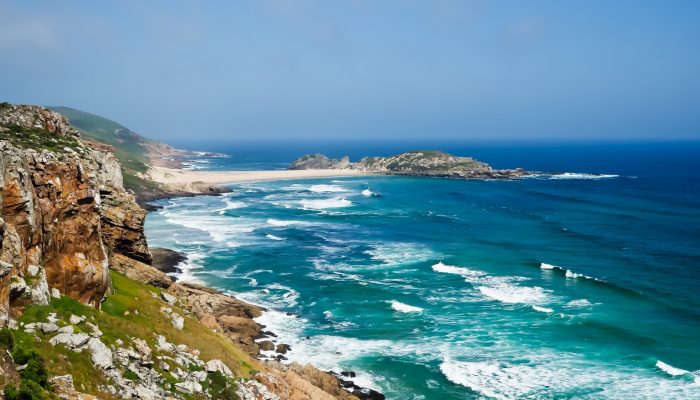
This picture is taken from the Robberg Peninsula, one of the most beautiful places, and definitely one of my favorite places in South Africa. The Peninsula forms the Robberg Nature Reserve and is situated close to the Plettenberg Bay on the picturesque Garden Route. “Rob” in Dutch means “seal”, so the name of the Peninsula is translated as “the seal mountain”. T ...[Read More]
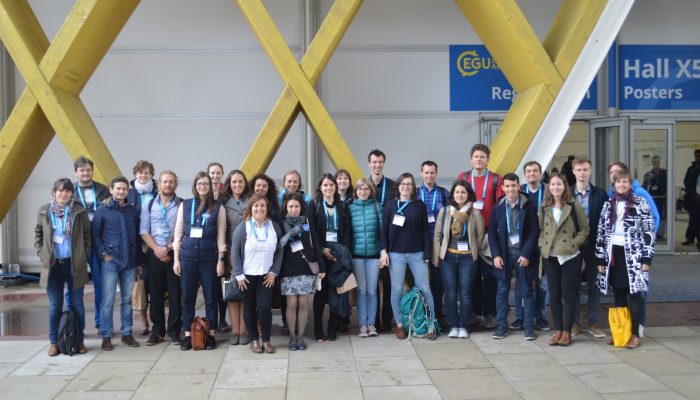
EGU 2018: How to make the most of your time at the General Assembly without breaking the bank
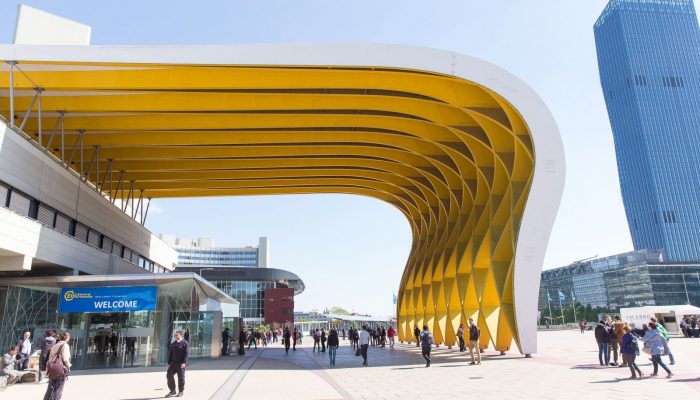
Attending a conference is not cheap, even if you’ve been lucky enough to secure some funds to help with travel, accommodation and/or registration costs. However, with a little insider knowledge from those who’ve attended the General Assembly many times before, it is possible to have a (scientifically) rewarding week in Vienna, without breaking the bank. Before you get there A sure way to save a fe ...[Read More]
January GeoRoundup: the best of the Earth sciences from across the web
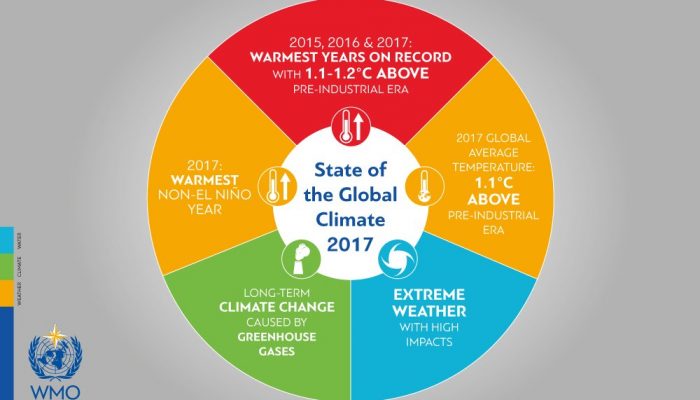
Drawing inspiration from popular stories on our social media channels, as well as unique and quirky research news, this monthly column aims to bring you the best of the Earth and planetary sciences from around the web. Major stories The World Meteorological Organization (WMO) has confirmed that 2017 is among the three warmest years on record. The three years with the highest temperature on record ...[Read More]
GeoTalk: Eleanor Frajka-Williams, the 2017 Ocean Sciences Division Outstanding Early Career Scientists Awardee
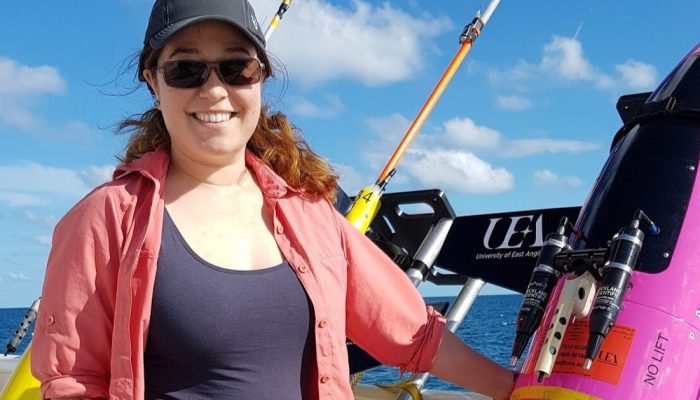
Geotalk is a regular feature highlighting early career researchers and their work. Following the EGU General Assembly, we spoke to Eleanor Frajka-Williams, the 2017 Ocean Sciences Division Outstanding Early Career Scientists awardee. In her work, Eleanor uses real-world measurements – from ships, satellites, sea gliders and moorings – to understand how the world’s oceans work. In today ...[Read More]
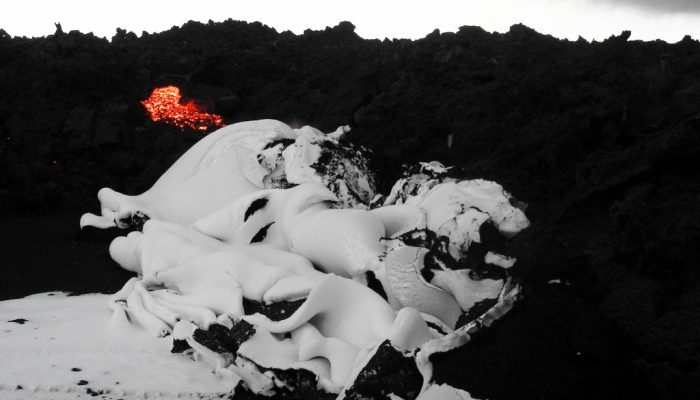
Imaggeo on Mondays: Snow folded by advancing lava
The photograph shows the interaction of the first snow and an active lava flow during the 2014 / 2015 Holuhraun eruption in Iceland. The first snow fell onto a ground covered by fine black ash on 26 September 2014. While the meter thick lava flow advanced a few meters per day, it neither melted the snow nor flowed on top of it. Instead, it pushed a layer of centimetre-thick snow and millimetre-thi ...[Read More]
Geopolicy: How does scientific uncertainty translate into policy?
Scientific uncertainty is one of the only things in science that is certain. It’s found in complex modelling systems, in the unpredictability of natural processes and even when there seems to be scientific consensus, a new scientific discovery can recreate ambiguity. But how do policymakers deal with scientific uncertainty when they are making decisions? Policymakers deal with and use scientific u ...[Read More]
Get involved: become an early career scientist representative
Early career scientists (ECS) make up a significant proportion of the EGU membership and it’s important to us that your voices get heard. To make sure that happens, each division appoints an early career scientists representative: the vital link between the Union and the ECS membership. After tenure of two or four years, a few of the current ECS Representatives are stepping down from their post at ...[Read More]
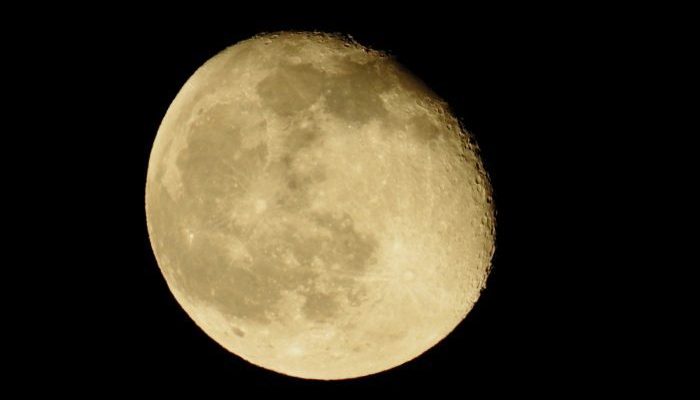
Imaggeo on Mondays: Decreasing Moon
This picture shows the decreasing Moon on May 6, 2015, two days after the full Moon, as viewed from Hamburg, Germany. There are still 96.4% of the lunar front illuminated. The Moon does not glow on its own, but its surface reflects the sunlight. The Sun always illuminates a complete half of our natural satellite, which, in its orbit around our planet, always turns its face (which we see at full Mo ...[Read More]
EGU Photo Contest 2018: Now open for submissions!
If you are pre-registered for the 2018 General Assembly (Vienna, 8 – 13 April), you can take part in our annual photo competition! Winners receive a free registration to next year’s General Assembly! The ninth annual EGU photo competition opens on 15 January. Up until 15 February, every participant pre-registered for the General Assembly can submit up three original photos and one moving image on ...[Read More]