Welcome to the blog of the Solar-Terrestrial Sciences (ST) Division of the European Geosciences Union (EGU).
This blog serves a twofold purpose. On the one hand, to be a platform for the solar-terrestrial community to share news, events, and activities, as well as to provide updates on the latest research. On the other hand, it will bring the solar-terrestrial sciences to the public, presenting and discussing a broad nature of topics.
Everybody is invited to contribute: please contact the editors below.
The opinions expressed in the Solar-Terrestrial Sciences blog are those of the authors, whose views may differ from those of the European Geosciences Union.
Editors
Contact: blog-st@egu.eu


Ezgi Gülay is a member of the Early-Career Scientist (ECS) Team and an editor of the Public Outreach and Communications for the Solar Terrestrial Division of the European Geosciences Union (EGU). She is a PhD candidate at the University of Helsinki working on the magnetic switchbacks.

Guram Kervalishvili is the Public Outreach and Communications Editor for the Solar-Terrestrial Division of the European Geosciences Union (EGU). He holds a PhD in Physics and Mathematics from Tbilisi State University (TSU), Georgia, and is currently a researcher at the GFZ Helmholtz Centre for Geosciences in Potsdam, Germany. His research focuses on space weather and climate, geomagnetic activity indices, and the processes within the Magnetosphere-Ionosphere-Thermosphere system.
Her research expertise lies in high-latitude ionospheric physics, with a particular focus on electromagnetic observations and their use to investigate the physical processes affecting the ionosphere. She has extensive experience working with complementary ground-based and satellite measurements, combining observations from different instruments to investigate the physical origins of ionospheric phenomena. Her research has also involved studying the connections between the atmosphere, ionosphere and magnetosphere, giving her a broad understanding of the processes that shape the coupled geospace environment.
Luke Barnard
Dr Luke Barnard is a postdoctoral researcher at the University of Reading.
Mrittika Ghosh

Shreedevi P. R. is the Public Outreach and Communications Editor for the Solar Terrestrial Division of the European Geosciences Union (EGU). She is a Designated Assistant Professor at the Institute for Space-Earth Environmental Research (ISEE), Nagoya University. Her research focuses on understanding the energetic coupling between the Sun and Earth.
About the ST Division
The Division on Solar-Terrestrial Sciences (ST) considers all aspects of solar and heliospheric physics, specifically the solar-terrestrial connection. It covers the physical processes occurring on the Sun, in the solar wind, as well as in Earth's magnetosphere and ionosphere. Solar activity (e.g. coronal mass ejections, solar flares, solar energetic particle events) and the response of the near-Earth space environment to these solar phenomena are studied on a wide-range of temporal and spatial scales. Data analysis and interpretation of space-borne and ground-based data, as well as theoretical studies and different modelling techniques are used to better our understanding of how our local star defines the neighbourhood that we live in.
About EGU
The European Geosciences Union (EGU) is the leading organisation for Earth, planetary and space science research in Europe. With our partner organisations worldwide, we foster fundamental geoscience research, alongside applied research that addresses key societal and environmental challenges. Our vision is to realise a sustainable and just future for humanity and for the planet.
It is a non-profit international union of scientists with about 23,500 members from all over the world. Membership is open to individuals who are professionally engaged in or associated with geosciences and planetary and space sciences and related studies, including students and retired seniors.
The EGU publishes a number of diverse scientific journals, which use an innovative open access format, and organises topical meetings, and education and outreach activities. It also honours scientists with a number of awards and medals. The annual EGU General Assembly is the largest and most prominent European geosciences event, attracting over 22,000 scientists from all over the world in the year 2026. The meeting’s sessions cover a wide range of topics, including volcanology, planetary exploration, the Earth’s internal structure and atmosphere, climate, as well as energy and resources.
The EGU was established in September 2002 as a merger of the European Geophysical Society (EGS) and the European Union of Geosciences (EUG), and has headquarters in Munich, Germany.
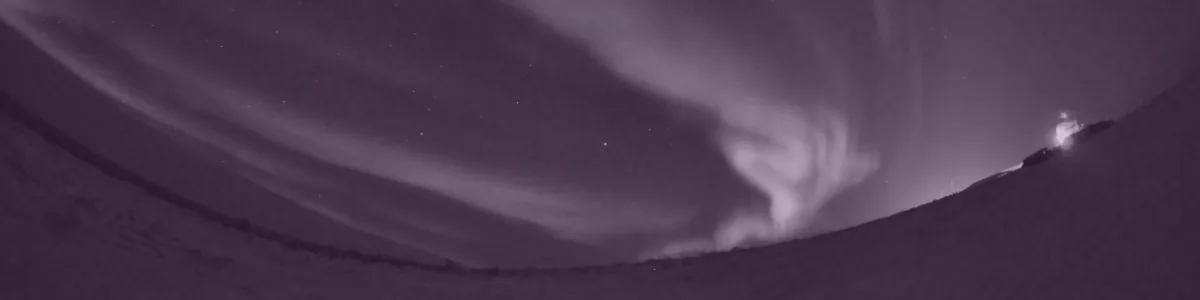
Banner image
Sky high
Credit: Taro Nakai (distributed via imaggeo.egu.eu)