EGU Blogs

Division blogs

CR
Cryospheric Sciences

Did you know? Machine learning can help us understand the cryosphere!
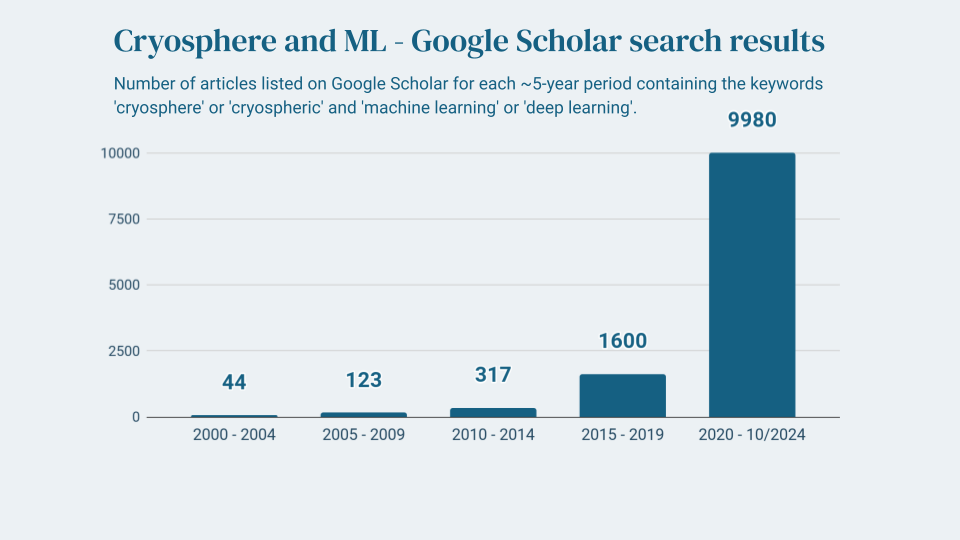
A bar chart showing in which years how many publications included machine learning.

    Recently, Machine Learning (ML) has emerged as a powerful tool within cryospheric sciences, offering innovative and effective solutions for observing, modelling and understanding the frozen regions of the Earth. From learning snowfall patterns and predicting avalanche dynamics to speeding up the process of modelling ice sheets, ML has transformed cryospheric sciences and bears …[Read More]

HS
Hydrological Sciences

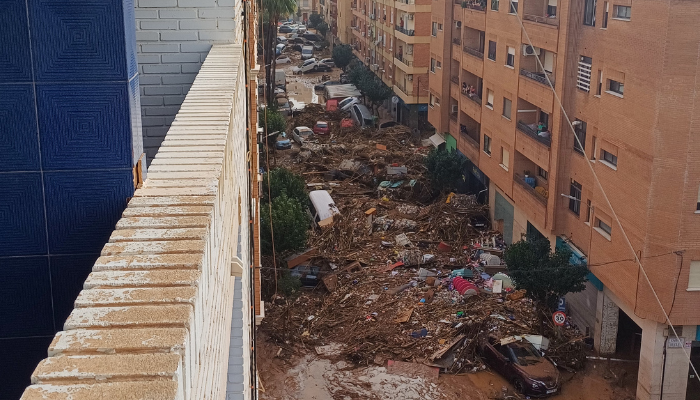
October 2024 floods in the Valencia region, Eastern Spain: One example too many of hazardous debris

October 2024 floods in the Valencia region, Eastern Spain: One example too many of hazardous debris

The recent devastating flash floods in Valencia region, Eastern Spain, have once more highlighted the role of large debris in enhancing urban flood hazard. Urban debris – so-called Urban Flood Drifters (UFDs) – are very varied as shown by a recent survey. They include vehicles, deadwood, waste bins, containers of many types, construction materials, and …[Read More]

SM
Seismology

Seismology Job Portal

Seismology Job Portal

On this page, we regularly update open positions in Seismology for early career scientists. Do you have a job on offer? Contact us at ecs-sm@egu.eu Please, note that other available research positions are displayed on the EGU Jobs Portal. Latest open positions: 1. Machine Learning Seismology Postdoc Institute: Lawrence Livermore National Laboratory (LLNL), USA Salary: …[Read More]

GD
Geodynamics

The Sassy Scientist – Trick or Treat?

The Sassy Scientist – Trick or Treat?

Seasons change, and so do our passions. My climate anxiety? Yeah, it’s on the rise, like the global average temperature. So, Mae asks: My research field feels stagnant (or even dying), with limited opportunities, and I have developed new interests. How hard is it to change fields/direction after your PhD? Dear Mae, I mean this …[Read More]

GM
Geomorphology

Highlighting Laura Krone: Connecting the Earth’s surface to the deep subsurface

Highlighting Laura Krone: Connecting the Earth’s surface to the deep subsurface

This blog post is part of our series: “Highlights” for which we’re accepting contributions! Please contact one of the GM blog editors, Emily (eb2043@cam.ac.uk) or Emma (elodes@asu.edu), if you’d like to contribute on this topic or others.  by Laura Krone, PostDoc in the Sedimentary Systems group at the Freie Universität Berlin (Germany). Email: l.krone@fu-berlin.de How is …[Read More]

GD
Geodynamics

4th Cargèse School on Earthquakes: Nucleation, Triggering, Rupture, and Relationships to Aseismic Processes

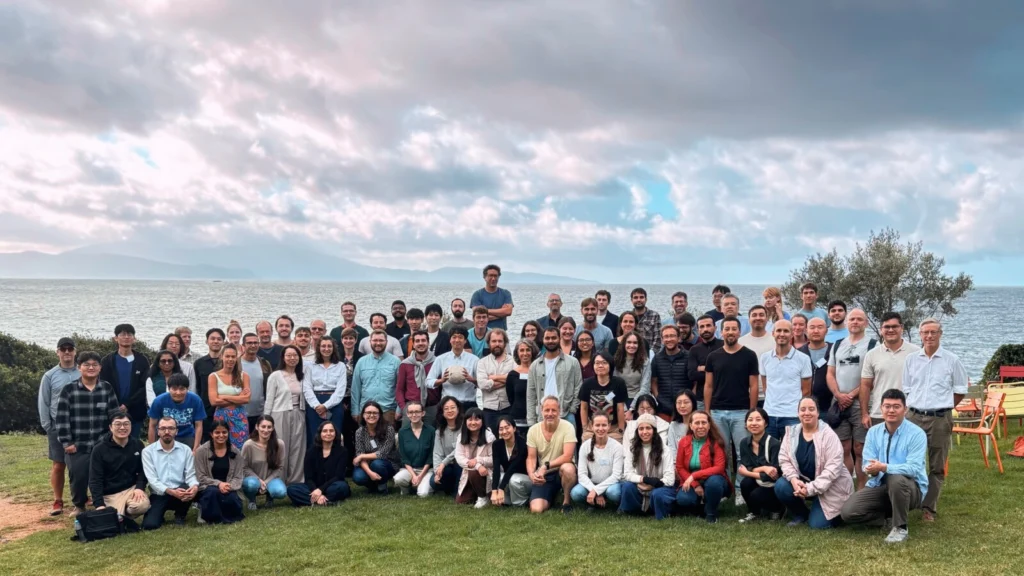
Group photograph of the participants of the 4th edition of Cargèse school on earthquakes. Credit: Anthony Sladen.

How do earthquakes nucleate? How do they arrest? Can we predict or control them? How do fault zone structure and rheology influence rupture? What do earthquakes in the lab tell us? How does fluid injection modulate seismicity? The Institut des Etudes Scientifiques de Cargèse (IESC) premise in Corsica, France was abuzz with discussions about these and …[Read More]

ST
Solar-Terrestrial Sciences

ST-ECS Networking Campfire – How to convene a scientific session

Convening a session at academic conferences is no doubt time-consuming, but they are also the primary catalysts for establishing a research network and significantly boosting your academic profile. Particularly for Early Career Scientists (ECS), the idea of convening a session can be fearful and many worry that they don’t know how to do it or …[Read More]