Detail of a photo: Large angular boulder beside a shallow pebbly stream in a grassy mountain valley, below steep forested slopes and rocky peaks under a dramatic blue sky, in heavily processed colours.
EGU Blogs

Division blogs

HS

The value of failure: Learning from what didn’t work

The value of failure: Learning from what didn’t work
“What failure prepared you for later success?” Tim Ferriss often asks this question to the high-performing guests on his podcast, giving them the opportunity to reflect on how setbacks have shaped their journey. Whether the guest is a leader in business, medicine or science, their answers often share a common theme: failure is not only …[Read More]

GD

Queer Quarterly: Allyship in the LGBTQIA+ community – what it is, how you can help

Queer Quarterly: Allyship in the LGBTQIA+ community – what it is, how you can help

Queer Quarterly is the blog series of the EGU pride group, a LGBTQIA+ team of geoscientists engaged to uphold and improve the rights of the community in the EGU organization. This week’s post is dedicated to allyship: how people outside of the community can support our efforts. The term LGBTQIA+ is the abbreviation for Lesbian, …[Read More]

GMPV is looking for the new ECS Rep!!!

GMPV is looking for the new ECS Rep!!!

The Geochemistry, Mineralogy, Petrology and Volcanology division of the EGU is looking for a new Early Career Scientist representative (ECS rep)! The outgoing rep (Simona Gabrielli) will be standing down officially at the EGU General Assembly 2025, so this is your opportunity to take this role! Why become an early career scientist representative? Being the …[Read More]

CR

Happy birthday to the Cryoblog!

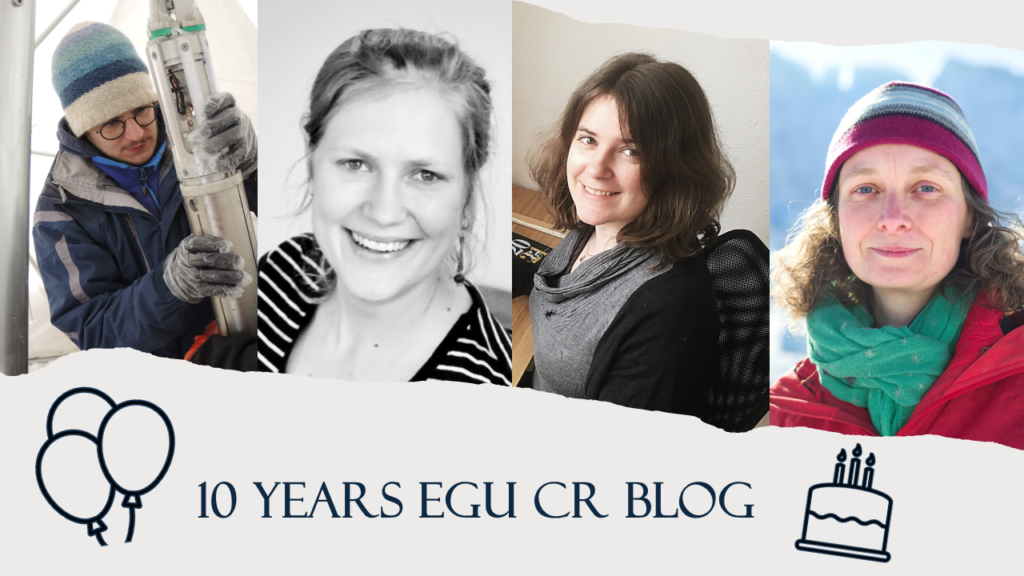
Collage of four people with the heading "10 years EGU CR blog" with balloons and a birthday cake.

  The EGU Cryosphere Blog is now 10 years old: Happy Birthday! It all started in December 2014 with this blog post from Nanna Karlsson, and now counts 452 blog posts across 25 blog categories, including winning three Best EGU blog posts (2016, 2019 and 2021). 881 different (hash)tags were used in our blog posts, …[Read More]

HS

What are water walks, and how can you use them as a research method to gather social science research data?

What are water walks, and how can you use them as a research method to gather social science research data?

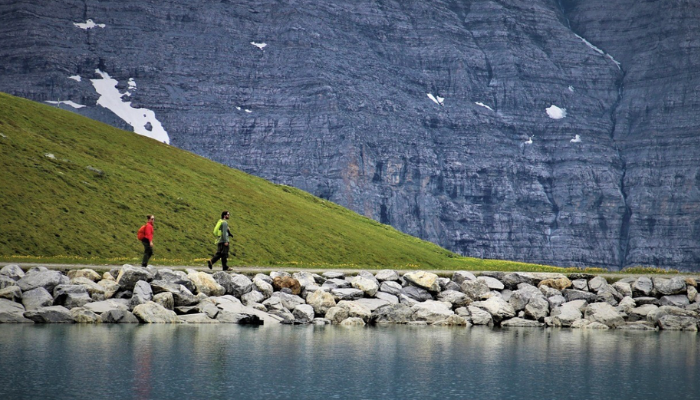
While doing my PhD, which explored community water governance in Scotland, I interviewed participants to understand their work and views concerning communities.  I quickly found that I wanted and needed to leave my and their offices to have these conversations. The setting restricted the conversation, making it difficult to connect with what they told me, …[Read More]

GD

How Hot our Moon Can Get: Mapping Radioactive Elements and Thermal State of the Lunar Interior

How Hot our Moon Can Get: Mapping Radioactive Elements and Thermal State of the Lunar Interior

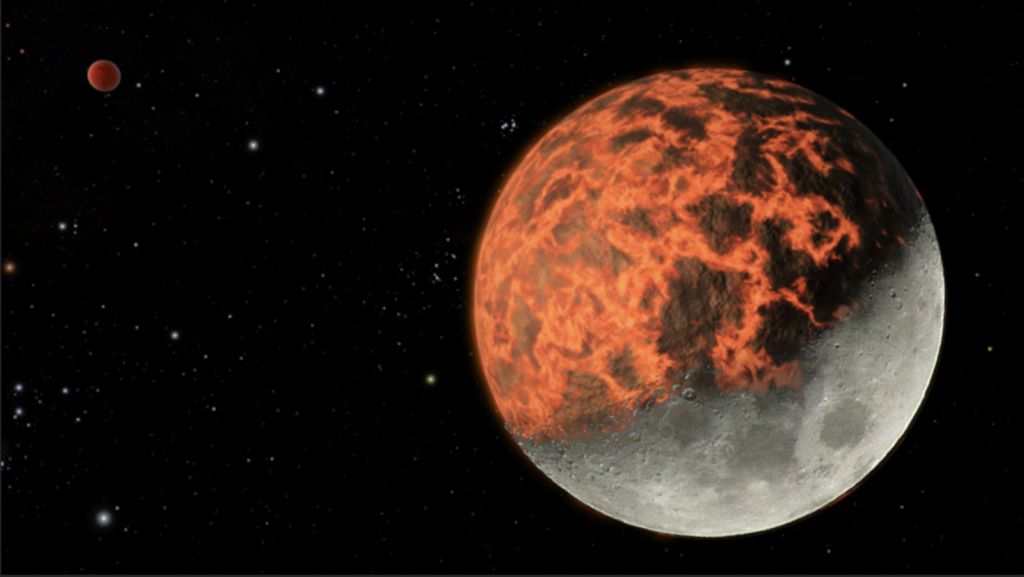
Geochemists and geophysicists, even with their favorite tools, have often scratched their heads while probing Earth’s deep interior—one  can only imagine the challenges while applying those techniques to the Moon! This week in News & Views, Arkadeep Roy, a PhD candidate from the University of Arizona demonstrates how the intersection of experimental petrology, geochemistry, and geophysical …[Read More]

NH

Trans-Border Mountainous Areas: Zones of Conflict or Cooperation Amid Natural and Man-Made Hazards?

Trans-Border Mountainous Areas: Zones of Conflict or Cooperation Amid Natural and Man-Made Hazards?

Mountain ranges have long served as natural boundaries, shaping the geopolitical landscape of nations. However, these towering landmarks often straddle borders, creating zones of cooperation or, more frequently, contention. From the Mont Blanc massif in Europe to the young, fragile ranges of the Himalayas, mountainous regions are fraught with overlapping challenges, including natural hazards, climate …[Read More]

GM

Highlighting the Sediment Cascades workshop in Chile

Highlighting the Sediment Cascades workshop in Chile

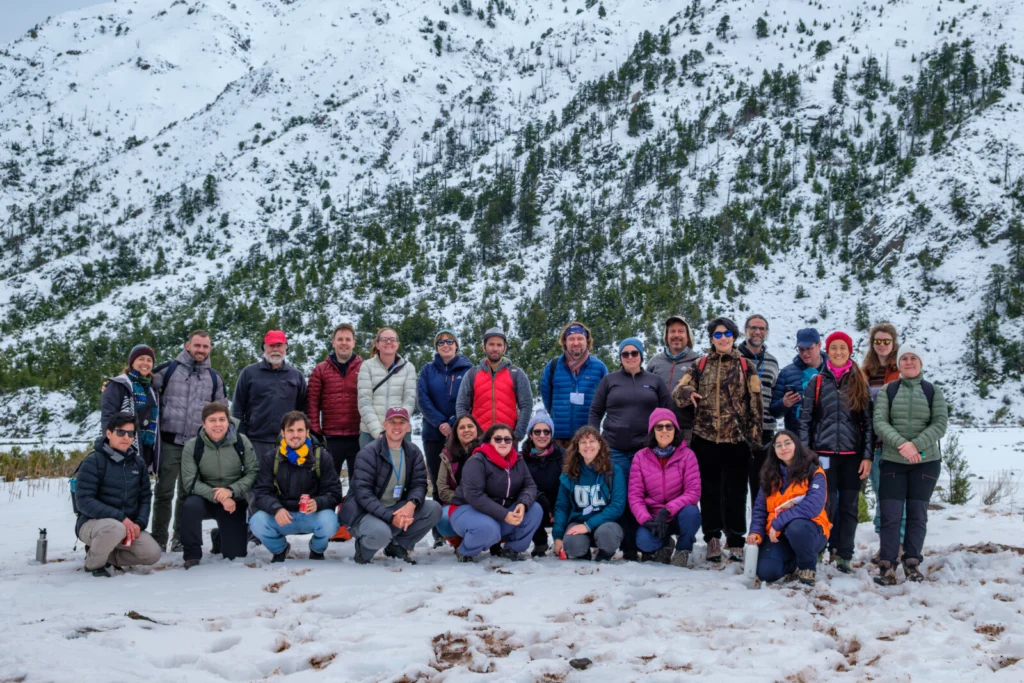
This blog post is part of our series: “Highlights” for which we’re accepting contributions! Please contact one of the GM blog editors, Emily (eb2043@cam.ac.uk) or Emma (elodes@asu.edu), if you’d like to contribute on this topic or others.  by Rebekah Harries, Postdoctoral researcher, Durham University, UK Email: rebekah.m.harries@durham.ac.uk With contributions from Paulina Vergara Torrejón, Elizabeth Orr, Tania …[Read More]