EGU Blogs

Division blogs

HS
Hydrological Sciences

Comparing Apples to Apples: Filtering Water Storage Compartments for GRACE
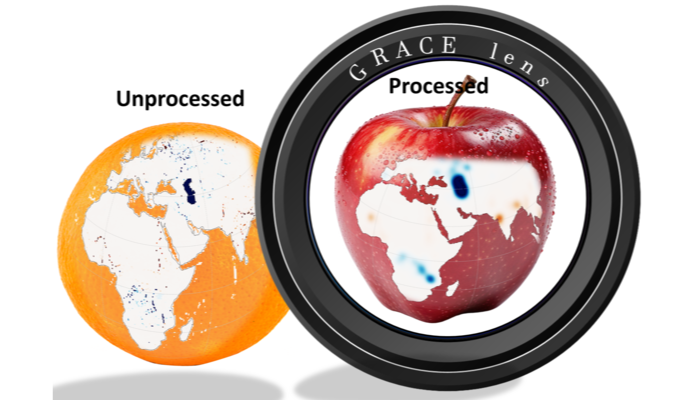
Comparing Apples to Apples: Filtering Water Storage Compartments for GRACE

Have you ever heard that we can “weigh” water on Earth from space?  Since 2002, the GRACE and GRACE-FO satellite missions have been mapping month-to-month variations of the Earth’s gravity field. Because gravity responds to mass, these data can reveal how water is redistributed at the surface and in the subsurface.  The result is a …[Read More]

NH
Natural Hazards

Hunting for historical Adriatic meteotsunamis

Hunting for historical Adriatic meteotsunamis

Before modern instruments, our only clues about past sea events came from written records and folklore. Along the eastern Adriatic coast, stories of sudden floods and “tidal waves” (locally called šćiga) have been passed down for generations. These waves, described as rapid rises and falls of the sea that could flood or empty harbours within …[Read More]

AS
Atmospheric Sciences

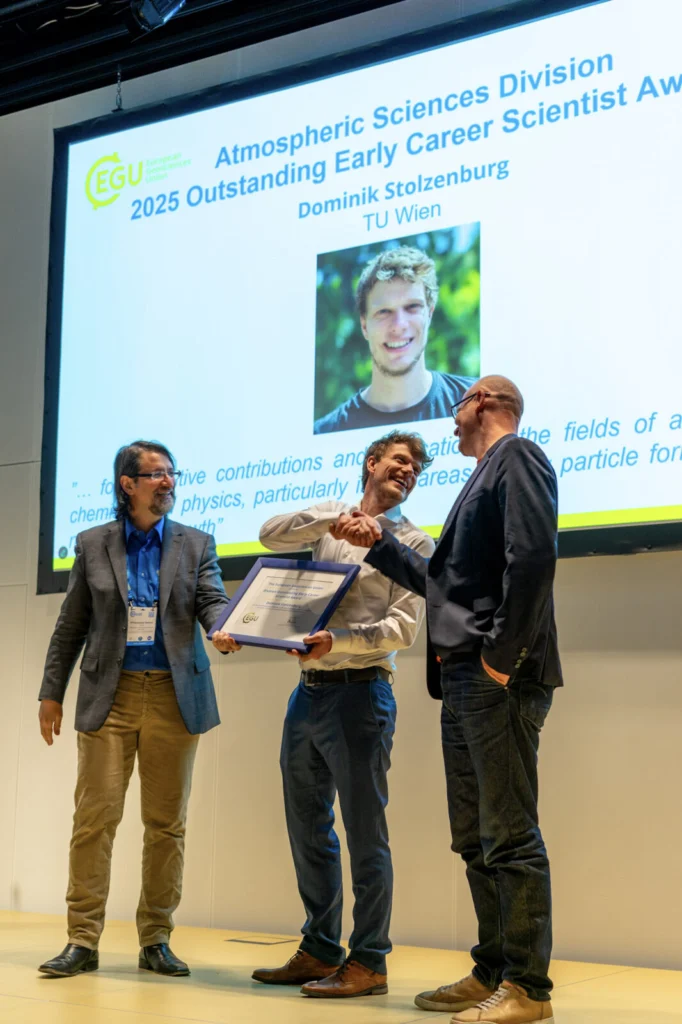
From Particles to the Air We Breathe: Dominik Stolzenburg’s Journey into the Hidden Life of Aerosols

From Particles to the Air We Breathe: Dominik Stolzenburg’s Journey into the Hidden Life of Aerosols

Dr. Dominik Stolzenburg is a chemist in atmospheric physics at TU Wien, specializing in aerosol science and air quality. His work focuses on how ultrafine particles form, transform, and affect both climate systems and human health — especially in cities. Through field measurements, modeling, and data analysis, he explores how human and natural emissions interact, …[Read More]

GM
Geomorphology

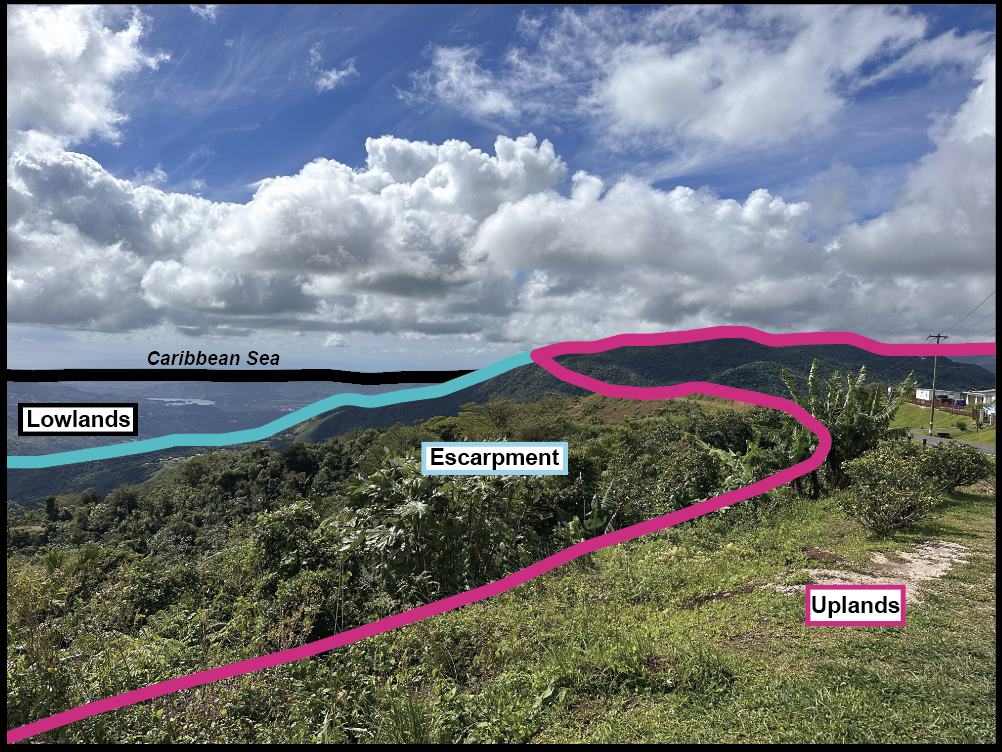
Highlighting: Puerto Rico, Part 2! (Interview with Kate Drobnich)

Highlighting: Puerto Rico, Part 2! (Interview with Kate Drobnich)

This blog post is part of our series: “Highlights” for which we’re accepting contributions! Please contact Emma Lodes (GM blog editor, elodes@asu.edu), if you’d like to contribute on this topic or others.  Interview with Kate Drobnich, PhD student, Department of Geosciences, Colorado State University. Email: kate.drobnich@colostate.edu. Questions by Emma Lodes. Can you briefly describe the …[Read More]

AS
Atmospheric Sciences

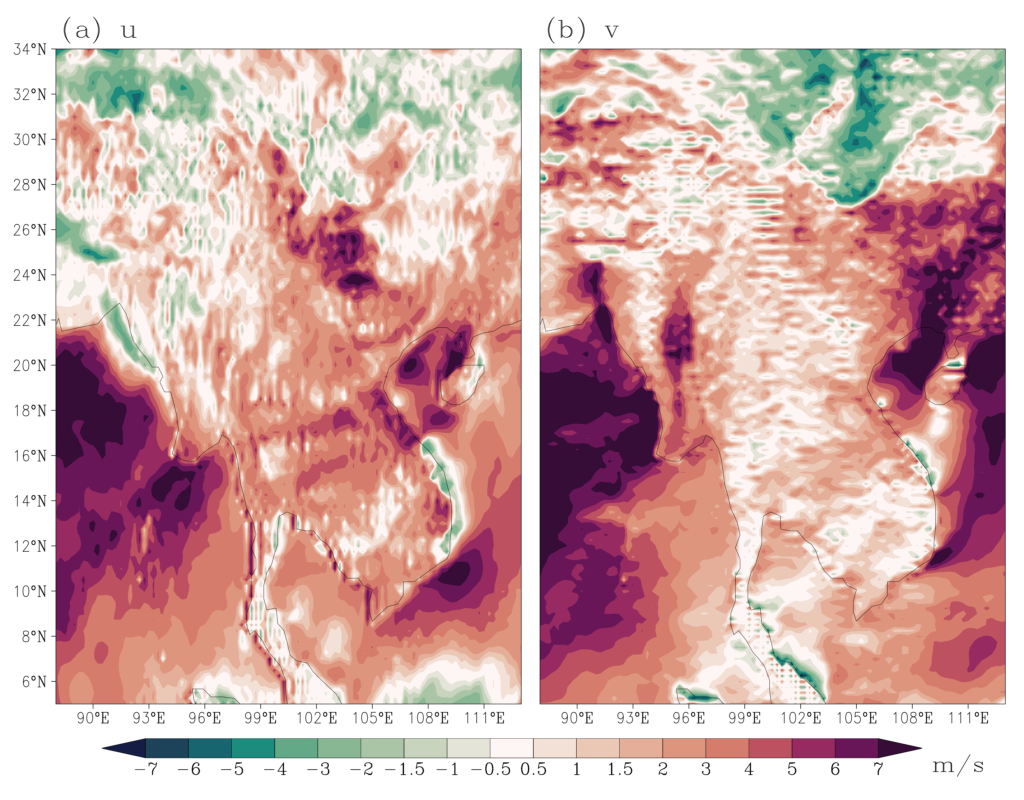
Have you ever seen a weather forecast map that looked like it was wearing a striped sweater?

Have you ever seen a weather forecast map that looked like it was wearing a striped sweater?

This isn’t a new fashion trend in meteorology. For model developers, these unexpected stripes are a sign that something has gone wrong in the complex digital engine that powers our forecasts. Recently, our team at CMA Earth System Modeling and Prediction Centre (CEMC) encountered these very stripes in wind forecasts produced by an operational global …[Read More]

GM
Geomorphology

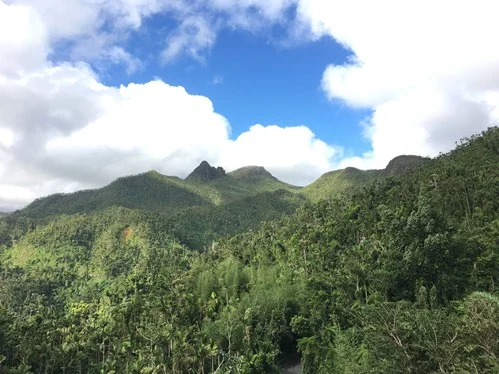
Highlighting: Puerto Rico, Part 1! (Interview with Angus Moore)

Highlighting: Puerto Rico, Part 1! (Interview with Angus Moore)

This blog post is part of our series: “Highlights” for which we’re accepting contributions! Please contact Emma Lodes (GM blog editor, elodes@asu.edu), if you’d like to contribute on this topic or others.  Interview with Angus Moore, Researcher at the Czech Academy of Sciences, Prague, Czechia. Email: angus.moore@uclouvain.be Questions by Emma Lodes. Can you briefly describe …[Read More]

GI
Geosciences Instrumentation and Data Systems

Google Earth Engine, a pioneer tool for environmental solutions

Google Earth Engine, a pioneer tool for environmental solutions

Since 2018, Google Earth Engine (GEE) has granted free access to various institutions for academic and non-profit scientific use. The goal of this initiative is to process large amounts of satellite imagery exclusively over the internet (cloud). This innovative option enabled thousands of users from around the world to investigate environmental phenomena at varying resolutions, …[Read More]

SSP
Stratigraphy, Sedimentology and Palaeontology

Insight into paleo-environmental and -climatic conditions during the Pleistocene period in Kashmir – An understudied and poorly understood puzzle-piece in the interaction-sphere of the Indian Monsoon and Westerly climate-systems

Insight into paleo-environmental and -climatic conditions during the Pleistocene period in Kashmir – An understudied and poorly understood puzzle-piece in the interaction-sphere of the Indian Monsoon and Westerly climate-systems

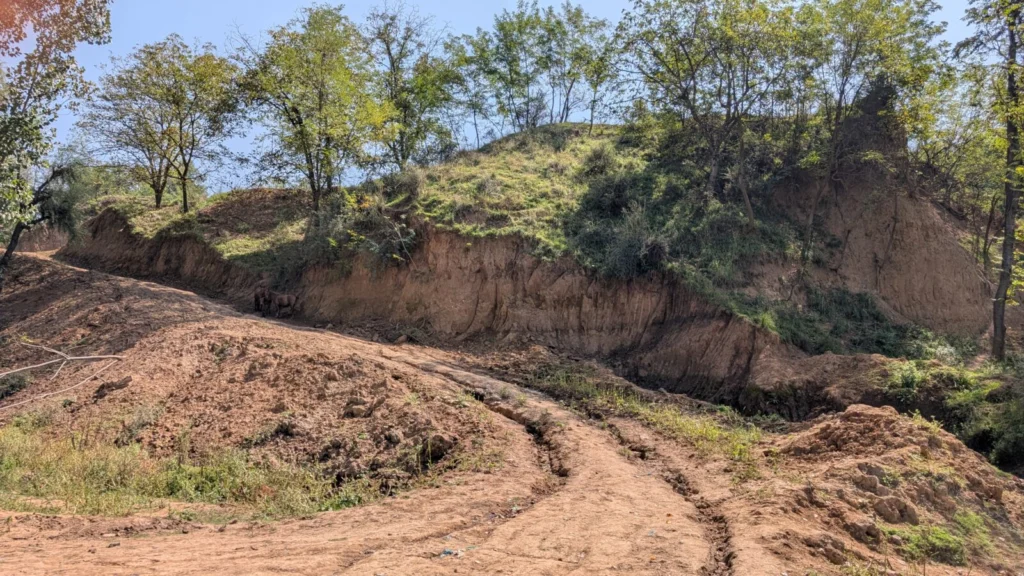
The Indian subcontinent is situated in Southern Asia, where it projects southwards from the Himalayas into the Indian Ocean. Along the northern border of this subcontinent, the Himalayas – home to the earth’s highest mountains on land – stretch with a length of ~2500 km and a width of 300 km. The stunning mountain ranges …[Read More]