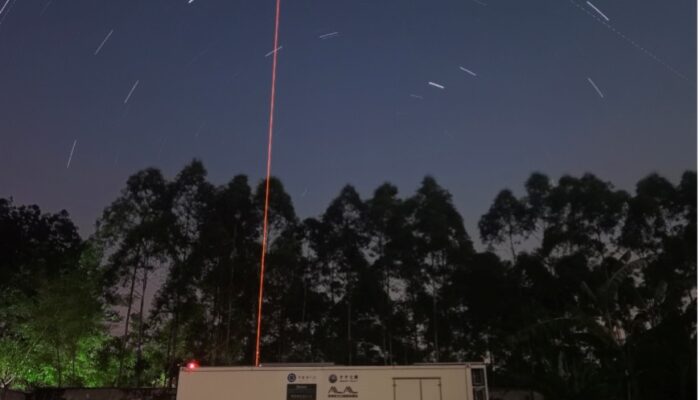
Marine low clouds, such as stratocumulus, play a central role in regulating Earth’s climate by reflecting incoming sunlight back to space. Yet these clouds are notoriously difficult to simulate and predict. One reason is that their evolution depends strongly on the surrounding atmosphere: temperature structure, moisture, winds, and aerosols all interact in complex ways. As a result, cloud response ...[Read More]
Climate: Past, Present & Future
CYCLIM: cycle counting a faster way
As we try to predict what will happen under increasing anthropogenic climate change, climate models can only get us so far. Another key is understanding past changes in the Earth’s climate. To do this, palaeoclimatologists turn to natural archives (e.g., sediment cores and speleothems) and extract records of past variability using their properties, such as chemical or physical composition. H ...[Read More]
Ocean Sciences
A Record-Breaking Indian Ocean Dipole: What Happened in 2021–2022?
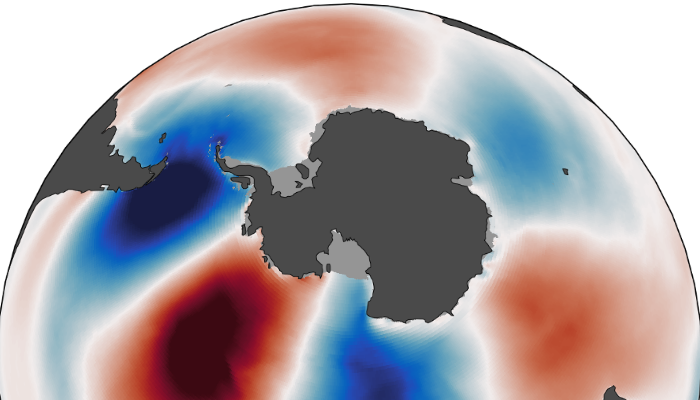
The Indian Ocean Dipole (IOD) is generally considered a seasonal mode of variability, developing and decaying within a single year. During 2021–2022, however, negative IOD conditions persisted for approximately 19 months (Figure 1, top left), making this event the longest—and among the strongest—observed since reliable records began. This unusual persistence highlights important aspects of ocean–a ...[Read More]
Geodynamics
The courage to be disliked: reflections on peer-review processes
Although often daunting and discouraging, every academic must navigate the inevitable process of peer review. In this week’s post, Jean-Baptiste Koehl, postdoctoral researcher at the University of Oslo (Norway), reflects on what the future of peer review might be. Author disclaimer: The reflections presented here reflect my perspective grounded in my own experience. While peer review is a key mech ...[Read More]
Geomorphology
Highlighting: Fluvial Biogeomorphology! (Interview with Florian Betz)
This blog post is part of our series: “Highlights” for which we’re accepting contributions! Please contact Emma Lodes (GM blog editor, elodes@asu.edu), if you’d like to contribute on this topic or others. by Florian Betz, Principal Investigator at the Earth Observation Research Cluster at University of Würzburg. Email: florian.betz@uni-wuerzburg.de What is biogeomorphology and why is it important ...[Read More]
Natural Hazards
Extreme hourly rainfall is increasing in Italy: insights from high-resolution climate reanalysis
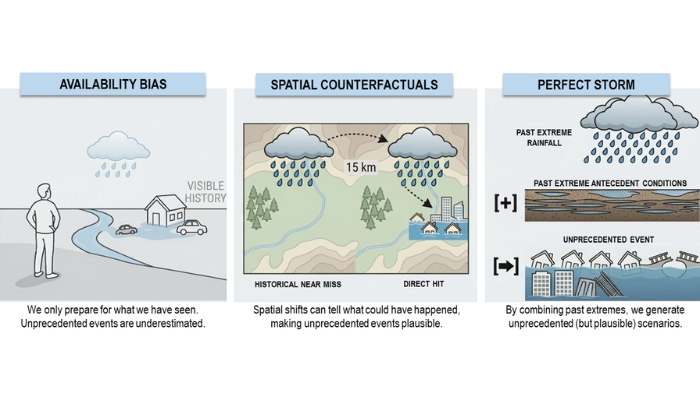
Intense rainfall lasting only a few hours is often enough to trigger natural hazards such as flash floods and landslides, leading to severe damage to infrastructure. These short-lived events are among the most dangerous natural hazards in the Mediterranean region, yet they are also among the hardest to study. Their small spatial scale and brief duration mean that they are often missed or underesti ...[Read More]
Solar-Terrestrial Sciences
Probing the Solar Wind with Spacecraft Radio Occultation Signals: Chasing a Unified Method to Probe the Sun
Introduction The solar wind, a continuous outflow of charged particles from the solar corona, plays a fundamental role in shaping the heliosphere and driving space weather. Its interaction with planetary magnetospheres and atmospheres regulates magnetospheric dynamics, influences atmospheric escape, and governs space weather hazards that can affect both space- and ground-based technologies. Despit ...[Read More]
Cryospheric Sciences
How Citizen Scientists mapped Arctic Permafrost
Cryosphere scientists know it well; the Arctic doesn’t give up its secrets easily. This is especially true when it comes to exploring permafrost -– frozen soils that store centuries of history underground. Keeping an eye on the state of permafrost is more important than ever, as widespread permafrost thaw is a direct result of rising global temperatures. However, monitoring the vast Arctic is not ...[Read More]
Geodesy
PhD abroad: Shuxian Liu
Doing a PhD is a challenge in itself. Doing it in another country, away from family and friends, is even harder. Handling the requirements of academia while adjusting to a new culture, language, and way of life can be overwhelming at times. But, doing a PhD abroad is not defined by challenges alone. A new academic and social environment can lead to new friendships, fresh perspectives, and personal ...[Read More]
Biogeosciences
How to write a competitive MSCA Postdoctoral Fellowship
Demonstrating independence is a critical step when you pursue a career in academia: not only being excellent at executing research, but also showing you can shape ideas into a coherent project, choose the right environment, and lead work that matters. EU funding can be a strong catalyst for that transition, especially in the postdoc phase, because it is designed to reward clear scientific vision p ...[Read More]