Welcome to the blog of the Geomorphology (GM) Division of the European Geosciences Union (EGU).
Geomorphology is the scientific study of land-surface features and the dynamic processes that shape them. Besides focusing on the diverse physical landscapes of the Earth, geomorphologists also study surfaces of other planets. Understanding landform history and dynamics, and predicting future changes through a combination of field observations, physical experiments, geochemical analysis and numerical modelling is at the heart of geomorphology. In this blog we will be bring you the latest news, events and activities that would be of interest to a geomorphologist and keep you updated on fascinating research being undertaken in geomorphology.
The aim of the blog is to:
- Provide a forum for dissemination of information and geomorphology activities such as:
- Events, workshops, conferences, meetings
- Outstanding work of young geomorphologists
- Sharing common advices and solutions for tricky field/monitoring/data challenges
- New technological developments
- Interesting findings
- Latest geomorphic processes happening all around the planet (or universe?)
- Funny incidents connected to geomorphology
- Promote communication and scientific interchange among geomorphologists.
Everyone can contribute to the blog by sending a message to any of the editors below.
The opinions expressed in the Geomorphology blog are those of the authors, whose views may differ from those of the European Geosciences Union.
About the GM Division
Geomorphology is the scientific study of land-surface features and the dynamic processes that shape them. Besides focusing on the diverse physical landscapes of the Earth, geomorphologists also study surfaces of other planets. Understanding landform history and dynamics, and predicting future changes through a combination of field observations, physical experiments, and numerical modelling is at the heart of geomorphology. The division brings together research on processes that build topography trough e.g. the effects of tectonic forces as well as processes that modify the terrain such as weathering, erosion through running water, waves, glacial ice, wind and gravitational forces. Division members also study the impact of humans on geomorphological processes and investigate how geomorphological knowledge can be applied to solve problems of relevance to societies.
About EGU
The European Geosciences Union (EGU) is the leading organisation for Earth, planetary and space science research in Europe. With our partner organisations worldwide, we foster fundamental geoscience research, alongside applied research that addresses key societal and environmental challenges. Our vision is to realise a sustainable and just future for humanity and for the planet.
It is a non-profit international union of scientists with about 23,500 members from all over the world. Membership is open to individuals who are professionally engaged in or associated with geosciences and planetary and space sciences and related studies, including students and retired seniors.
The EGU publishes a number of diverse scientific journals, which use an innovative open access format, and organises topical meetings, and education and outreach activities. It also honours scientists with a number of awards and medals. The annual EGU General Assembly is the largest and most prominent European geosciences event, attracting over 22,000 scientists from all over the world in the year 2026. The meeting’s sessions cover a wide range of topics, including volcanology, planetary exploration, the Earth’s internal structure and atmosphere, climate, as well as energy and resources.
The EGU was established in September 2002 as a merger of the European Geophysical Society (EGS) and the European Union of Geosciences (EUG), and has headquarters in Munich, Germany.
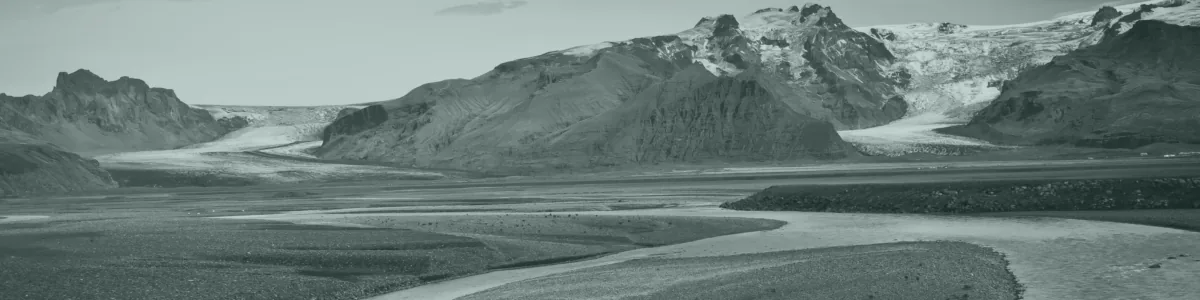
Banner image
Sandur
Credit: Miloš Rusnák (distributed via imaggeo.egu.eu)