CL
Climate: Past, Present & Future

Climate of the Past

When a major climate event goes almost unnoticed: the elusive 8.2 ka signal in southern France stalagmites
When a major climate event goes almost unnoticed: the elusive 8.2 ka signal in southern France stalagmites

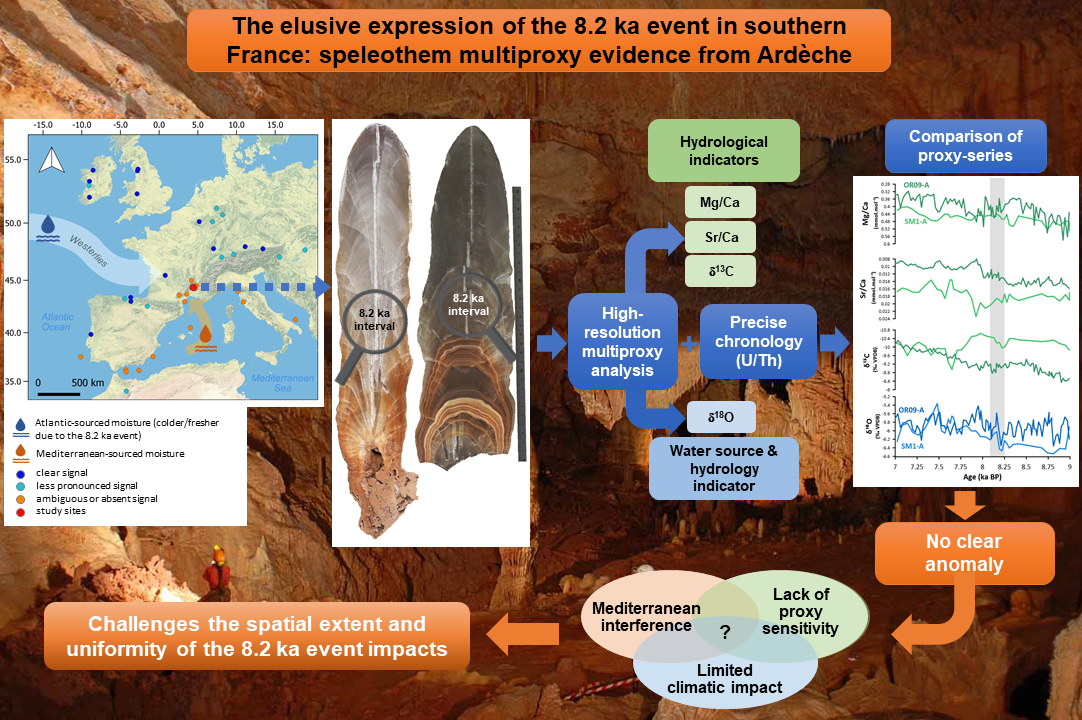
  Around 8,200 years ago, the climate of the Northern Hemisphere experienced an abrupt disturbance. In Greenland ice cores, the signal is unmistakable: a rapid drop in temperatures, followed by a gradual return to previous conditions. This episode, which lasted about 150 years, is known as the 8.2 ka event (“ka” meaning thousand years before 1950). It is often described as the most prominent ...[Read More]

When European pollution reshaped the Asian summer monsoon

When European pollution reshaped the Asian summer monsoon

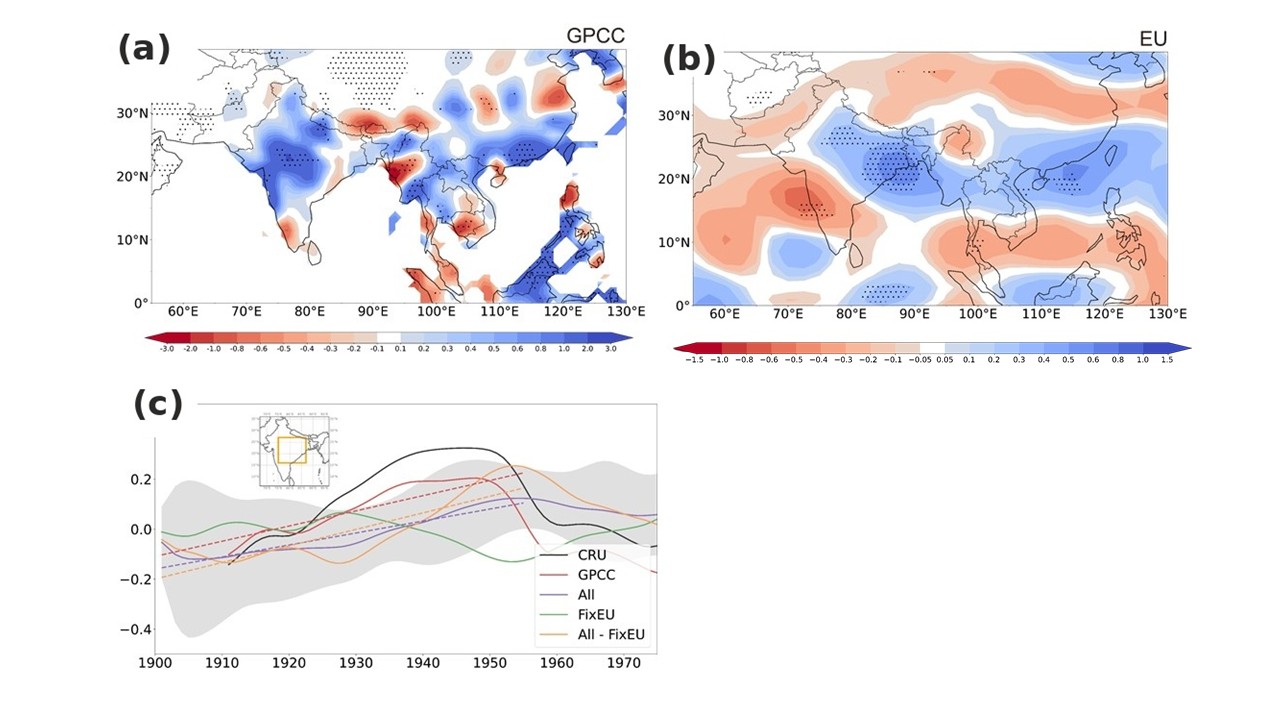
  The Asian summer monsoon is one of the most powerful climate phenomena on Earth. Each year, it brings life-giving rainfall to billions of people across South and East Asia. Its arrival determines harvests, water supply, food security, and economic stability. We often think of the monsoon as something driven locally: by the heating of the Indian subcontinent, by ocean temperatures, or by reg ...[Read More]

CYCLIM: cycle counting a faster way

CYCLIM: cycle counting a faster way

As we try to predict what will happen under increasing anthropogenic climate change, climate models can only get us so far. Another key is understanding past changes in the Earth’s climate. To do this, palaeoclimatologists turn to natural archives (e.g., sediment cores and speleothems) and extract records of past variability using their properties, such as chemical or physical composition. H ...[Read More]

20 years of Climate of the Past: A journey through two decades of paleoclimate research

20 years of Climate of the Past: A journey through two decades of paleoclimate research

Twenty years ago, a small group of scientists set out to create a journal dedicated entirely to understanding Earth’s climate history. That journal, Climate of the Past (CP), was launched in 2005 as an international open-access journal of the European Geosciences Union (EGU), and over the past two decades it has become a cornerstone for the paleoclimate community. From geological eras to the last ...[Read More]