Why is our Earth not far hotter than it is? A deceptively simple question, with a crucial answer: our planet reflects a significant fraction of sunlight back into space. This reflectivity, known as albedo, determines how much solar energy is absorbed versus returned. On average, Earth reflects about 30 % of incoming sunlight, with the …[Read More]
satellite observations
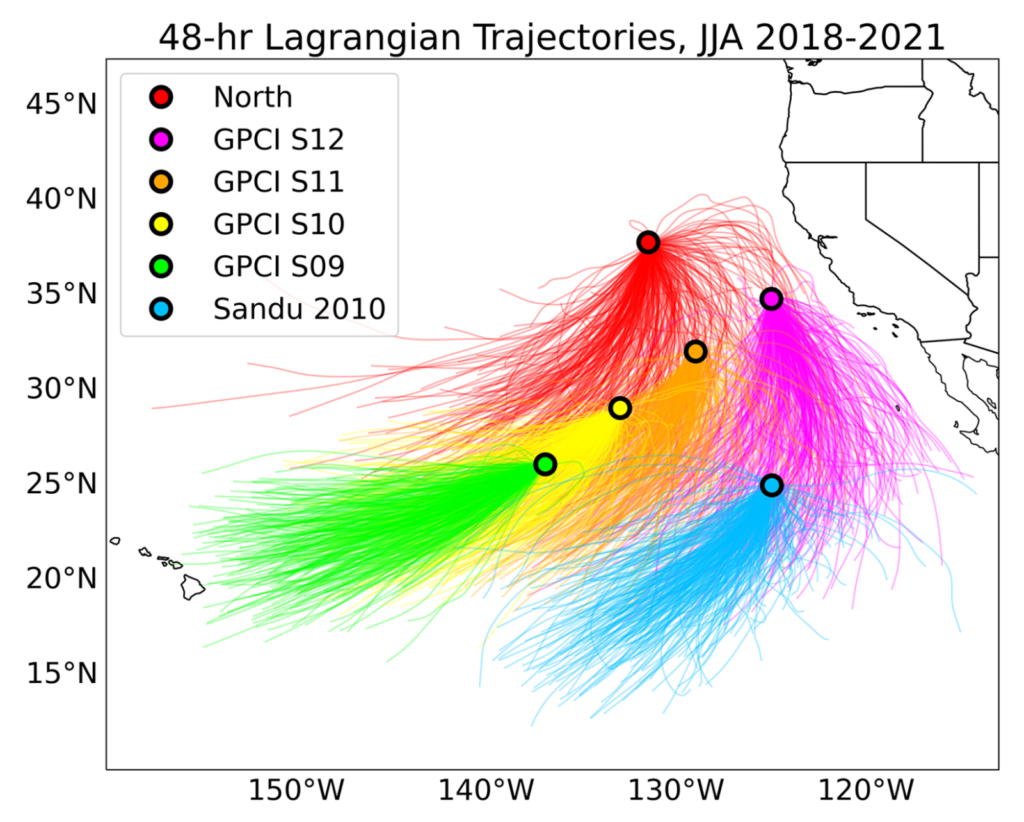
Building a library of observed air mass trajectories to study aerosol-cloud interactions
Marine low clouds, such as stratocumulus, play a central role in regulating Earth’s climate by reflecting incoming sunlight back to space. Yet these clouds are notoriously difficult to simulate and predict. One reason is that their evolution depends strongly on the surrounding atmosphere: temperature structure, moisture, winds, and aerosols all interact in complex ways. As …[Read More]