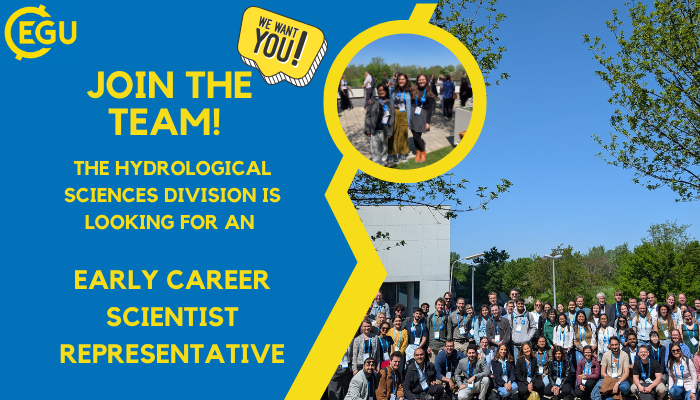
It’s time to grow the Early Career Scientists (ECS) team of the Hydrological Sciences Division! We’re looking for the next ECS representative to contribute to coordinating social media, our newsletter, online campfires, our podcast series, and to join our fantastic blog team. Interested? Keep reading to find out more! What do ECS teams do? EGU’s …[Read More]
1727 search results for "network"
If you didn't find what you were looking for, try searching again.
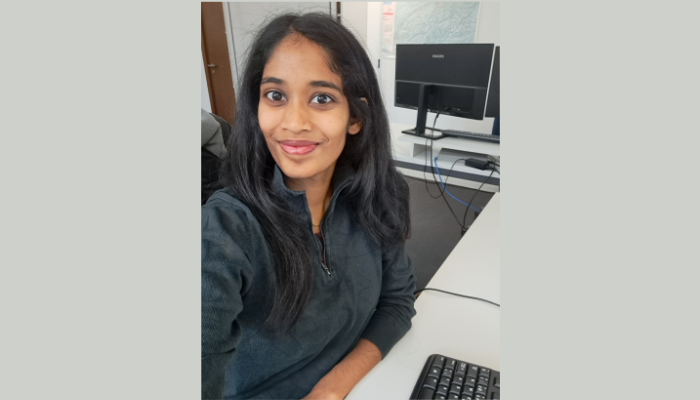
GeoTalk: meet Thanushika Gunatilake, researcher of earthquake impacts on geothermal energy
Hello Thanushika – welcome to GeoTalk! Before we delve deeper, could you introduce yourself to our readers? Thank you for having me! I’m Thanushika Gunatilake, an Assistant Professor at Vrije Universiteit Amsterdam. My research connects natural and human-induced processes in the Earth’s crust; from earthquake nucleation in the central Apennines, subduction dynamics, and volcanic activity, …[Read More]
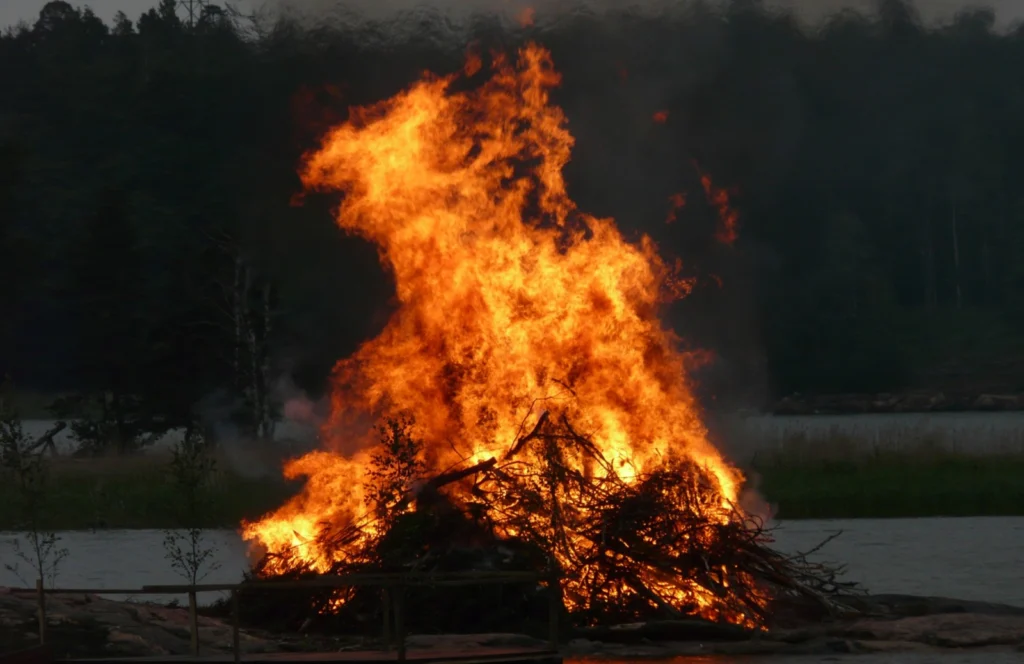
EGU Campfire Geodesy – Share Your Research – 14th Edition
We are excited to announce the 14th edition of Geodesy Campfire – Share Your Research in November. The Geodesy EGU Campfire Events “Share Your Research” give (early career) researchers the chance to talk about their work. We have two exciting talks by our guest speakers, Betty Heller-Kaikov and Pingping Huan. Below, you can find the …[Read More]
GeoPolicy: The first case of rights of Nature in Europe: The Mar Menor Lagoon
The rights of Nature: A new paradigm Does Nature have inalienable rights just as humans do? This is what the rights of Nature paradigm stands for, marking a radical departure from the assumption that Nature is property under the law. The idea of rights for Nature stems from legal philosophy and political science. Partially, it …[Read More]
Looking Back at IAHS2025 in Roorkee: Hydrologists Assemble in India
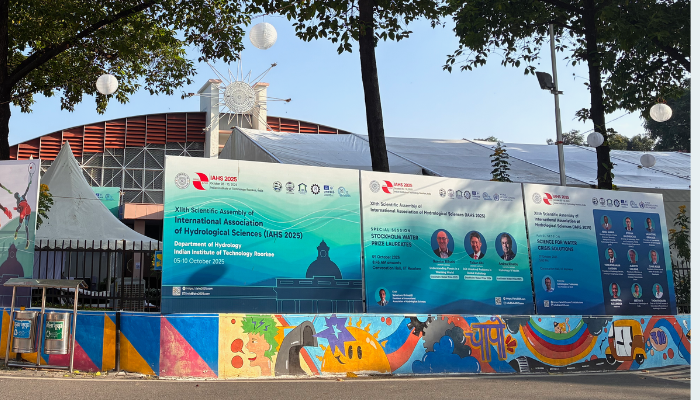
Between October 5 – 10, 2025, the XIIth Scientific Assembly of the International Association of Hydrological Sciences (IAHS) took place in Roorkee, India. Overall, more than 600 hydrologists assembled on the campus of the Indian Institute of Technology (IIT) to share their latest progress, discuss with their colleagues, nurture connections, and celebrate hydrology as a …[Read More]
Faults vs. Fractures — How to Tell Them Apart ?
Faults and fractures can sometimes be confusing, especially for students taking their first geology courses. When they go hiking in the mountains and see a crack in the rock, they often wonder — is this a fracture or a fault? Even scientists sometimes mix the two terms, so it’s good to understand the difference. Since …[Read More]
Where is climate science heading? Views from the community
At the recent UNDERPIN2 conference (Understanding rare events and their climatic impacts, in Erice, Sicily), we held a discussion on the future of climate science. To guide the conversation, I ran an interactive survey to capture how climate scientists see the current challenges, opportunities, and blind spots in climate research, communication, and the use of …[Read More]
From Mountains to Oceans: How the memory of ancient orogens guides the rupture of continents
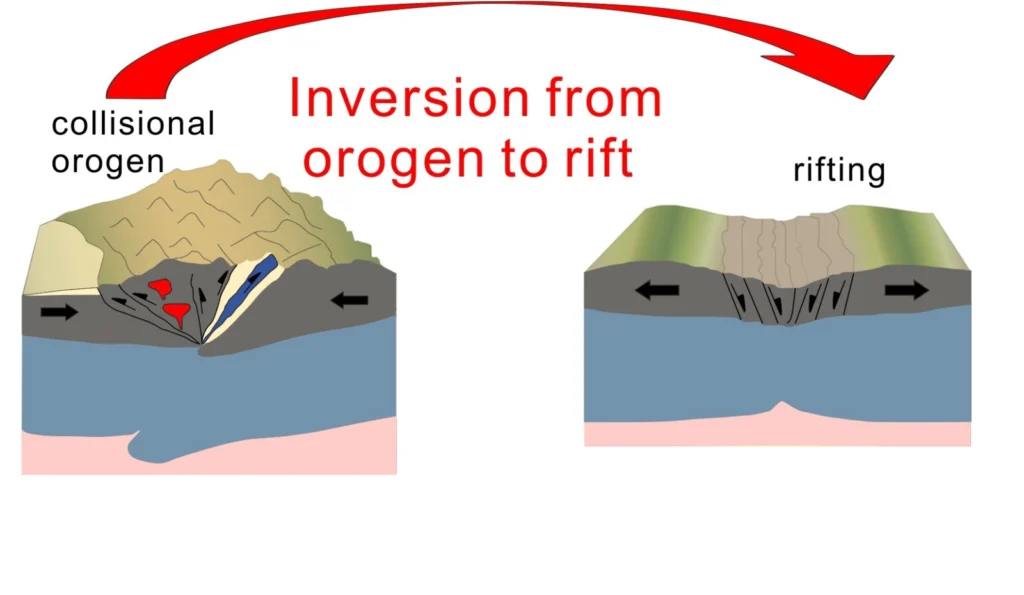
In this new blog, Dr. Kai Li (GFZ Potsdam) talk about his PhD work, where he used accordion numerical models to explore the tectonic history of the South China Sea. His PhD research focuses on the impact of orogenic inheritance on rifts and rifted margins, employing advanced geodynamic modeling techniques. Have you ever tried to …[Read More]
GI Campfire – Artificial Intelligence: Exploring New Frontiers in Geoscience
The Geoscience Instrumentation and Data Systems (GI) Division of the EGU is opening its 2025 Campfire series with an event dedicated to Artificial Intelligence (AI). The Campfire will take place on Thursday, 30 October 2025 at 16:00 CET and will be coordinated by the Early Career Scientists (ECS) team of the GI Division. Campfires are …[Read More]
Working in industry during your PhD
A guide for early career researchers exploring opportunities beyond academia Pursuing a PhD often starts with the assumption that your next step will be a postdoc, followed by a tenure-track position. But, for a number of reasons, many early career researchers are starting to look beyond academia. Industry careers represent an appealing alternative as they …[Read More]