Snowy days are here! Between two slides and snow ball (kind and consented) fights with colleagues, let’s see what’s in my mailbox… Well, this one is pretty topical, let’s go! Dear Sassy scientist, I think I lost all motivation for research but I need to work! What do I do? Please help me! My sweet cute pie, Let me ask you a quick question, when was the last time you took va ...[Read More]
Soil System Sciences
Soil Carbon, Resilience, and Modelling the Future: A Conversation with Katerina Georgiou
Soils play a central role in climate change mitigation and adaptation, with soil carbon management increasingly seen as a key pathway for enhancing ecosystem resilience—particularly in agricultural systems. At the same time, predicting how soil carbon responds to changing climate and management remains one of the major challenges in soil system science. In this interview, we speak with Katerina Ge ...[Read More]
Geodesy
EGU Campfire Geodesy – Share Your Research – 16th Edition
We are excited to announce the 16th edition of Geodesy Campfire – Share Your Research in February. The Geodesy EGU Campfire Events “Share Your Research” give (early career) researchers the chance to talk about their work. We have two exciting talks by our guest speakers, Matthias Willen and Joshua Dreyer. Below, you can find the details of the topics awaiting us. We will have time to network after ...[Read More]
Stratigraphy, Sedimentology and Palaeontology
CSI: Sedimentology
Ocean Sciences
How do mesoscale eddies modulate CO2 fluxes in the Southern Ocean?
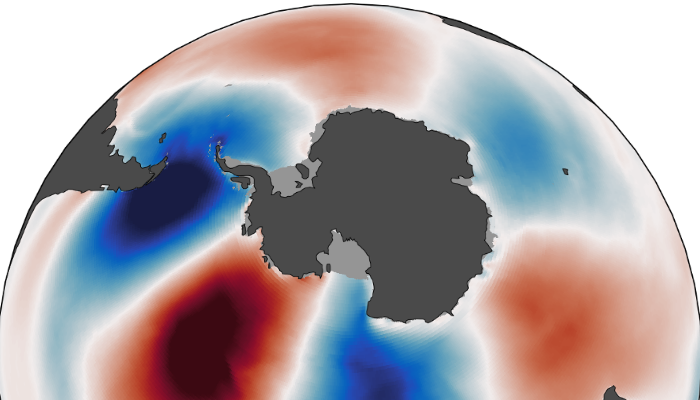
Mesoscale eddies and Southern Ocean carbon sink The Southern Ocean takes up more than a quarter of the anthropogenic CO₂. Its powerful westerly winds, deep overturning circulation, and intense mixing make it a major player in Earth’s climate system. But beneath this large-scale picture lies a world of swirling, dynamic structures that constantly reshape the ocean’s physical and biogeochemical prop ...[Read More]
Tectonics and Structural Geology
TS Must-read – wrap up and tectonics history
TS Must-read series, the wrap up In 2020, we started the Must Read activity by asking the TS community a simple question: which papers do you think every tectonics and structural geology student should read? that led to more than a thousand nominations and lively debate. A short list of 48 Must Read papers was distilled by adding 3 complementary contributions to the 45 entries that had the larges ...[Read More]
Hydrological Sciences
HydroTalks: Heidi Kreibich about Floods, Human-water Feedbacks, and the IAHS Scientific Decade Panta Rhei
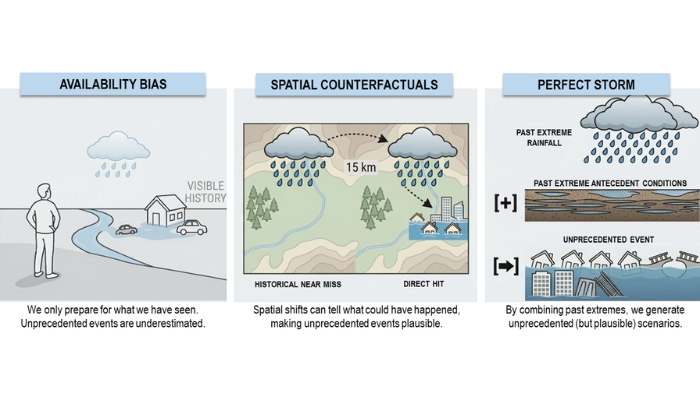
For this month’s episode of HydroTalks, we’re thrilled to welcome Heidi Kreibich. She is head of the Section Hydrology at GFZ Helmholtz Centre for Geosciences and senior lecturer at the Geography Department of Humboldt-Universitat zu Berlin. Heidi is also president of the Natural Hazards division of the EGU and president of the International Commission on Human-Water Feedbacks in the IAHS. In add ...[Read More]
Geosciences Instrumentation and Data Systems
GI and PS Joint Campfire. Investigation of Planetary Bodies: Analog Studies And Mission Concepts
The Geoscience Instrumentation and Data Systems (GI) and Planetary and Solar System Sciences (PS) Divisions of the EGU are excited to host the first joint campfire event, shifting our gaze upward and outward. On Monday, 26 January at 4 pm CET, we invite the geoscience community to a session dedicated to the frontiers of space with the campfire entitled “Investigation of Planetary Bodies: Analog St ...[Read More]
Nonlinear Processes in Geosciences
Turbulence (and not only): The Legacy of Vincenzo Carbone, 2025 Richardson Medal
One year ago, Vincenzo Carbone left us. Vincenzo was a leading scientist in nonlinear geophysics, turbulence, and complex systems, influencing fluid and plasma physics, weather and space weather, solar–terrestrial relations, and climate dynamics. Yet for those who worked closely with him, his legacy goes well beyond his remarkable scientific achievements. Scientific Contributions and Impact Over m ...[Read More]
Geodynamics
Understanding geodynamic modelling results through maps of neural networks
The huge amount of data produced in Geosciences is increasing exponentially, and numerical modelling has become a key tool for understanding tectonic evolution over time, which also increases the volume of data produced. Here, I, João Bueno (PhD student at University of São Paulo, Brazil) will present how a machine learning technique known as Self-Organising Maps can be used to understand the int ...[Read More]