
This was originally posted here. Mass extinctions are insanely catastrophic, but important, events that punctuate the history of life on Earth. The Jurassic/Cretaceous boundary, around 145 million years ago, was originally thought of to represent a mass extinction, but has subsequently been ‘down-graded’ to a minor extinction event based on new discoveries. However, compared to …[Read More]
Palaeontology
New species of ‘river dolphin’ reveals their ancient marine origins
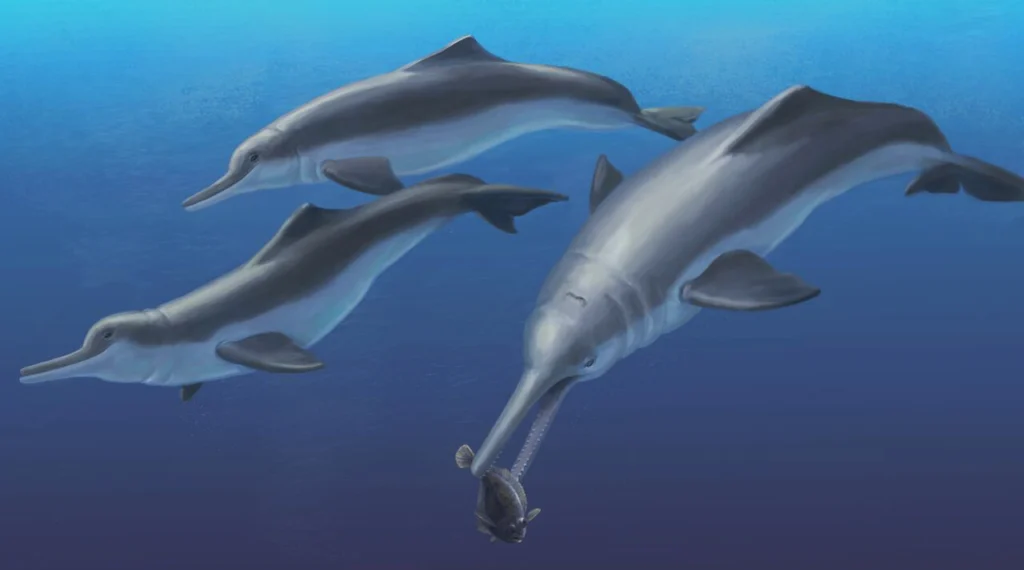
A new species of extinct dolphin closely related to modern Amazonian ‘river dolphins’, but which dwelled in ancient oceans, is helping to solve the mystery of how and when dolphins adapted for life away from the sea. Freshwater dolphins are endangered, largely due to human activity. In modern ecosystems, only five or six species remain, …[Read More]
Welcome to guest blogger Dr. Sabine Lengger!
Hi readers of “Green tea and Velociraptors”, my name is Sabine Lengger, I am a scientist, and I am an avid reader of Jon’s blog too. I started out my scientific career as a chemist / biochemist, and became more and more fascinated by the fields of environmental chemistry and molecular palaeontology. Since Jon spends …[Read More]
SVPCA 2015
This year, the 63rd Symposium for Vertebrate Palaeontology and Comparative Anatomy is taking place alongside the 24th Symposium of Palaeontological Preparation and Conservation with the Geological Curators’ Group (what a mouth-full..), at the National Oceanographic Centre in Southampton. I don’t have much to say about this conference, as I’m heading to it’s international cousin, SVP (Society for …[Read More]
A thought on impact factors
OK, bear with me on this one. It’s a bit of a thought dump, but it would be interesting to see what people think. You can’t go anywhere in academia these days without hearing about impact factors. An impact factor is a metric assigned to a journal that measures the average number of citations per …[Read More]
They might be giants, but how could they live with each other?
Sauropod dinosaurs are the biggest animals to have ever walked on land. They are instantly recognised by their long, sweeping necks and whiplashed tails, and nearly always portrayed moving in herds, being stalked by hungry predators. In recent years, a huge amount of taxonomic effort from scientists has vastly increased the number of known species …[Read More]
The early evolution of birds – more complicated than trying to untangle your headphones..
Birds are a phenomenal story of evolutionary success. As modern-day dinosaur descendants, they occupy almost all environments and ecosystems around the globe, and are truly animals that capture our imaginations. However, how did they become so diverse, both in number and form? This is something only the fossil record can divine for us. Birds first …[Read More]
Palaeontology in the 21st Century
Palaeontology is the study of the history of life on Earth. Whenever I get asked what I do, my answer always gets a predictable response: either “Oh, like Ross from Friends?” “So Jurassic Park?” or “So you dig dinosaurs?” Neither of these are close to what myself, my colleagues, or the broader field are doing. …[Read More]
Top 10 dinosaur facts!
For those of you who may not have been aware, I was fortunate enough to recently publish a dinosaur book for kids, complete with build-it-yourself pop-out dinosaurs. I’ve recently published an article in The Guardian about it, which features much of the great artwork by Vladimir Nikolov. It’s all about some of the perhaps less …[Read More]
The origin of a second wave of supreme-swimming crocodiles
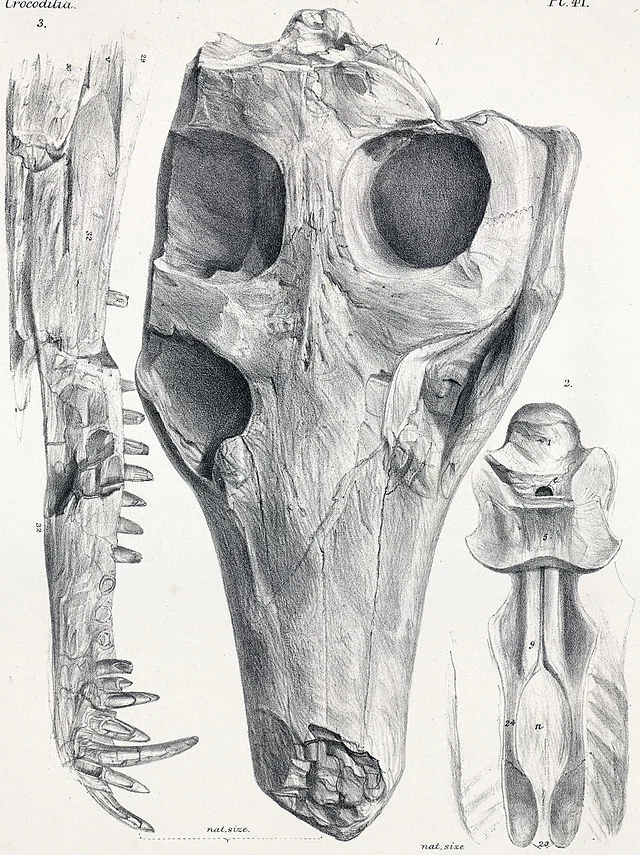
Millions of years ago, crocodiles were far more diverse (and weird) than the ones we still have around today. They ranged from armoured, tank-like forms living on land and feeding on plants, to 9 metre long fully-fledged swimmers out in the open oceans. In the Jurassic period, most of the crocs we know of were …[Read More]