
This was originally posted here. Mass extinctions are insanely catastrophic, but important, events that punctuate the history of life on Earth. The Jurassic/Cretaceous boundary, around 145 million years ago, was originally thought of to represent a mass extinction, but has subsequently been ‘down-graded’ to a minor extinction event based on new discoveries. However, compared to other i ...[Read More]
Crocodiles feeling the heat of extinction
New research on crocodiles shows that a combination of changing sea levels and temperatures were responsible for driving their biodiversity over millions of years. Living crocodiles are threatened by climate change, with 10 out of 23 species at a high risk of extinction. As ectotherms, animals which require external sources of heat to function, they are sensitive to changes in temperature. With 2- ...[Read More]
It’s kind of like a turtle-fish-dolphin…
Close your eyes. Go back in time 250 million years, and the world would seems as strange to you as a different planet. On land, there was a whole host of bizarre and now extinct animals: strange, crocodile-like things, and the precursors of dinosaurs; weird mammal-like beasts, that looked like the lost offspring of a hippo and a monitor lizard. In the seas, marine reptiles dominated. A whole range ...[Read More]
New ‘fish lizard’ used to prowl the Scottish seas
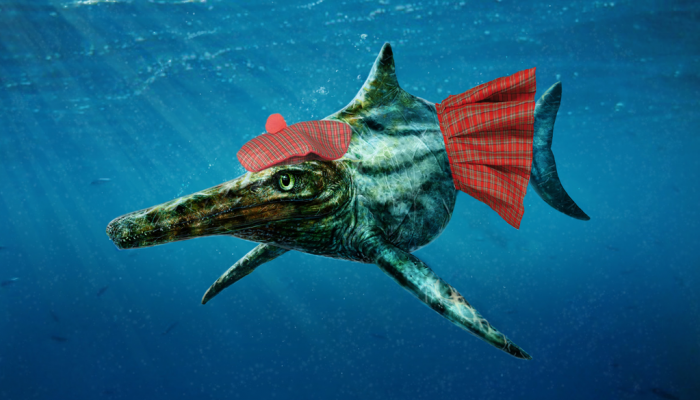
A cool new ichthyosaur – a type of marine reptile – has just been named in the Scottish Journal of Geology. I’ve written about it here, with some great comments from the lead author (Steve Brusatte). Most reports on the new beastie just focus on the finding, but we’ve gone for a different angle by delving into what it means for the evolution of ichthyosaurs during the Juras ...[Read More]