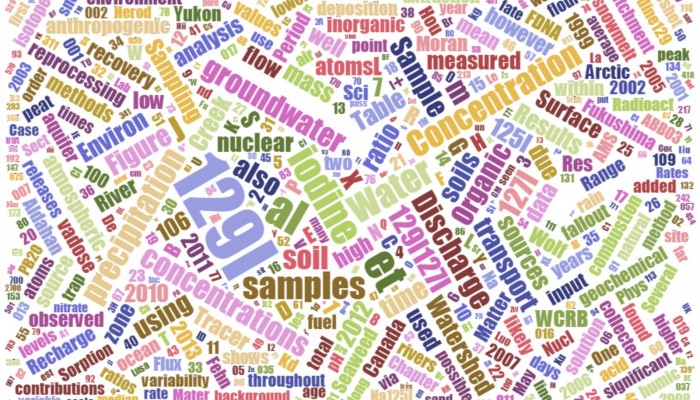
As you may have gathered from my enthusiastic title I just submitted my thesis! After 6 years of hard work it’s been passed in. To celebrate I decided to make this really cool word cloud showing the most frequently occurring words in the thesis, which currently contains a total of 55,713 words. The bigger the font the more common the word. As you may notice 129I occurs a lot, 1,220 times to ...[Read More]
GeoSphere
Geology Photo of the Week #45
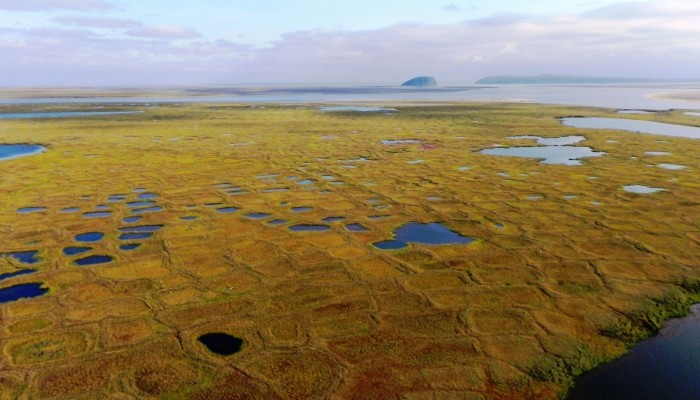
This weeks photo is once again related to permafrost and the Arctic….something tells me I miss being there. Anyway, the gorgeous photo below shows a terrific example of polygonal patterned ground from Siberia. Patterned ground is a phenomenon that occurs frequently in cold regions and is caused by the seasonal freeze-thaw of the active layer/soil. This process can produce a phenomenon called ...[Read More]
WaterUnderground
A new data portal for permeability!
Permeability data is tucked many dusty corners of the web and in even dustier reports, books and thesis. The purpose of the Crustal Permeability Data Portal is to ‘unearth’ (pun intended!) permeability data by providing links to online, peer-reviewed permeability data that is open to anyone around the world. This data portal collates links to other data sources rather than hosting data and is a co ...[Read More]
GeoSphere
Thaw Slumps of the NWT
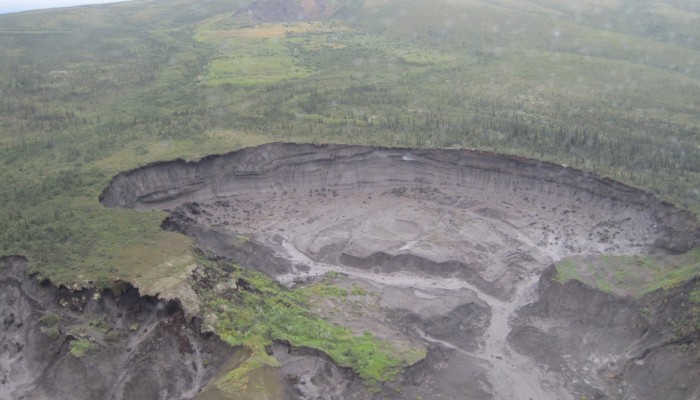
I recently across an article that reminded me of my field work days in the early stages of my PhD in the Canadian Arctic at retrogressive thaw slumps. The article discusses the impending catastrophic drainage of a lake when the thin strip of land separating it from a thaw slump fails (see article), which it will inevitably do very soon. The story has now been picked up all across Canada in the con ...[Read More]
GeoSphere
Geology Photo of the Week #44
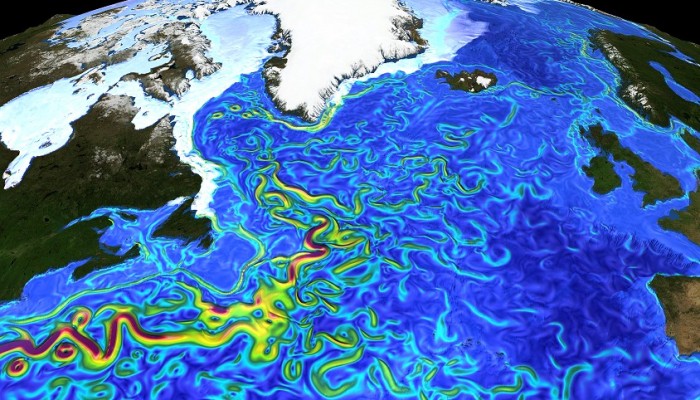
For a bit of a change of pace the photo of the week this week isn’t a photo at all. Rather it’s a fascinating model output showing ocean surface currents in the North Atlantic. The Gulf Stream is clearly visible as it flows past Atlantic Canada and out towards the middle of the north Atlantic. I am guessing that colour scheme has something to do with current velocity or mass flux or so ...[Read More]
WaterUnderground
When it snows, it pours (into aquifers)! Recharge seasonality around the world…
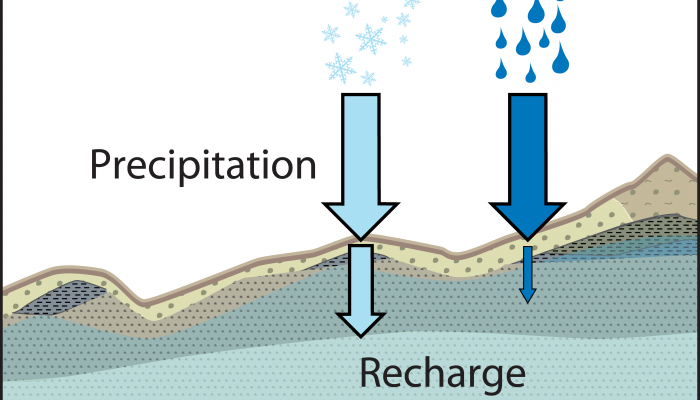
Written by Scott Jasechko University of Calgary isohydro.ca twitter.com/sjasechko Groundwater is renewed by rain and melted snow that moves under the ground, a process called groundwater recharge. The percentages of summer versus winter precipitation that make it under the ground are expected to be different for a number of reasons including larger plant water use during the summer, and larger are ...[Read More]
Green Tea and Velociraptors
The Open Research Glossary round 2
A few months ago, we published the crowd-sourced Open Research Glossary, details of which can be found here. We’ve taken this to the next level now, and published the updated and much prettier version of this resource on Figshare. This means it is now openly licensed for re-use, and can also be cited like any normal research article. We also popped it on Zenodo, because why not! The original ...[Read More]
WaterUnderground
Is research on ‘regional groundwater flow’ stagnant or still flowing?
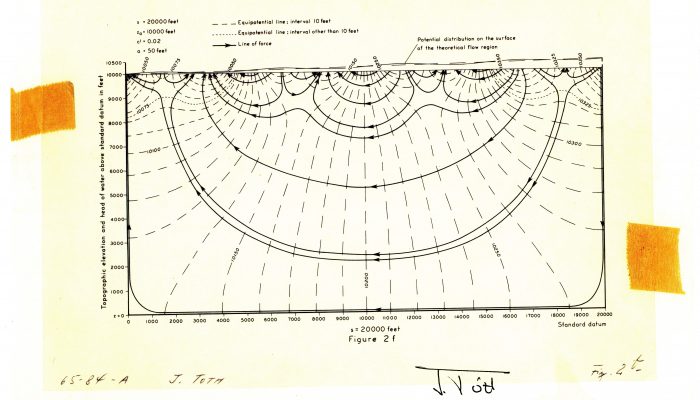
Written by Brian Smerdon IAH regional groundwater flow commission In the early 1960’s József Tóth published seminal work on the concept of regional scale flow and nested flow systems. His work built on the “theory of groundwater motion” by M.K. Hubbard, and seemed to come along just at the right moment in history of hydrogeology. Armed with József Tóth’s work, the hydrogeologic community (geologis ...[Read More]
GeoSphere
Geology Photo of the Week #43
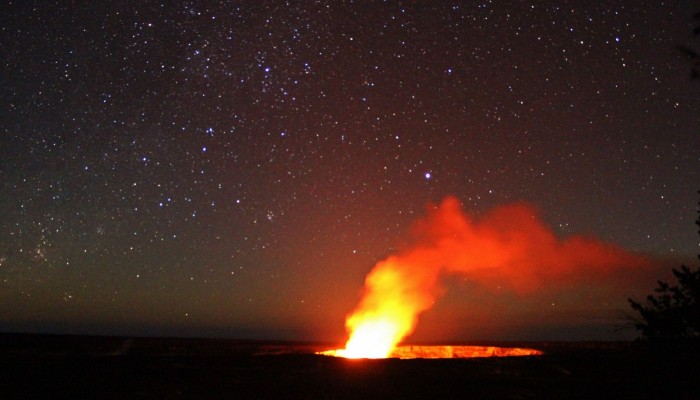
This weeks photo can be described by one word: mesmerizing. Honestly, it’s hard to tell which part of this photo is better, the beautiful starry sky backdrop or the glow of Kilauea’s smoking crater. Combined, it’s just fantastic. Kilauea is part of the Hawaiian Island volcanic chain which has been formed as the Pacific plate has moved across at hotspot. The volcano is about 300,0 ...[Read More]
Geology for Global Development
Commentary: ‘Globalize Geoscience’ and International Capacity Strengthening
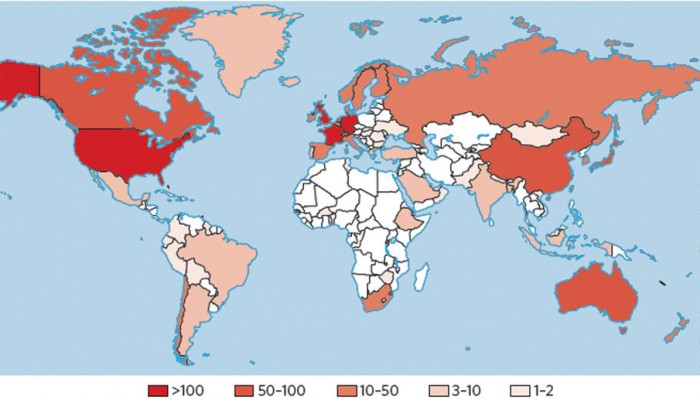
The international community will soon agree on a set of sustainable development goals. This is a significant moment for the international community, and a great opportunity for geoscience. Over the coming months a broad discussion is needed as to how we can best support this global effort to eradicate extreme poverty. One important way this can be done is through ‘globalizing geoscience̵ ...[Read More]