
River terraces cutting into Cenozoic sediments in Kazakhstan. River terraces are flood plains that have moved away from the river, in this case because the land was vertically displaced during fault movement. Credit: Tim Middleton (c) Geology for Global Development
Retired blogs
Research Highlight – Variations of 129I in the atmospheric fallout of Tokyo, Japan: 1963-2003
I occasionally like to focus in on what I view as a key paper either in my particular field of iodine geochemistry or in the geochemical world at large. In this instance I have decided to highlight a paper in my field that releases a fantastic wealth of data that is matched nowhere else in the literature I have …[Read More]
The International Association for Promoting Geoethics
As geoscientists we have to consider the human impact of the decisions we make throughout our careers. There are many circumstances that require us to consider and discuss the ethical code of our profession. Developing the necessary soft skills and creating a forum for the discussion of ethical issues is one of the aims of …[Read More]
Geology Photo of the Week #15 – Dec 9-15
The 15th photo of the week is of an area of natural acid rock drainage (ARD) in Eagle Plains, Yukon. ARD is a phenomenon that most people associate with mine tailings and mine waste. However, it occurs naturally as well since the only criteria that need to be met are a source of oxidized water, such as …[Read More]
Reducing the Risk of Future Disasters
GfGD welcomes the release of the UK Government Office for Science Foresight Report into “Reducing the Risks of Future Disasters: Priorities for decision makers”. The report has been specially commissioned to recognise the growing need for good disaster and risk reduction (DRR) science. The report describes how the growing threat of natural hazards to increasingly …[Read More]
Friday Photo (60): Active Geology – Displacement on a Fault, Kazakhstan
The ridges running across this Kazakhstan landscape are a result of displacement on an active fault. Credit: Tim Middleton. (c) Geology for Global Development
A Portmanteau of Natural Hazards
Last week, the UK’s Natural Environment Research Council (NERC) launched an over-arching programme in Natural Hazards, a network called PURE (Probability, Uncertainty and Risk in the Environment). This post is a very short attempt to navigate the maze of acronyms of projects that are either linked to PURE, or to other related initiatives in Natural …[Read More]
Geology Photo of the Week #14 – Dec 2-8
This week’s photo, which is posted mid-week instead of at the beginning is one that I only took this Monday. I was away all day at the Royal Military College SLOWPOKE-2 reactor doing some neutron activation of cesium and calcium. We were making minute quantities of Cs-134 and Ca-41 for research purposes on the accelerator …[Read More]
What can we Learn from the Great Eastern Japan Tsunami?
Over a year and a half on from the Great Eastern Japan Tsunami, and there are still boats lying overturned at the side of roads. Recovering from such a major national catastrophe is a slow process. We hope to be able learn from this tragedy and use it to lower vulnerability to future disasters, both …[Read More]
Santiaguito Volcano: Ninety Years and Counting.
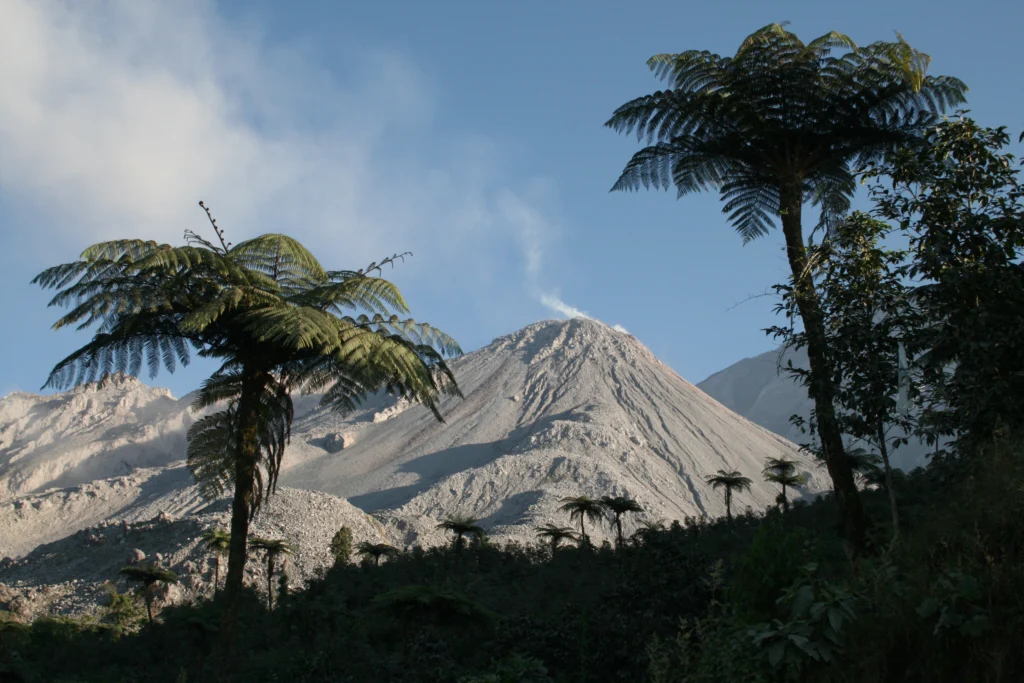
Santiaguito volcano, Guatemala, burst into life in 1922 and is now the second longest continuing eruption. It has outlasted both Stromboli (Italy) and Sangay (Ecuador), both erupting since 1934, and is only outdone by Yasur (Vanuatu), which has been erupting at least since 1774, when first visited by Captain Cook. These long-lived eruptions give us …[Read More]