If you’re a regular reader of the EGU blogs, you may notice a certain annual tradition of ours: we like to celebrate the contribution of our science writers and bloggers over the year gone by. And 2024 was no exception of course; we had a number of inspiring and thought-provoking blog posts published across the …[Read More]
GeoLog
Geo-magicians: The mysterious work of understanding our magnetic Earth
There is a force all around us—unseen, unfelt, and yet profoundly influential. It guides the migration of birds across continents, whispers secrets to ancient rocks, and shields us from cosmic storms. This force is as mysterious as it is essential, shaping our world in ways that most of us never think about. Imagine a sailor …[Read More]
GeoRoundup: the highlights of EGU Journals published during February!
Each month we feature specific Divisions of EGU and during the monthly GeoRoundup we put the journals that publish science from those Divisions at the top of the Highlights section. For February, the divisions we are featuring are Geodesy and Geodynamics. They are served by the journal: Solid Earth (SE) and Geoscientific Model Development (GMD). Geoscientific Model …[Read More]
GeoPolicy: Science Diplomacy in a new Geopolitical order
We have entered a new era of “harsh” geopolitics. Those were the words of the European Commission President Ursula von der Leyen in her keynote speech at the World Economic Forum in Davos on January 21, 2025. It is an era with geostrategic rivalries where commitment to international organisations (e.g. UN, WHO) and global solidarity …[Read More]
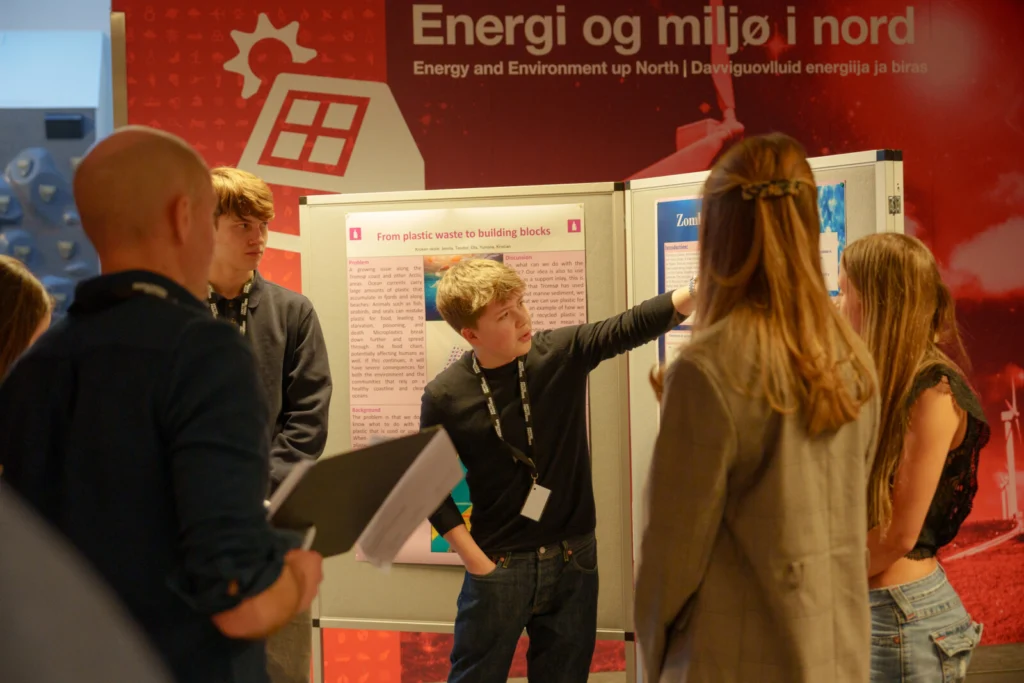
Sparking scientific curiosity in Arctic Students: How they’re tackling big questions
Growing up, I didn’t know what it meant to “do research”. I did some research projects in high school, but research as a field path was totally foreign to me until I started university. Unlike me, the young students who participated in this year’s Arctic Frontiers Science for Schools program were given a first-hand glimpse …[Read More]
How can scientists see ice underground? Recent study reveals how!
When it comes to peering beneath the Earth’s surface, geophysicists have an arsenal of high-tech tools at their disposal. But what happens when you need to track something as elusive as underground ice forming and melting in real time? Enter borehole Ground-Penetrating Radar (GPR), the underground detective that helped Peter Jung and his colleagues image …[Read More]
Why Earth and Space Sciences need to dismantle the cis-het-white boys’ club
The Earth and space sciences, like many STEM fields, have long been dominated by a narrow vision of who belongs. But the tide is turning. A 2023 workplace climate survey of Earth and space scientists highlights both the persistent barriers queer and other historically excluded scientists face and the urgent need for cultural shifts within …[Read More]
How to make a personal change this year: part 2 – growth
It is the new year and new resolutions draw you onward. Yet motivation is fickle, and too often good intentions wither before bearing fruit. You may have drawn a plan to keep you in check, but how do you build on this to achieve sustainable growth? Sustainable growth has been a crucial throughout my career: …[Read More]
Are you ready to vote for your favourite Division blog of 2024?
Our EGU blogging team has had a fantastic 2024 posting across our official blog, GeoLog and the division blogs. Most of our readers appreciate EGU’s blogs for their informative yet accessible style, and for our bloggers ability to take complex geoscience content and make it fun and relevant to the reader. If this sounds like …[Read More]
GeoRoundup: the highlights of EGU Journals published during January!
Each month we feature specific Divisions of EGU and during the monthly GeoRoundup we put the journals that publish science from those Divisions at the top of the Highlights section. For January, the divisions we are featuring are Tectonics and Structural Geology (TS), Geochemistry, Mineralogy, Petrology & Volcanology (GMPV), and Earth Magnetism & Rock Physics (EMRP). …[Read More]