This blog post is part of our series: “Highlights” for which we’re accepting contributions! Please contact Emma Lodes (GM blog editor, elodes@asu.edu), if you’d like to contribute on this topic or others.
Interview with Kim Huppert, Assistant Professor of Earth and Atmospheric Sciences, City College of New York and Graduate Center CUNY. Email: khuppert@ccny.cuny.edu, website: https://sites.google.com/view/huppert-ccny-esd
Questions by Emma Lodes.
What is most interesting or exciting to you about the geomorphology of volcanic islands?
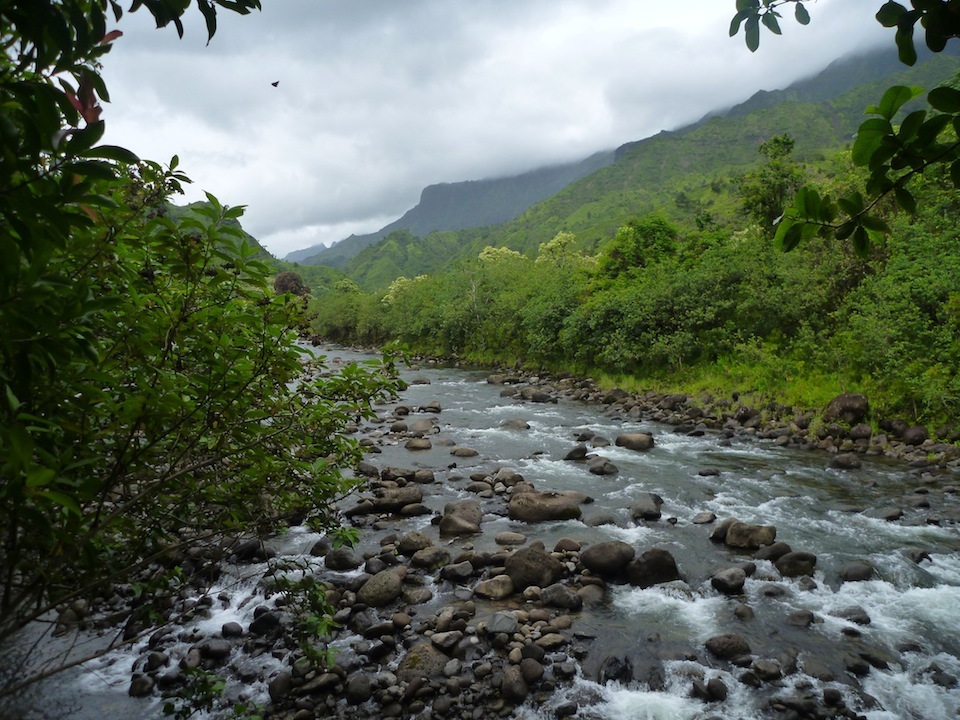
Hanalei River, Kauai (PC: Kim Huppert)
Where to start! I think volcanic ocean islands are such captivating and awe-inspiring landscapes because, on the one hand, they have a perhaps simpler, or at least better constrained, geologic history than most continental landscapes, so they offer a phenomenal opportunity to study landscape evolution. We can even make space-for-time comparisons along age-progressive island chains like the Hawaiian Islands to see firsthand how island landscapes change over time (…incredible to think that James Dwight Dana was able to recognize variations in island age decades before the development of radiometric dating and plate tectonic theory!) On the other hand, island are incredibly diverse landscapes, hosting some of Earth’s steepest climate gradients and unique ecosystems, with close connections between steep mountain headwaters and coastal systems. Truly a microcosm, in many ways, of the diversity of landscapes we see across vast swaths of the continents…with their own uniquenesses too!
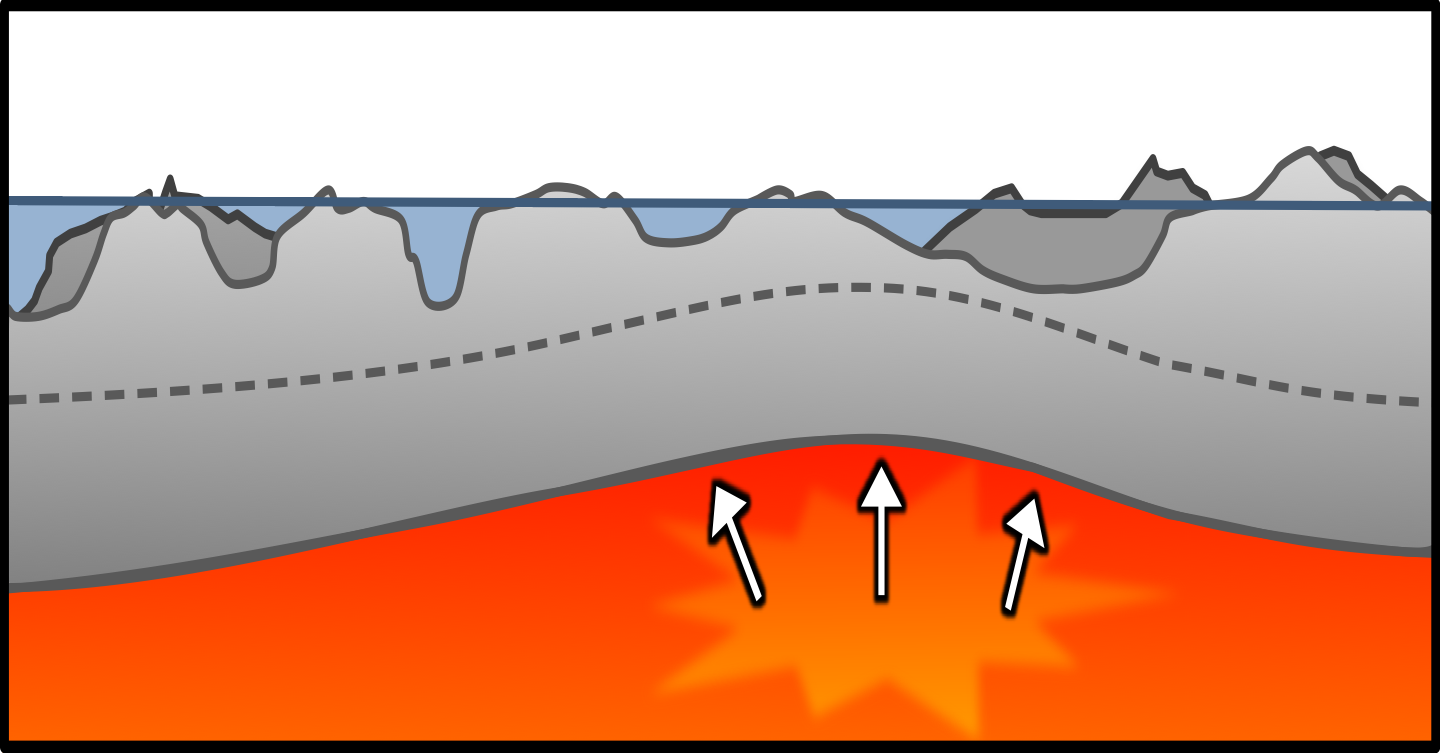
Dynamic uplift (PC: Kim Huppert)
Can you describe what is the main objective of your research on volcanic islands?
My research on volcanic ocean islands has focused primarily on (1) climatic controls on erosion, particularly the influence of rainfall on bedrock river incision and the influence of waves on seacliff erosion; and (2) the geodynamic mechanisms of island vertical motion.
Can you share a short story of a fun moment or time doing field or lab work in volcanic islands?
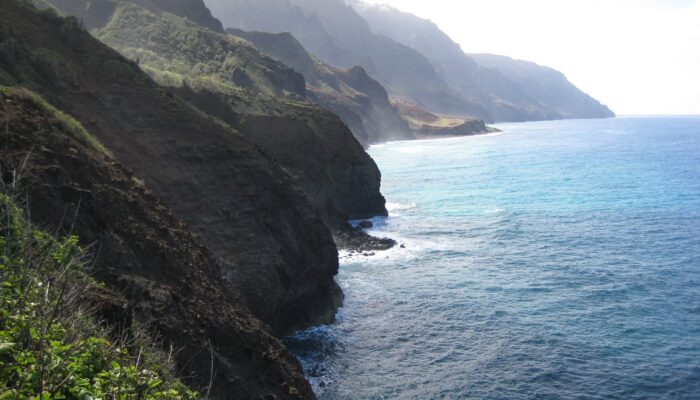
One of the most incredible experiences I had while doing fieldwork on the Hawaiian Island of Kaua’i involved collecting river sand for cosmogenic exposure dating from basins along the waveswept northwestern Na Pali Coast. Seacliffs line the coastline here, including at some hanging valleys that sit perched above and discharge into the ocean as waterfalls. Further inland, the terrain is too steep to access these basins by land…so we sampled these basins by sea kayak! Pretty incredible to get the offshore view (complete with feral goat baas echoing out of the valleys and sea turtles circling our kayaks).
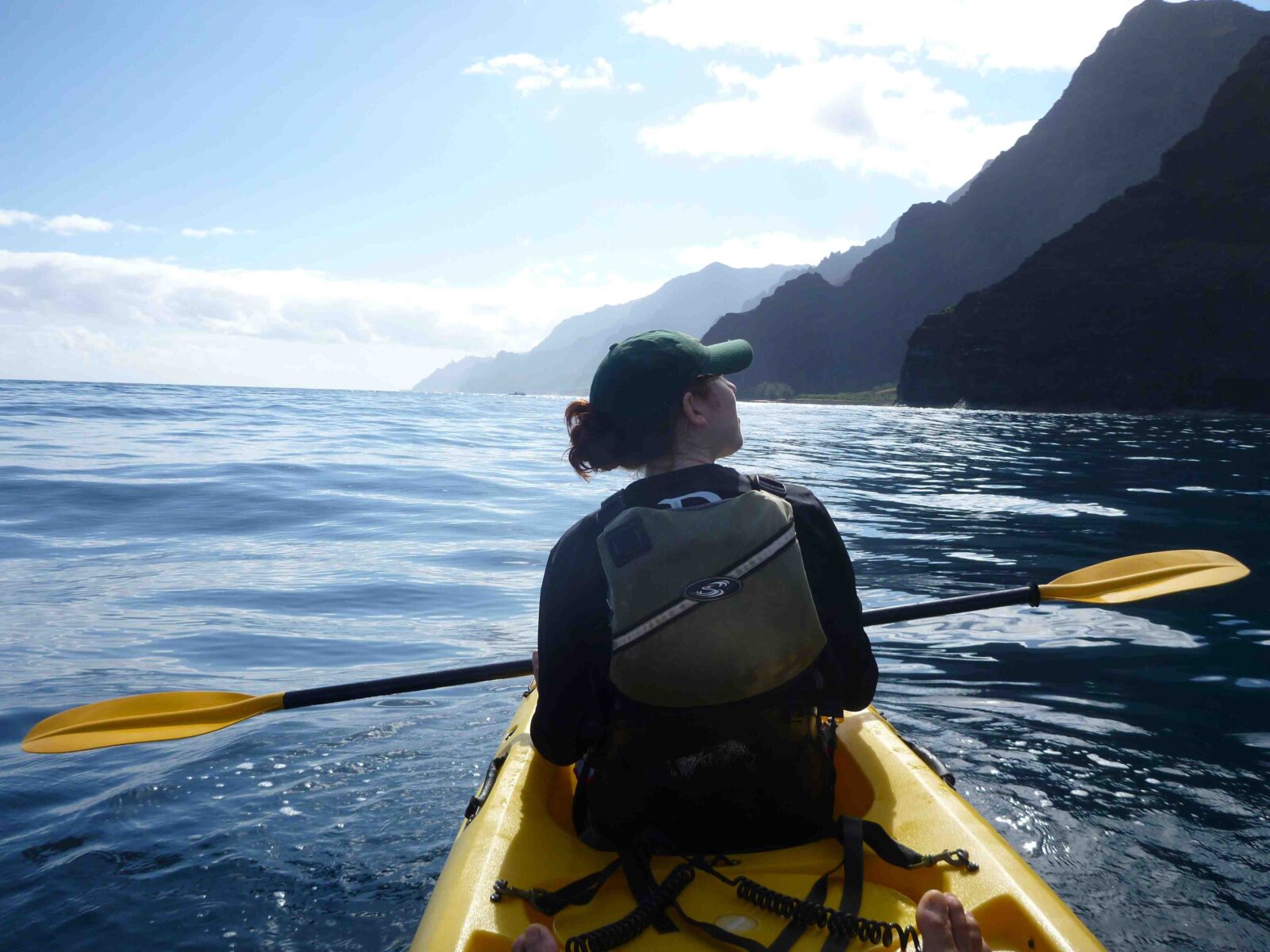
Kim kayaking the Na Pali coast to collect samples (PC: Matt Rosener)
Are there major unanswered questions in the topic that you want to focus on next?
Again where to start! I’ve been focusing more recently on how climate variability affects erosion and landscape evolution on volcanic ocean islands, and there are a lot of really interesting unanswered questions there. I’m also curious to examine if we can leverage what we’ve learned from spatial variations in climate on islands to understand better any temporal changes in climate that might be recorded in island topography. But yeah, there are so many interesting questions, particularly at the interface of geomorphology and volcanology, soil science, biogeography,…you name it, so it’s been exciting to see growing interest and a burgeoning community of researchers studying ocean island geomorphology!
How can what you’ve learned in volcanic islands be applied in other settings?
To the extent that volcanic ocean islands represent natural experiments in landscape evolution (or at least Earth’s best offering of a landscape with relatively constant lithologic and tectonic conditions but significant variations in climate and age), what we learn about how climate influences erosion and landscape evolution, or about how canyon formation or coastline evolution proceeds, on islands should apply equally to continental landscapes, particularly if these observations are grounded in physically based theory. Signals of climatic controls on landscape evolution might be obscured in continental landscapes by simultaneous variations in rock type or tectonic conditions…so volcanic ocean islands really come to the rescue as natural laboratories to isolate the influence of climate on landscape evolution or leverage chronosequence comparisons. That said, I think there’s still a lot to learn about the unique aspects of island landscape evolution (e.g., spatial and temporal variations in island vertical motion, interactions between terrestrial and coastal processes, soil development and changes in hydrology as islands age,…) that might make these comparisons and the portability of what we learn on islands to other landscapes more nuanced and interesting…TBD!
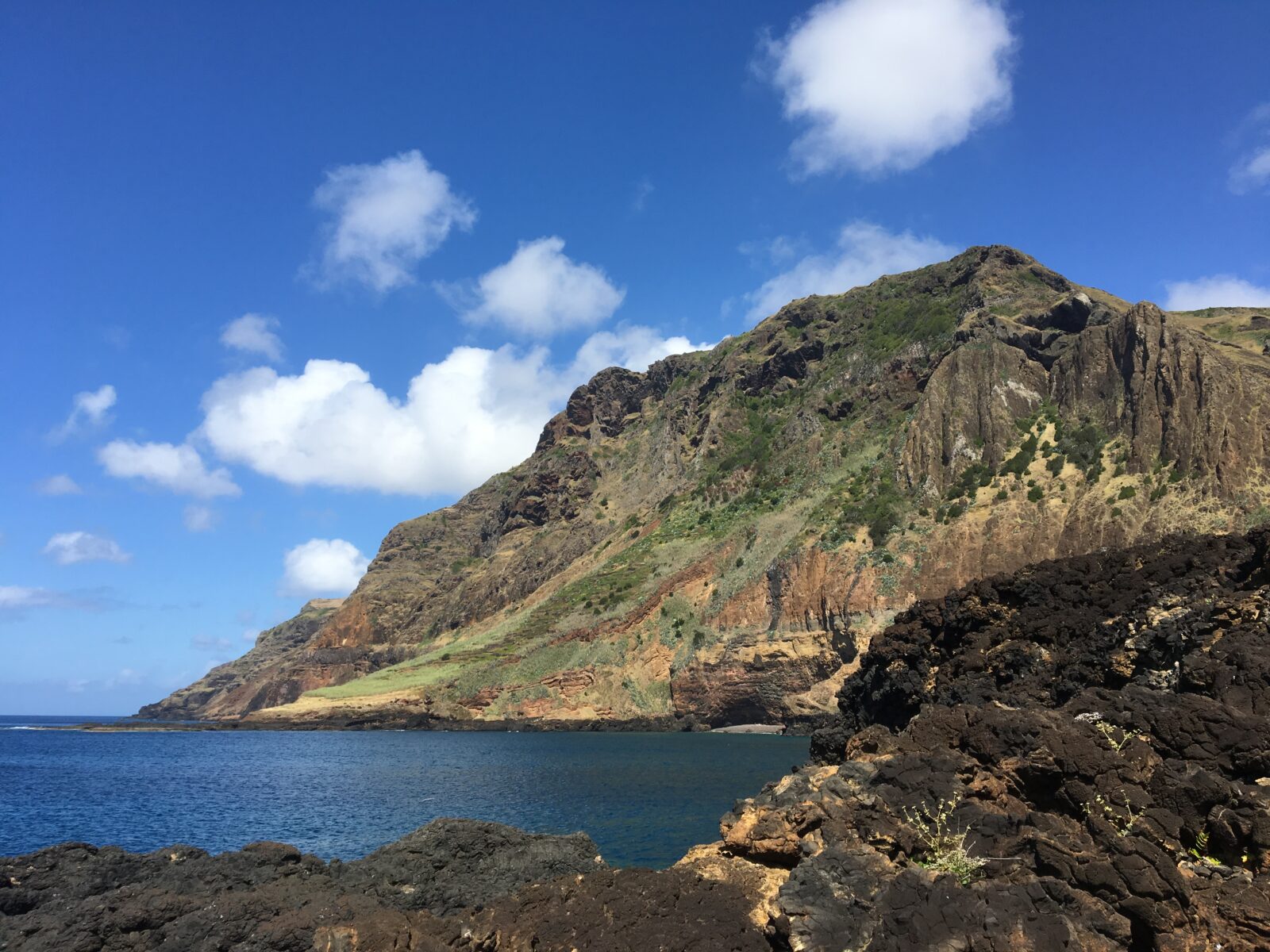
Santa Maria, Azores (PC: Kim Huppert)