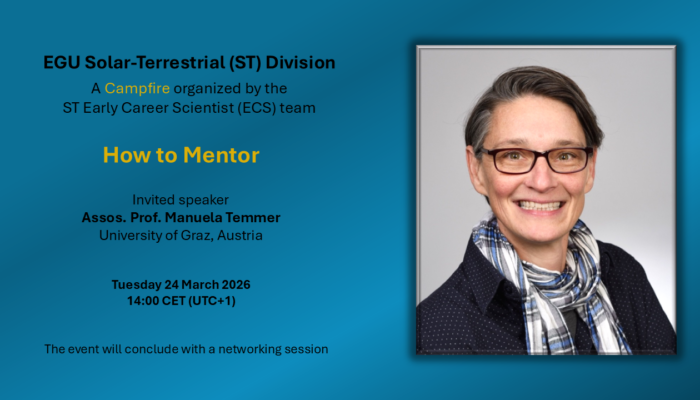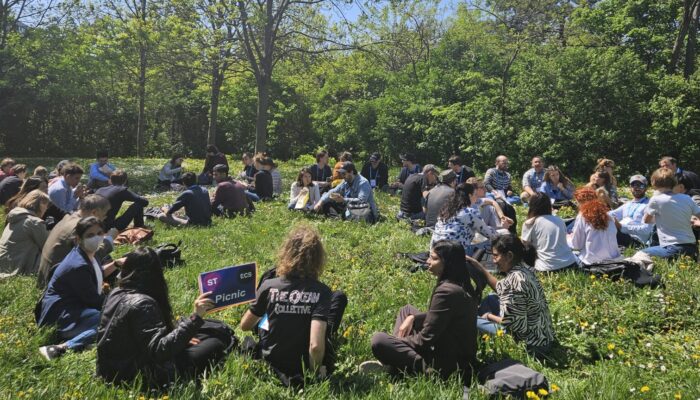
In academia, success is often measured with quantifiable outputs such as publications, grants, and awards. On the other hand, the challenging road leading to this success is not something discussed openly. The relationship we build with our colleagues, the support and guidance we receive from mentors and supervisors are important factors affecting our success as individuals and as a community. Me ...[Read More]
On the correlation and interactions of space weather with biological indicators
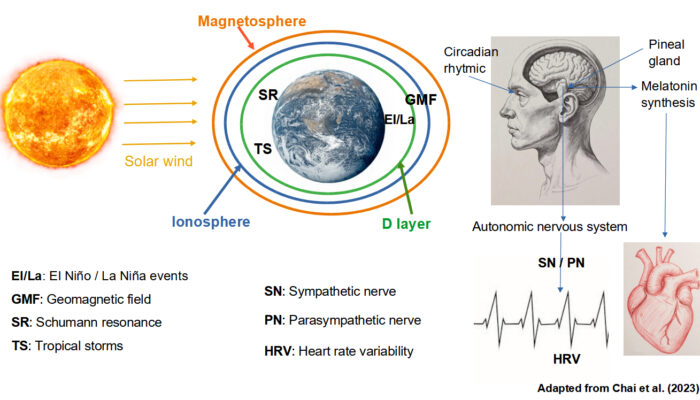
1. Introduction Space weather is significantly affected by geomagnetic disturbances (GMDs) that occur during or after intense solar events such as coronal mass ejections (CMEs), which expel substantial amounts of electromagnetic particles into interplanetary space. Most of these particles collide with the magnetosphere (the outermost region of the atmosphere) where the solar wind (continuous flow ...[Read More]
Probing the Solar Wind with Spacecraft Radio Occultation Signals: Chasing a Unified Method to Probe the Sun
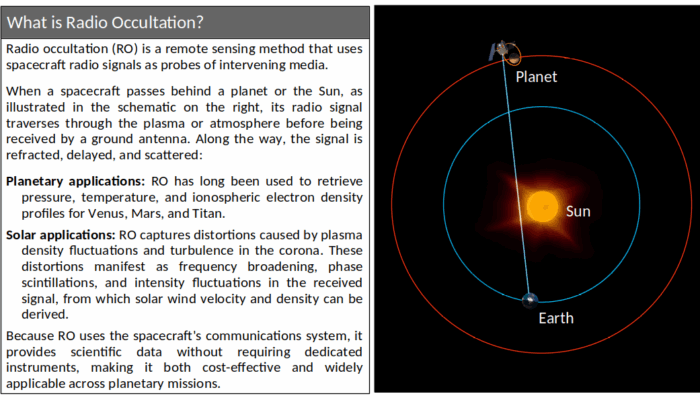
Introduction The solar wind, a continuous outflow of charged particles from the solar corona, plays a fundamental role in shaping the heliosphere and driving space weather. Its interaction with planetary magnetospheres and atmospheres regulates magnetospheric dynamics, influences atmospheric escape, and governs space weather hazards that can affect both space- and ground-based technologies. Despit ...[Read More]
Behind the Poster: Extending the Wave Telescope – An Interview with EGU 2024 Outstanding Student Paper Presentation (OSPP) Award Winner Leonard Schulz
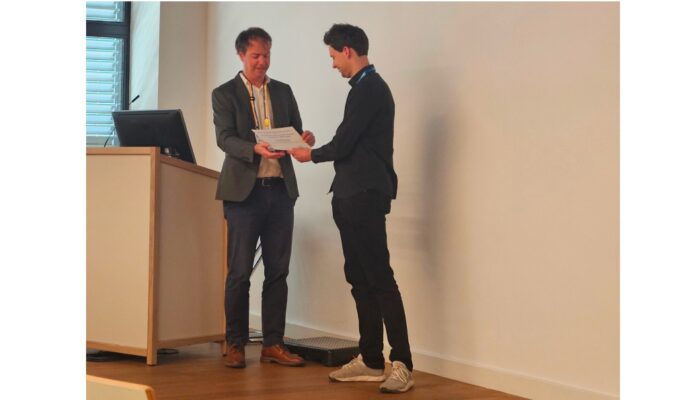
1. Congratulations on your OSPP Award 2024! What was your initial reaction to winning, and how has it helped your career as an early-career scientist? I was very delighted and also proud that my work is recognized in this way. I also understood in hindsight why I had little time to breathe during my poster presentation slot; some of the people asking a lot of the questions will have been the judge ...[Read More]
A talk with scientists across Europe: building the future of European heliophysics together
“Heliophysics studies the Sun, its sphere of influence, and how it affects the bodies in the solar system.” – this holistic approach to understanding our space environment is at the heart of the European Heliophysics Community (EHC), an open and inclusive network of researchers across Europe (https://www.heliophysics.eu/). The EHC promotes collaborative, curiosity-driven science that explore ...[Read More]
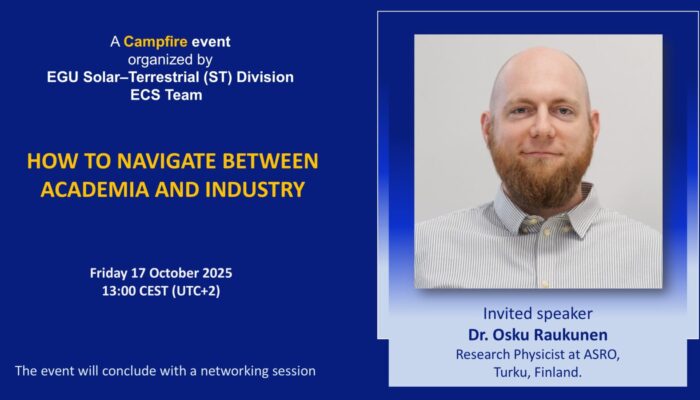
ST-ECS Networking Campfire: “How to Navigate Between Academia and Industry”
For many early-career scientists, one of the big questions is whether to pursue a career in academia, move into industry, or find a path that bridges both worlds. Each sector offers unique opportunities and challenges, and learning how to navigate between them can help you make confident, informed career decisions. To shed light on this topic, the Early Career Scientists (ECS) team of the Solar-Te ...[Read More]
Meet Richard Horne, 2025 Julius Bartels medalist, honoured for his fundamental contributions to understanding the formation of the radiation belts and their effects on space weather
Congratulations on receiving the 2025 Julius Bartels Medal for your groundbreaking contributions to wave-particle interactions, their role in accelerating charged particles, and advancing the understanding of the formation of the radiation belts and their space weather effects. What does this recognition mean to you personally, and how does it impact your work in this fascinating field? I am truly ...[Read More]
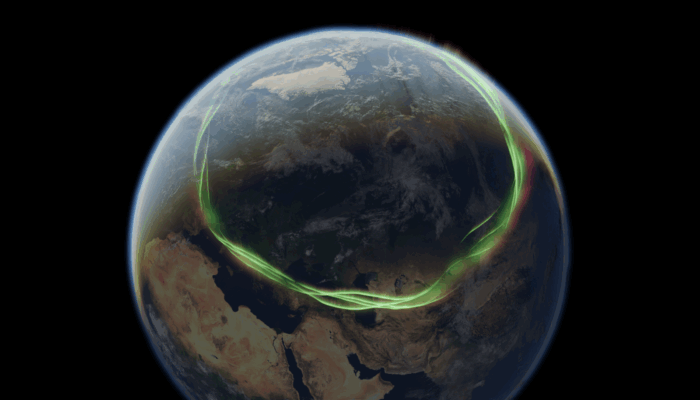
Chasing Auroras 41 Millennia Ago with Agnit Mukhopadhyay and Sanja Panovska
Approximately 41,000 years ago, during the Laschamps geomagnetic excursion, Earth’s magnetic field experienced a significant disturbance. The strength of the magnetic field decreased to only 10% of what it is today, the magnetic poles shifted considerably from the geographic poles, and the magnetosphere—the protective layer surrounding our planet—became smaller and distorted in previously unvisual ...[Read More]
A Week to Remember: My EGU 2025 Experience
Vienna transformed into a buzzing hub of scientific exchange as the European Geosciences Union (EGU) General Assembly (GA) 2025 took place from 27 April to 2 May. Over 20,000 scientists from 120 countries gathered to share groundbreaking research across the Earth, planetary, and space sciences. Attending the GA for the first time as part of the Early Career Scientists (ECS) Team of the Solar-Terre ...[Read More]
Meet Sandra Catherine Chapman, 2024 Hannes Alfvén Medalist, honoured for her groundbreaking contributions and vision in space plasma physics
Congratulations on receiving the 2024 Hannes Alfvén Medal for your pioneering work and outstanding leadership in advancing our understanding of space plasma physics, including its fundamental processes and impacts throughout the solar system and beyond. What does this recognition mean to you personally, and how does it impact your work in this fascinating field? I am deeply honoured to be awarded ...[Read More]