
In this third instalment in this series our journey takes us into the Skeleton Coast. Synonymous with shipwrecks and known as “The Land God Made in Anger” to indigenous Bushmen this coastal desert has been protected as a National Park since 1971. Similar to many of Namibia’s National Parks, the Skeleton Coast does not allow …[Read More]
33 search results for "dust in the desert"
If you didn't find what you were looking for, try searching again.
GeoLog
Dust in the desert: The Kuiseb and Tschaub Rivers – part 2 of 3
The dust in the desert series continues this week as James King shares his experience of fieldwork in Nambia… Our base of operations is located in Swakopmund, a sea-side town of German heritage. This has two benefits: pastries and unrivalled hardware stores. The amount of supplies (hardware, not cake) that this sleepy Namibian town has …[Read More]
GeoLog
Dust in the desert: Measuring it is only half the battle – Part 1 of 3
Fieldwork is vital to understanding all sorts of Earth processes, but that doesn’t make it easy! James King, a researcher from the University of Oxford, describes what it takes to set off on a scientific expedition… Although the classic text on sediment transport by wind by Sir Ralph Bagnold was written way back in 1941, the mechanics …[Read More]
GeoLog
Imaggeo on Mondays: Dust devil sighting in the Atacama Desert
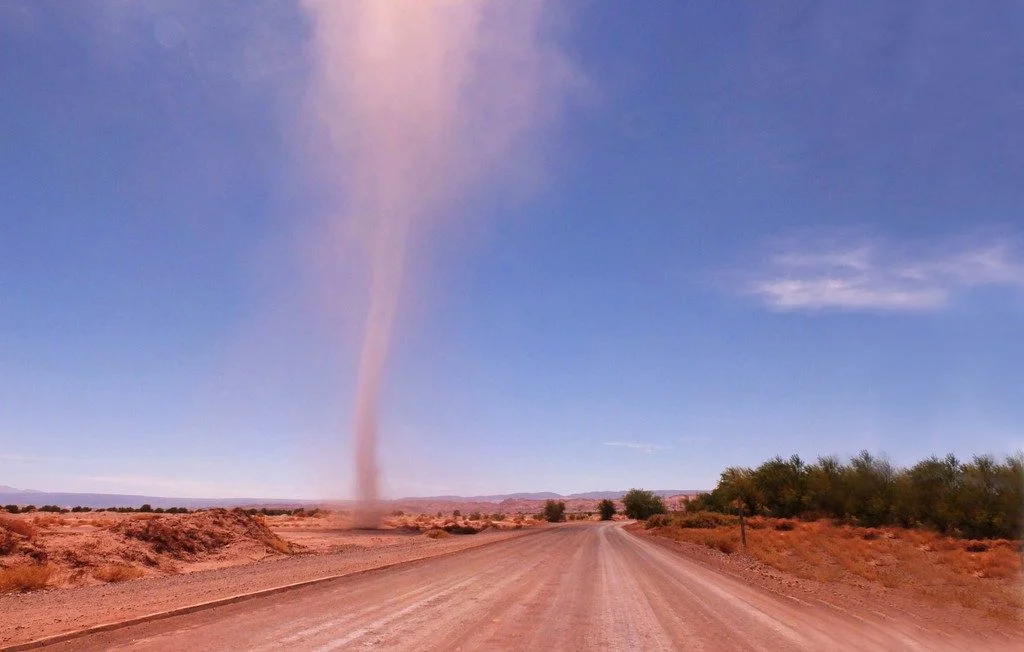
Dust devils are like miniature tornadoes, they form when a pocket of hot air near the surface moves fast upward and meets cooler air above it. As the air rapidly rises, the column of hot air is stretched vertically, thereby moving mass closer to the axis of rotation, which causes intensification of the spinning effect …[Read More]
GeoLog
Can our oases outlast the dry spell of desertification?
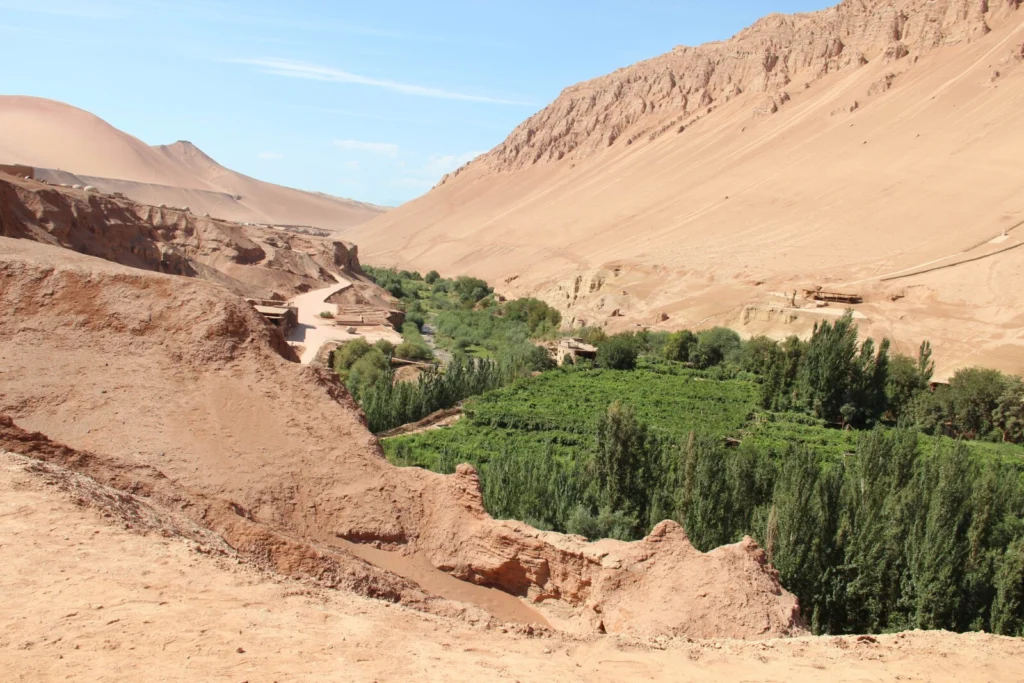
Ever wondered how fast our planet is losing its footing? Imagine this: every time you blink, four football fields’ worth of fertile soil vanish into thin air. According to the UN, that’s a mind-boggling 100 million hectares gobbled up by land degradation each year! But when this happens in dry regions, it morphs into something …[Read More]
GeoLog
Imaggeo On Monday: Yardangs in the Gobi desert
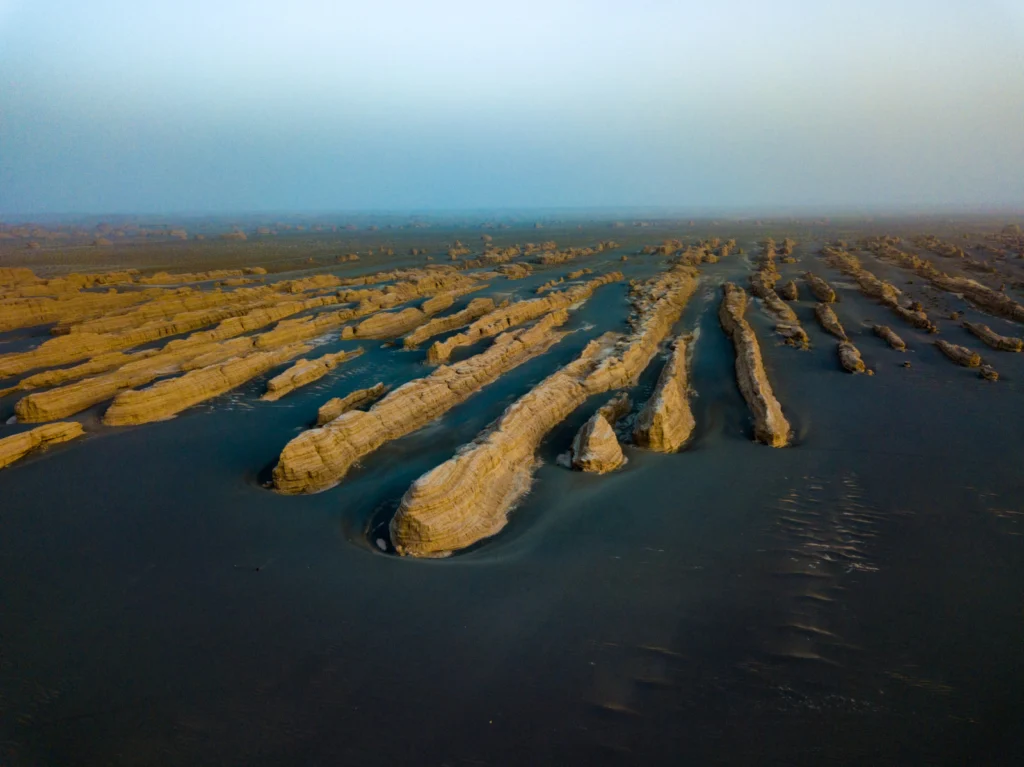
Seeing the Yardang rock formations during sunset was a surreal experience. While they seem to have be standing in a sea of water that formed them, the fluid dynamics that actually lead to their existence is the result of wind abrasion by dust and sand and the removal of loose material by wind turbulence. The …[Read More]
GeoLog
Imaggeo on Mondays: Monitoring the melt
Automatic weather stations (AWS) play a prominent role in making meteorological measurements in remote areas. These measurements can feed into climate models; providing better projections for rainfall, temperature and more. This peculiarly perched piece of equipment is just such a weather station: Out in the Swiss Alps, this AWS is making measurements of temperature, precipitation, …[Read More]
GeoLog
Mars’ lost oceans: Inside the new planetary hydrology model published in EGU’s Geoscientific Model Development (GMD)
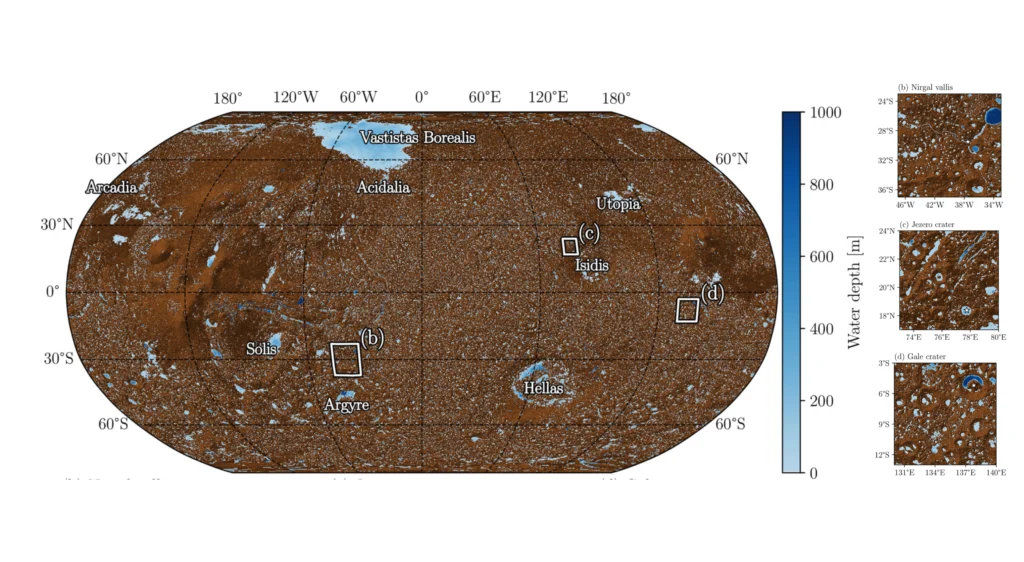
If we look at Mars today, we’ll see a cold, dusty desert, but peel back the surface geology, and the planet tells quite a different story! Networked river valleys, ancient deltaic fans, carved impact crater lakes, and potential palaeoshorelines all point to a warm and active past during the Noachian and early Hesperian epochs, circa …[Read More]
GeoLog
Reflecting on fifty years of Mars through Viking 1’s lens
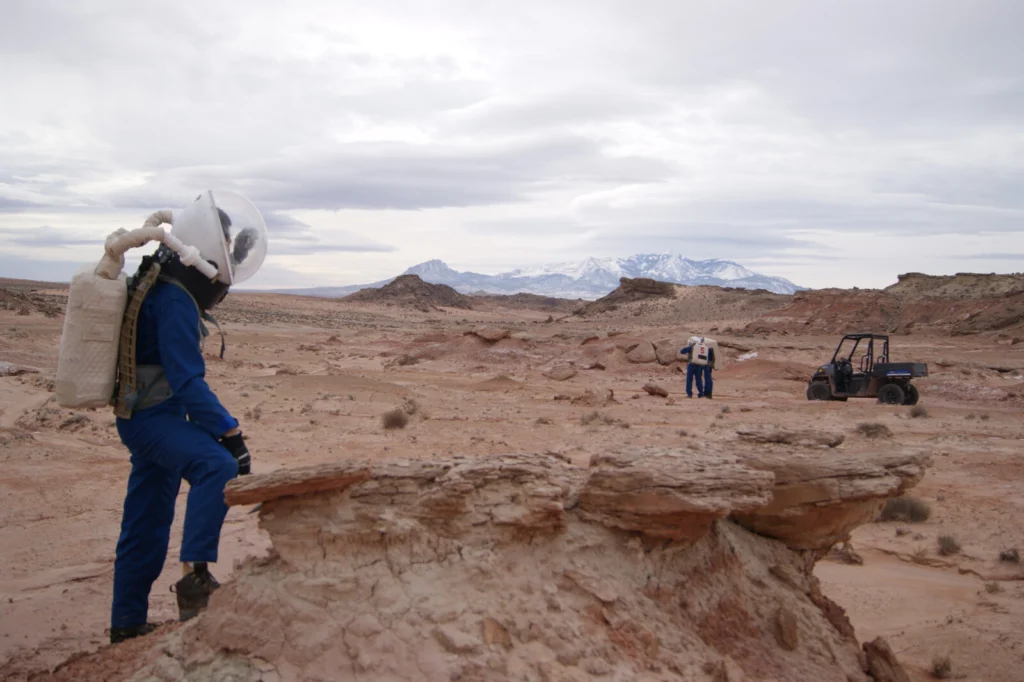
On July 20, 1976, a machine of steel and titanium dropped through a thin atmosphere and touched the dirt of Chryse Planitia. Scientists at NASA held their breath, since five years earlier, the Soviet Union’s Mars 3 probe had died less than two minutes after touchdown. To mitigate this nightmare, engineers programmed Viking 1 to …[Read More]
GeoLog
GeoCinema: coming soon to the EGU26 General Assembly!
After a big success last year, GeoCinema is back for EGU26! As many of you know, doing science is very rarely just about the research, but also involves sharing that research in several forms and formats. For many talented researchers this means using films. Either working with a film-maker or creating something themselves, several of …[Read More]